
SEO Strategy vs SEO Execution: What's the Difference?
Key Takeaways
SEO strategy decides direction, priorities, and measurement. SEO execution turns that direction into finished work.
Doing more SEO tasks does not guarantee better results if the work is aimed at the wrong pages, keywords, or audience intent.
A strong SEO program needs both: strategic clarity and consistent implementation across content, technical, on-page, and reporting tasks.
For growing businesses, the biggest gap is often execution capacity. The strategy may be clear, but no one has the time to keep the work moving.
Smart VAs supports SEO execution through a managed specialist team structure so the work does not depend on one overwhelmed person.

ARE YOU STILL TRYING TO DO IT ALL?
Discover the SMART way to delegate without losing control—and finally free up your time.
I see this often as an SEO specialist: a business is "doing SEO," but the results still feel random. Blog posts are being published. Meta titles are being updated. A few backlinks might be coming in. Maybe someone is checking rankings every month. On the surface, work is happening.

But when we look closer, the issue is usually not effort. It is that the effort is not guided by a clear SEO strategy.
SEO strategy and SEO execution are connected, but they are not the same thing. Strategy decides where the business should focus. Execution makes the work happen. At Smart VAs, this distinction matters because many growing businesses already know they need better visibility, but they do not always know whether they are missing direction, consistency, or both.
In this guide, I will break down the difference, show what each one controls, and help you identify which part of your SEO program needs attention right now.
What Is the Difference Between SEO Strategy and SEO Execution?
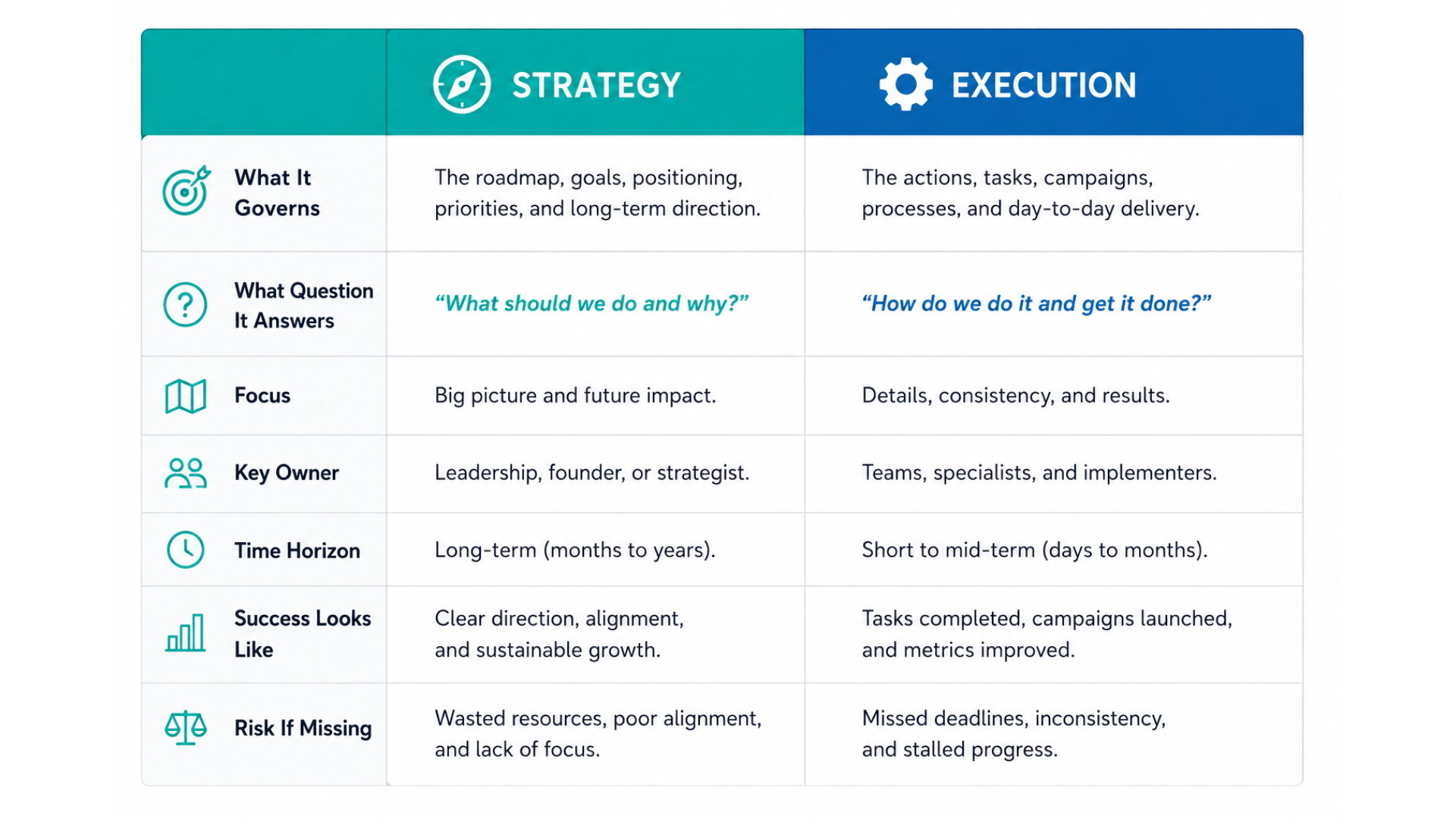
SEO strategy is the direction. SEO execution is the implementation.
Strategy answers: What should we focus on, why does it matter, and how will it support the business? Execution answers: How will the work actually get done?
For example, an SEO strategy might decide that a service page needs to be strengthened before publishing more blog content. SEO execution is the work of updating that page, improving headings, adding internal links, tightening the copy, and tracking performance afterward.
At Smart VAs, I think about this in a practical way. A business owner does not just need someone to "do SEO tasks." They need the right tasks done in the right order. That is where a managed specialist team can help keep execution tied to the bigger business goal instead of turning SEO into scattered activity.
What Does SEO Strategy Actually Involve?
SEO strategy is the thinking layer. It connects search demand, audience intent, website structure, and business priorities.
A strong SEO strategy usually includes keyword-to-service mapping, search intent analysis, page structure decisions, technical priorities, content planning, internal linking direction, and a measurement plan. It should tell you which pages matter most, which topics deserve attention, and what success looks like beyond traffic.
Google explains that SEO helps search engines crawl, index, and understand content, but strategy decides what content deserves to exist in the first place and how it should support the user journey.
When I work through SEO planning, I do not start with, "How many blogs can we publish?" I start with, "Which pages should bring the right leads into the business?" That is why building an SEO strategy should happen before large-scale content production. Otherwise, the site can grow in volume without growing in authority or conversions.
What Does SEO Execution Actually Involve?
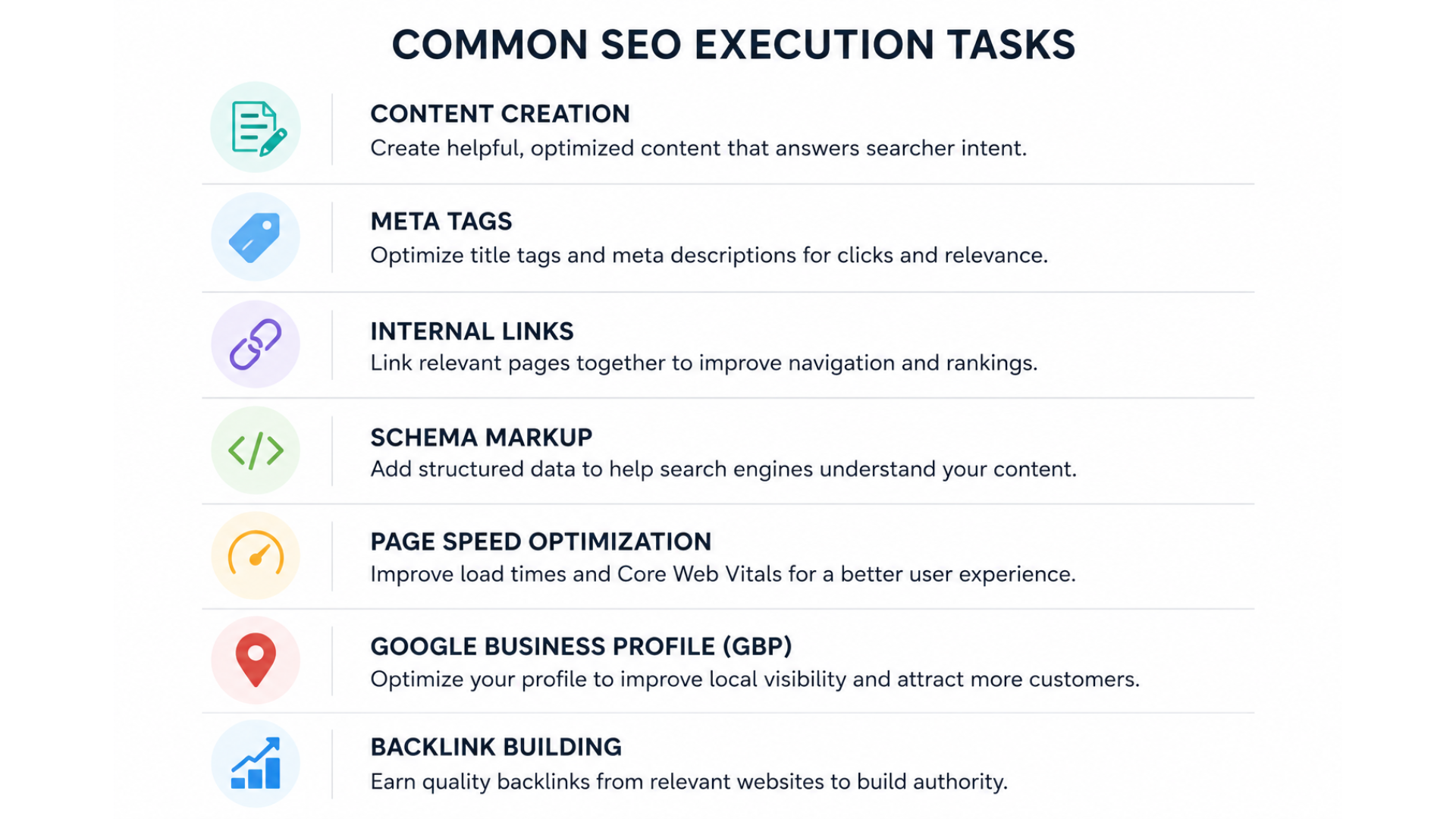
SEO execution is the hands-on work that brings the strategy to life. This is where plans become published pages, updated metadata, structured internal links, resolved technical issues, and measurable progress.
Execution can include keyword research support, content briefs, blog writing, title tags, meta descriptions, image optimization, schema markup, internal linking, page speed fixes, Google Business Profile updates, website edits, backlink coordination, and reporting.
At Smart VAs, this is where SEO Specialist support becomes valuable. The strategy may come from a founder, consultant, agency, or internal marketing lead, but someone still has to organize and complete the recurring SEO work. Without consistent execution, even a smart plan stays stuck in a spreadsheet.
This is also why SEO content writing support matters. A content plan only works when briefs become useful articles, articles are optimized correctly, and those pages are connected back to the services the business actually wants to sell.
Why Does Not Doing More SEO Tasks Guarantee Better Results?
More activity is not the same as progress.
A business can publish four blogs a month and still miss the keywords that buyers search before booking a call. It can update meta descriptions across the site and still have thin service pages. It can chase backlinks while its core pages have unclear messaging.
This is the busywork trap. Execution can make a team feel productive while the strategy is still pointing in the wrong direction. Google also emphasizes helpful, reliable, people-first content, which means the goal is not to produce more pages just for search engines. The goal is to create useful content that answers real questions and supports the reader.
From the Smart VAs side, I would rather see a business improve three high-value pages properly than publish ten disconnected blogs that do not support a service, offer, or buyer journey. Good SEO services should not be measured by task volume alone. They should be measured by whether the work moves the business closer to qualified visibility.
What Does It Look Like When a Business Has Execution But No Strategy?
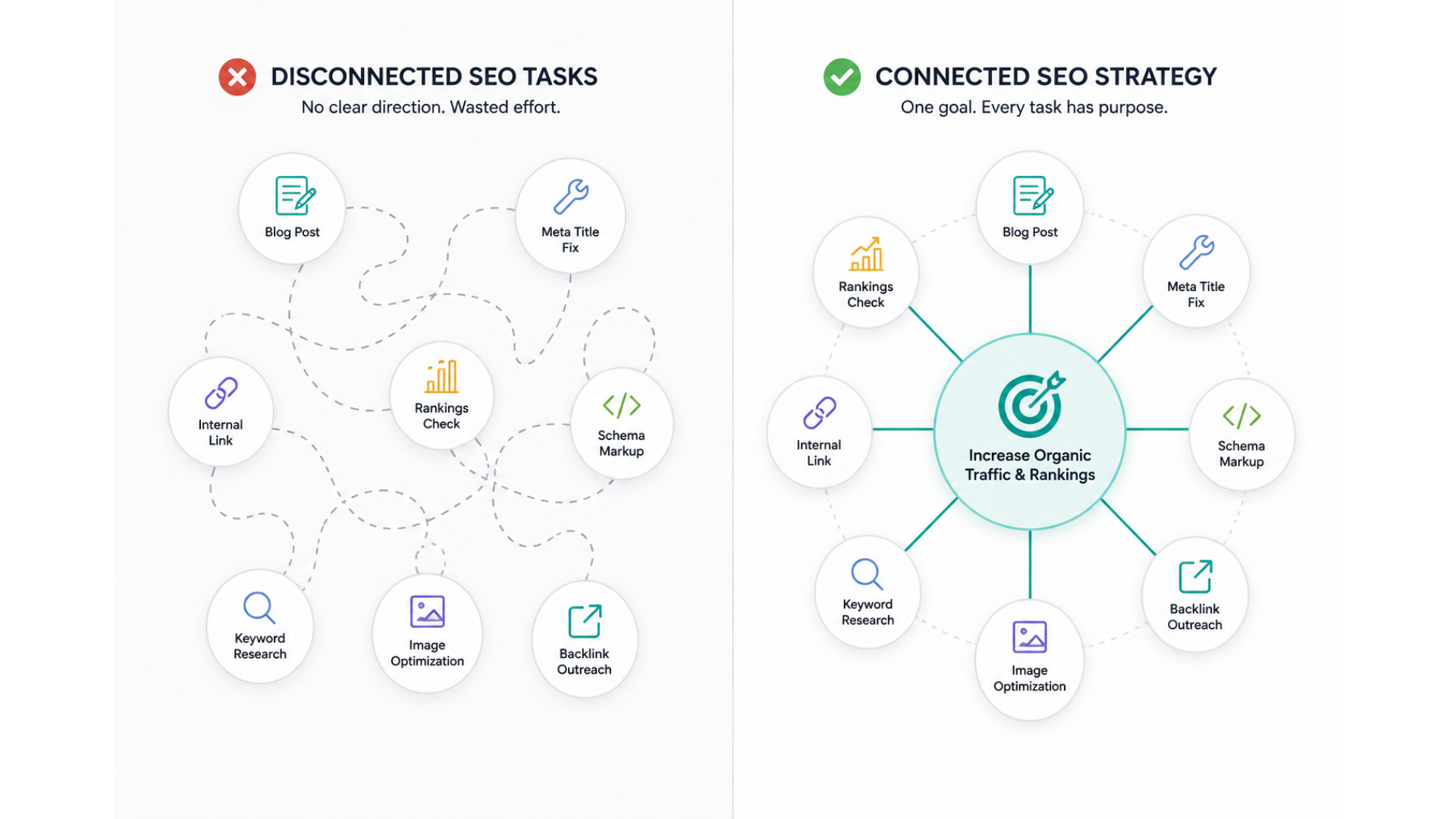
The easiest example is a business publishing blog posts every month while its main service pages stay weak.
The team may be working hard. The content calendar may be full. But if the service pages are unclear, under-optimized, or missing important proof, the blog traffic has nowhere strong to go. The business may get impressions and visits without stronger leads.
A strategic approach would step back and ask: Which pages should drive revenue? Which services need stronger positioning? Which blog topics should support those pages? Which internal links help users move from education to action?
I think of John Moore when explaining this balance. His Smart VAs story connects website development, search engine marketing, SEO reporting, and operational consistency. The lesson is not that one SEO task fixed everything. The lesson is that execution becomes more useful when it supports a larger operating structure and gives the business more room for strategy and client-facing work.
How Does a Clear Strategy Help You Decide What Not to Do?
A good SEO strategy does not only tell you what to do. It also tells you what to ignore for now.
This matters because growing businesses usually have limited time, limited budget, and limited internal bandwidth. Without priorities, every idea can feel urgent. Rewrite the homepage. Start a blog series. Build backlinks. Fix technical issues. Refresh old posts. Launch local SEO. Add schema. Update landing pages. All of those tasks can matter, but not all of them matter first.
At Smart VAs, I look at SEO planning through capacity. If a client can only approve a few items each month, we should not overwhelm the workflow with every possible tactic. We should choose the work that supports the current business stage. Sometimes that means improving service pages. Sometimes it means technical cleanup. Sometimes it means outsourcing SEO work so the internal team can stay focused on sales, delivery, and leadership.
Can You Have Strong Execution Without a Strategy, or a Strategy Without Execution?
You can, but neither situation works well for long.
Execution without strategy creates motion without direction. The work may be completed, but the business may not know whether it is targeting the right search intent, supporting the right offer, or improving the right pages. Strategy without execution creates clarity without movement. Everyone knows what should happen, but nothing gets published, updated, tested, or measured.
That is why I do not see strategy and execution as opposites. They are partners. Strategy protects the business from wasting effort. Execution protects the strategy from staying theoretical.
For Smart VAs clients, the execution gap is often the bigger day-to-day problem. The owner may already understand that SEO matters. They may even have a plan from a consultant or agency. What they need is consistent implementation, clean reporting, and someone who keeps the SEO work from getting buried under everything else.
How Do You Know If Your SEO Program Has a Real Strategy Behind It?
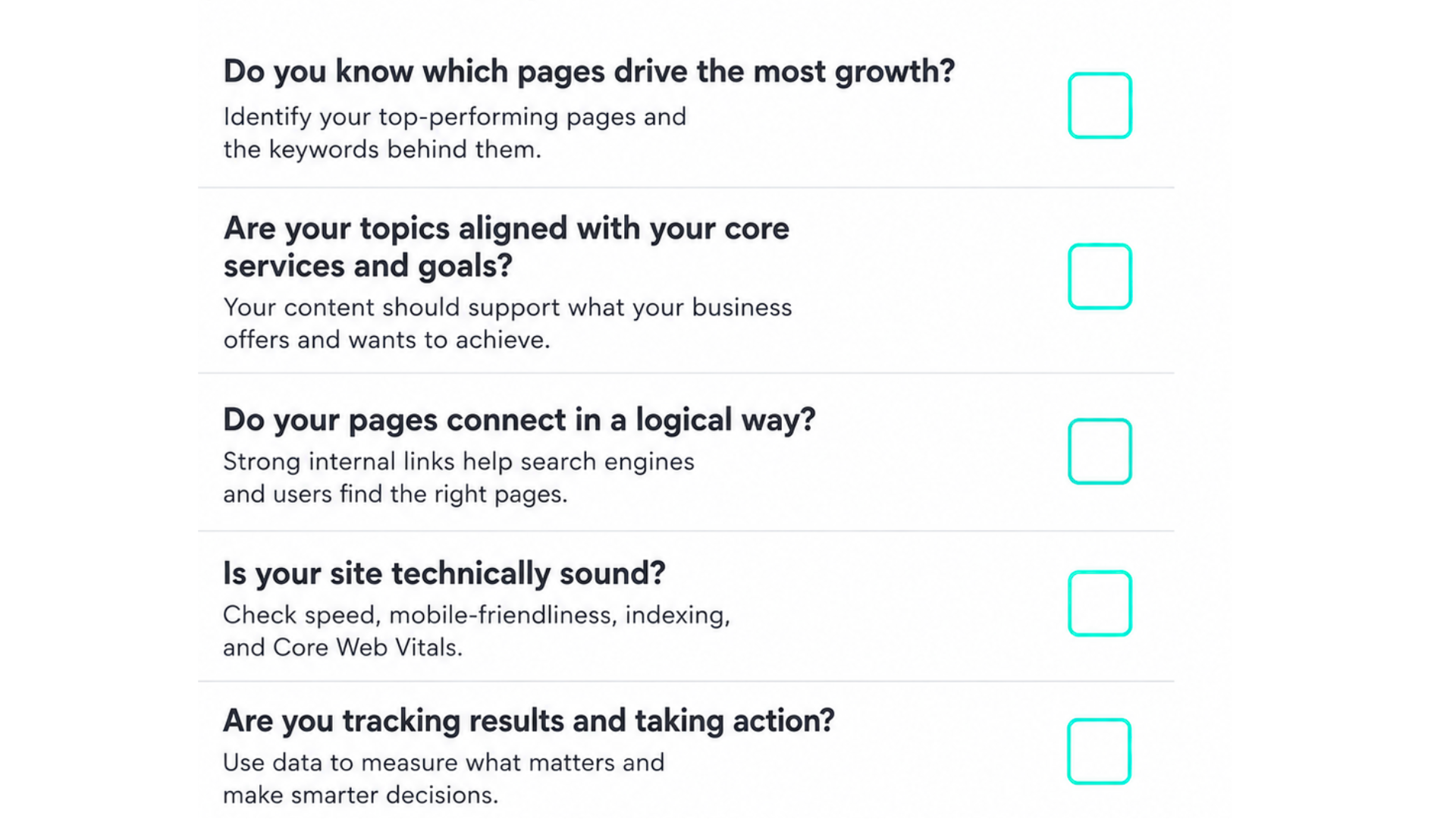
A real SEO strategy should make decisions easier. If every SEO task feels equally important, the strategy is probably not clear enough.
Here is the checklist I would use to diagnose the program:
Do you know which pages are meant to drive leads or sales?
Are your blog topics connected to your core services?
Do your internal links guide readers toward useful next steps?
Are you measuring conversions, inquiries, or qualified actions, not only traffic?
Do you know which technical issues are actually blocking performance?
Can you explain why each current SEO task is being done?
Are content, website updates, and reporting working from the same priority list?
If the answer is no to several of these, the issue may not be effort. It may be missing strategy. Google's link guidance also reinforces why internal links and anchor text should help people and Google understand the page being linked to, which is one reason I treat internal linking as a strategic decision, not just a publishing checklist item.
Do You Need One Partner for Strategy and Another for Execution?
Not always. It depends on where the gap is.
Some businesses need strategic direction first. They do not know which pages to prioritize, which keywords match buyer intent, or how SEO should support their offers. Other businesses already have direction, but execution is inconsistent because no one has time to handle content updates, on-page optimization, reporting, and technical follow-through.
In many growing businesses, the founder, marketing lead, consultant, or agency sets the strategic direction. Then a specialized remote professional or Client Success Partner helps keep the implementation organized. This structure works well when the business does not need another full-time hire, but it does need someone reliable to keep SEO moving.
At Smart VAs, we often support the execution layer through SEO specialists, blog writers, website support, and a Client Success Partner who helps coordinate the moving pieces. That is different from treating SEO as random tasks handed to whoever has free time. It gives the work ownership, rhythm, and follow-through. If you are comparing support options, hiring an SEO expert should come down to whether they can connect technical knowledge with business priorities.
How Do Strategy and Execution Work Together for Long-Term SEO Growth?
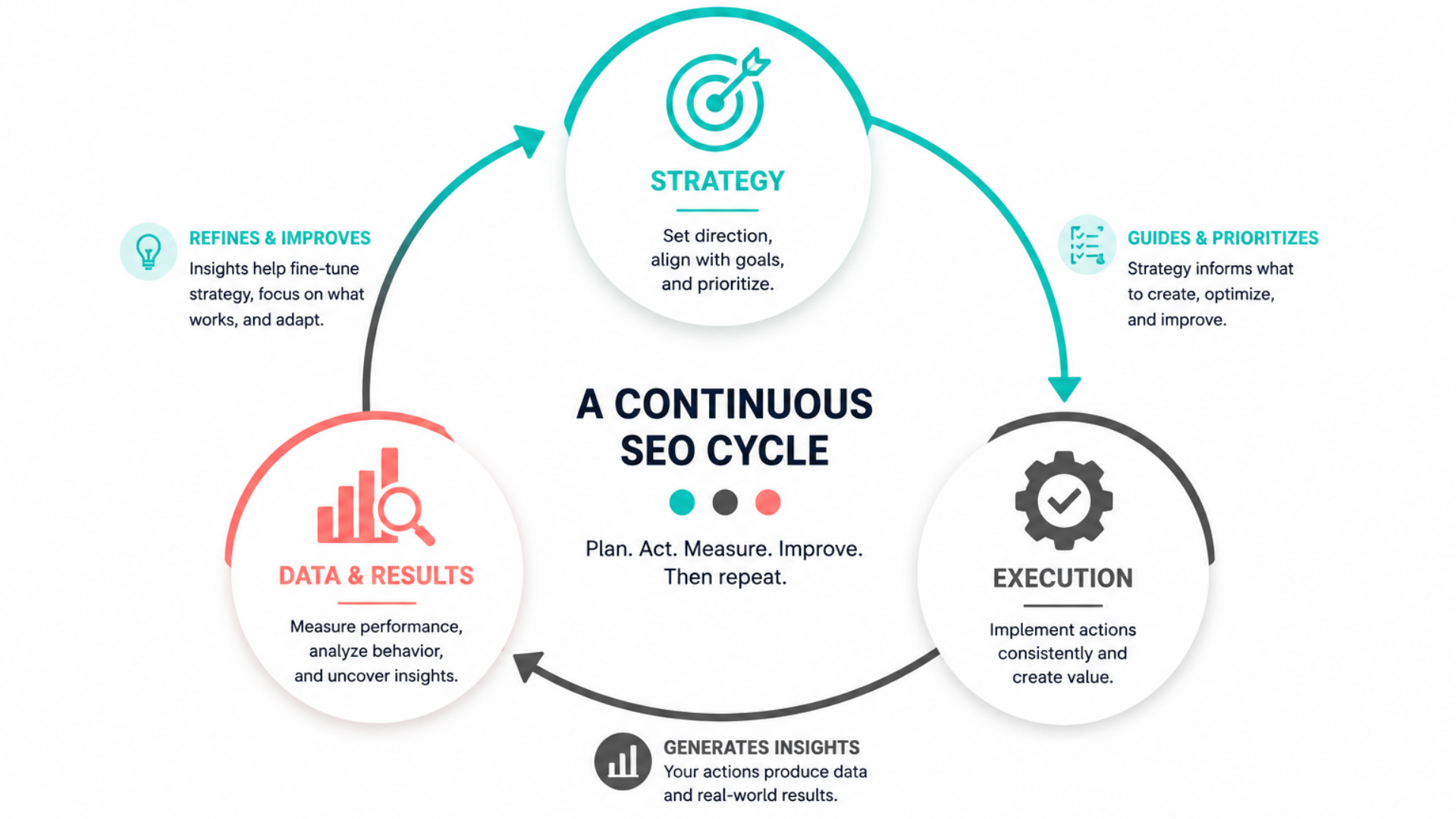
Long-term SEO growth happens when strategy and execution reinforce each other.
The strategy sets the direction. It identifies the right audience, the right keywords, the right pages, and the right priorities. Execution moves the strategy forward through content, technical updates, internal links, schema, reporting, and ongoing improvements.
When both are aligned, SEO feels less random. Blog content supports service pages. Technical fixes support user experience. Local SEO supports the right searches. Reporting shows what should be adjusted next. Even SEO and PPC decisions become clearer because the business understands which channel should support short-term visibility and which should build long-term organic authority.
This is where managed SEO execution can make the difference. Strategy may define the roadmap, but execution keeps the roadmap from collecting dust.
Getting Strategy and Execution Working Together
SEO strategy and SEO execution are not competing ideas. You need both. Strategy gives SEO a reason and direction. Execution turns that direction into visible work that search engines and users can respond to over time.
As an SEO specialist, I have seen how frustrating it can feel when a business is doing the tasks but not seeing the momentum. In many cases, the fix is not to do more. It is to get clearer about what matters, then build a consistent system for getting the right work done.
At Smart VAs, we help growing businesses bridge that gap with SEO specialists, content support, website support, and a managed structure that keeps implementation moving without putting everything back on the owner.
Book a free discovery call to talk through what your SEO program is missing right now: strategy, execution, or both.
Smart Virtual Assistant
👍🤵
Smart Virtual Assistant 👍🤵
What if you could reclaim 40 hours this month?
Find out inside this free guide.
Frequently Asked Questions
-
No. SEO strategy and SEO execution serve different roles. Strategy decides direction and priorities, while execution completes the work. A strong strategy without execution does not create results. Strong execution without strategy can waste time on the wrong tasks. The best SEO programs need both working together.
-
You can complete SEO tasks without a formal strategy, but the results may feel inconsistent. Publishing content, updating metadata, or building links works better when those tasks support clear business goals. At Smart VAs, I prefer to connect execution to a simple priority plan before scaling the workload.
-
When a business only focuses on execution, SEO can turn into busywork. The team may publish often or complete many updates, but the work may not support the right keywords, services, or conversion path. This usually leads to scattered traffic instead of stronger qualified leads.
-
Not always. A small business may start with one experienced SEO partner who can guide priorities and complete implementation. As the workload grows, it often helps to separate direction from execution so strategy stays focused and recurring SEO tasks keep moving consistently.
-
I recommend reviewing SEO strategy at least quarterly, or sooner after major website changes, service changes, ranking shifts, or new business goals. Execution should be monitored more often, but strategy needs enough time to show patterns before making major adjustments.
About the Author:
Sakshi Kulshrestha, SEO Specialist

Sakshi is an SEO Specialist at Smart VAs who helps businesses improve their online visibility and reach the right audiences through strategic, data-driven SEO. She specializes in keyword research, content optimization, technical SEO, and developing search strategies that align with business goals.
With a strong focus on search trends, user intent, and performance data, Sakshi works to create SEO strategies that improve organic rankings, strengthen website visibility, and drive meaningful growth. She combines analytical thinking with a practical approach to SEO, ensuring that optimization goes beyond rankings to support a brand’s overall digital presence and long-term growth.
