SEO vs PPC: Which Marketing Strategy Is Right for Your Business?
Key Takeaways
SEO and PPC are not permanent opposites. They are two search strategies that work best when sequenced around your goals, budget, and timeline.
SEO builds long-term organic visibility, but it takes time, consistent content, technical health, and ongoing optimization.
PPC can create faster visibility and lead flow, but results depend on strong targeting, conversion tracking, landing pages, and regular campaign management.
Most growing businesses eventually need both, but not always at the same time or with the same budget priority.
The right choice depends on how quickly you need leads, how competitive your market is, how mature your website is, and whether your team can execute consistently.

ARE YOU STILL TRYING TO DO IT ALL?
Discover the SMART way to delegate without losing control—and finally free up your time.
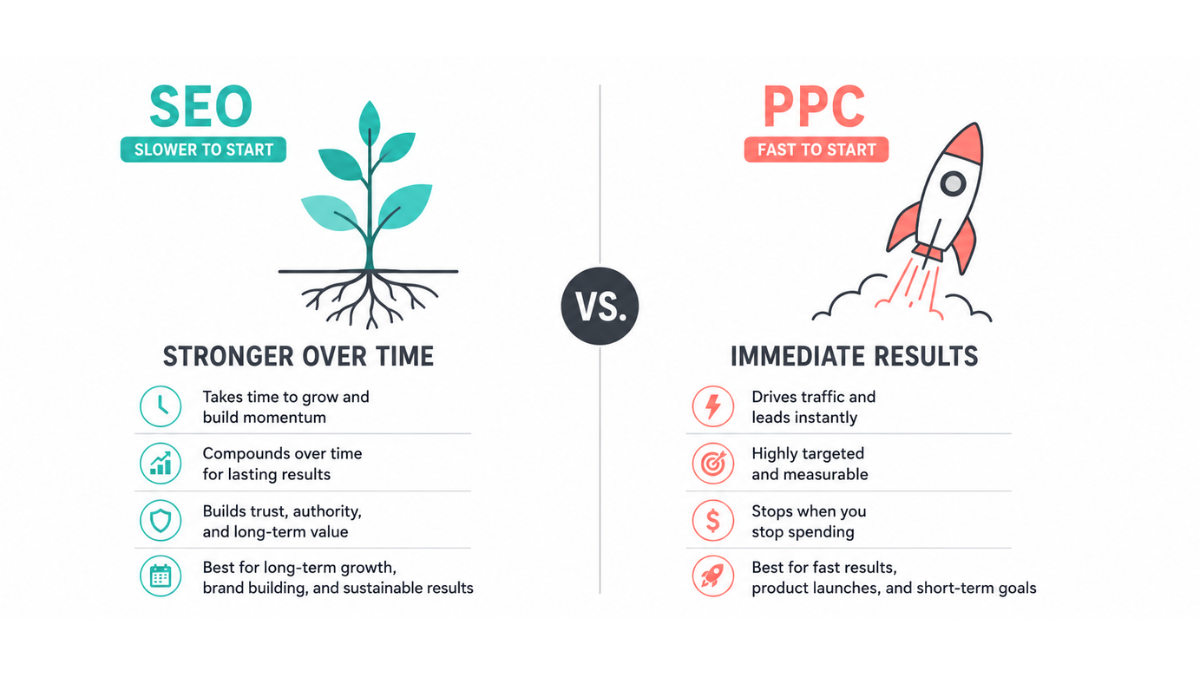
SEO vs PPC is not really a battle between organic and paid search. It is a decision about timing, budget, website maturity, and how quickly your business needs measurable leads.
I talk to business owners all the time who feel stuck between two options: invest in SEO and wait, or run ads and pay for speed. The pressure is real, especially when the budget is limited and every marketing dollar has to work harder.
My answer is rarely “choose SEO” or “choose PPC” without context. The better question is: what does your business need most right now: trust, traffic, testing, leads, or long-term visibility?
In this guide, I’ll walk you through what SEO and PPC actually do, where each one performs best, what they cost beyond the obvious budget, and how we think about execution at Smart VAs when a growing business needs both strategy and support.
What Is SEO and How Does It Work?
SEO is the process of improving a website so search engines can crawl, understand, and rank its pages for relevant searches. It works through content quality, technical health, internal linking, user experience, and authority signals that build over time.
Google’s SEO Starter Guide explains SEO as a way to help search engines understand your content and help users find useful pages. That is why I do not look at SEO as a quick traffic trick. I look at it as a long-term visibility system.
For a growing business, SEO usually includes:
Keyword research based on what buyers are actually searching for.
Helpful service pages and blog content that answer real questions.
Technical improvements so Google can crawl and index the website properly.
Internal links that help people and search engines understand the site structure.
Content updates so older pages do not go stale over time.
Inside Smart VAs, when we support SEO execution, we do not treat it as a one-time upload task. Our professional SEO experts help with ongoing keyword research, content optimization, technical checks, and visibility improvements so the strategy can keep moving while the owner stays focused on the business.
A stronger SEO strategy is not always blocked by knowledge. Often, it is blocked by time. Many founders already understand the basics, but they need SEO strategy work to keep moving while they handle clients, sales, and delivery.
What Is PPC and How Does It Work?
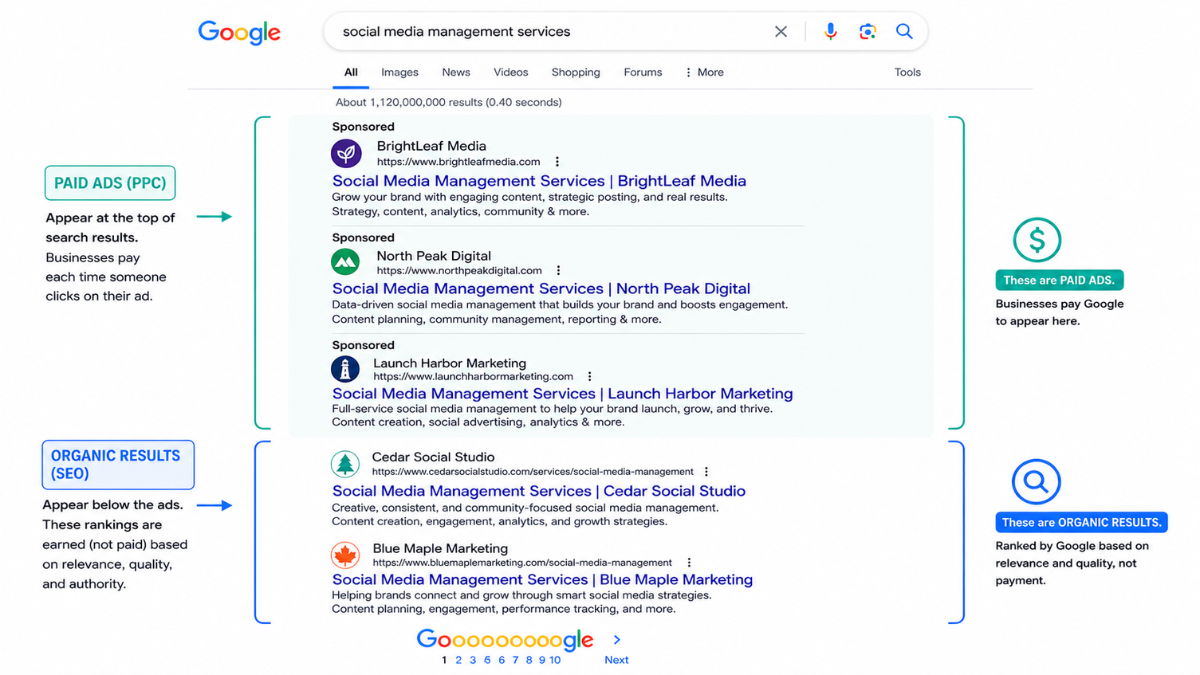
PPC means pay per click. Instead of waiting for organic rankings, a business pays for ad placement and is charged when someone clicks, which makes PPC useful for faster visibility, testing offers, and reaching high-intent searchers quickly.
Google explains that Search ads use an auction system where advertisers set bids and budgets, while ad quality and relevance also affect visibility. Google also explains that Ad Rank helps determine whether and where an ad appears.
PPC can include Google Search campaigns, Performance Max campaigns, remarketing, display ads, YouTube ads, and paid social campaigns. For this article, I’m focusing mainly on paid search because that is where most business owners compare PPC directly with SEO.
A PPC campaign usually depends on:
Clear goals, such as calls, form fills, purchases, or booked consultations.
Keyword and audience targeting that matches buying intent.
Ad copy that makes the offer clear fast.
Landing pages that match the ad promise.
Conversion tracking that shows which clicks actually turn into business value.
At Smart VAs, a Google Ads Specialist can support campaign setup, keyword research, ad monitoring, optimization, and reporting. The goal is not just traffic. The goal is paid visibility that connects to qualified leads and measurable outcomes.
Related Article: How to Build Backlinks Without Paying For Them
What Are the Key Differences Between SEO and PPC?
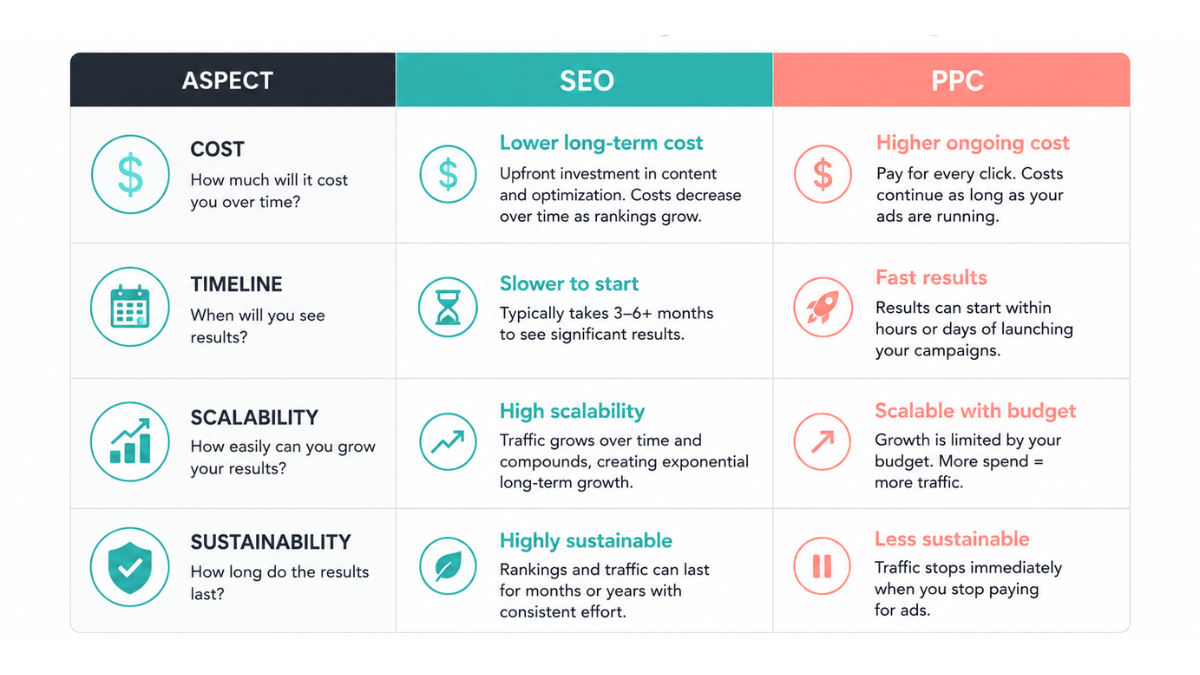
The biggest difference between SEO and PPC is how visibility is earned. SEO earns organic search visibility over time, while PPC pays for placement and can start generating traffic faster when campaigns, tracking, and landing pages are set up correctly.
This is the simple comparison I use with business owners when they are deciding where to invest first.
| Factor | SEO | PPC |
|---|---|---|
| Cost Structure | Investment goes into content, technical SEO, optimization, and ongoing maintenance. | Investment goes into ad spend, campaign management, testing, and landing page improvements. |
| Timeline to Results | Usually slower because rankings build over time. | Usually faster because ads can launch once tracking and campaigns are ready. |
| Sustainability | Can continue producing traffic after the work compounds, but still needs maintenance. | Traffic usually stops when spend stops. |
| Control | Less direct control over rankings because algorithms and competitors change. | More direct control over budget, targeting, ad copy, and landing pages. |
| Best Use Case | Long-term visibility, authority, and lower dependency on paid traffic. | Fast testing, lead generation, launches, and competitive search visibility. |
| Main Risk | Slow results if the website lacks authority, content depth, or technical health. | Wasted spend if targeting, tracking, or landing pages are weak. |
The right choice depends on what problem you are trying to solve. If your website is invisible but you need leads this month, PPC may help you create movement faster. If paid traffic is getting expensive and you want stronger long-term visibility, SEO deserves serious attention.
This is also why a fully managed specialist team can be helpful. SEO and PPC both need steady execution, but they require different skills, different tools, and different review rhythms.
What Are the Pros and Cons of SEO?
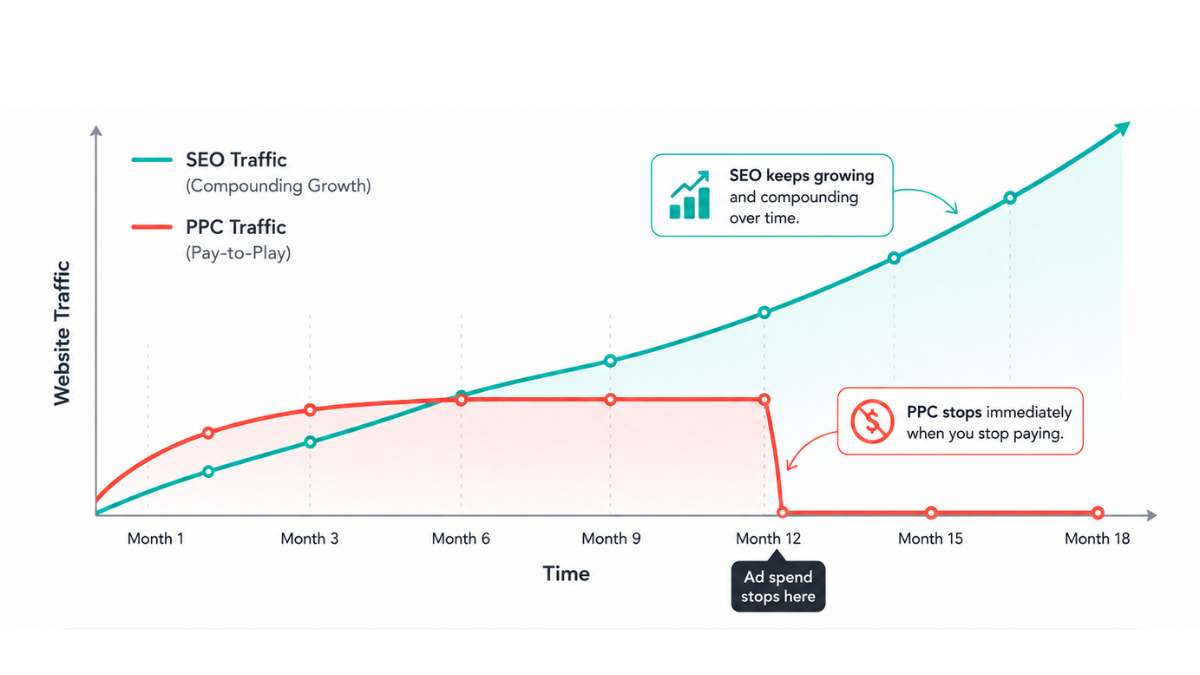
SEO is best when a business wants long-term visibility, trust, and compounding search traffic. It is not best when a company needs immediate lead flow, has no content foundation, or expects rankings to appear without consistent work.
The strongest benefit of SEO is that it can build durable visibility. A strong page can keep attracting qualified visitors long after it was first published, especially when it is maintained and updated.
SEO can build trust because organic results often feel less interruptive than ads.
SEO can support long-tail searches that reveal very specific buyer problems.
SEO can reduce overdependence on paid traffic over time.
SEO content can support sales calls, email campaigns, social posts, and AI search visibility.
The tradeoff is patience. SEO results can be affected by competition, technical issues, algorithm changes, weak content, or a site that has not built enough authority yet.
SEO also depends on content that answers the right questions clearly. When we support clients with blogs, we focus on search intent, internal links, and SEO-friendly blog posts that are useful for readers instead of written only for rankings.
What Are the Pros and Cons of PPC?
PPC is best when a business needs faster visibility, controlled targeting, and measurable testing data. It is not best when the business has weak tracking, unclear offers, poor landing pages, or no budget for ongoing optimization.
The biggest advantage is speed. If your campaign is built well, you can get your offer in front of searchers who already show intent.
PPC can support new service launches, promotions, and urgent lead-generation goals.
PPC gives more control over targeting, geography, budget, ad copy, and landing pages.
PPC can reveal which keywords and offers convert before you invest heavily in SEO content.
PPC can help retarget people who already visited your site but did not act.
The downside is that paid traffic has a direct cost. If your ad sends people to a slow page, a confusing offer, or the wrong call to action, you still pay for the click even when the visitor leaves.
This is why paid search support should never stop at “turn on the campaign.” PPC needs regular testing, landing page alignment, and strong campaign management because ad performance depends on much more than clicks.
When Should You Prioritize SEO Over PPC?
You should prioritize SEO when your goal is long-term visibility, trust building, and sustainable organic traffic. SEO is especially valuable when your buyers research before purchasing, your industry has expensive ad clicks, or your business needs stronger authority over time.
I usually recommend leading with SEO when a business has time to build, a website that can support content, and a clear understanding of the questions buyers ask before they contact you.
You sell services that require trust before someone books a call.
Your market has many educational searches, comparison searches, or “how do I choose” searches.
Your ad costs are high enough that relying only on PPC feels risky.
You want content that supports sales, email, and social media, not just search rankings.
You have the patience and capacity to publish, update, and optimize consistently.
At Smart VAs, we often see owners who know they need SEO but cannot keep up with keyword research, content briefs, blog updates, and optimization. That is a good signal that execution support may matter as much as strategy.
When Should You Prioritize PPC Over SEO?
You should prioritize PPC when you need faster traffic, offer testing, immediate lead generation, or visibility in a competitive market where organic rankings will take time. PPC is also useful when a business needs data quickly before committing to a bigger content strategy.
PPC can be the better first move when waiting six months for organic visibility would slow the business down. It is often useful during launches, seasonal offers, local promotions, and competitive service searches.
You are launching a new service and need traffic within weeks.
You need to test which message, offer, or keyword converts before building content around it.
You are entering a market where competitors already dominate organic search.
You have a focused landing page and a clear action for visitors to take.
You have conversion tracking in place so you can tell what is actually working.
When we support PPC, we pay attention to the whole path: keyword, ad, landing page, conversion action, and reporting. That is where many campaigns break. The ad may be fine, but the follow-through is weak.
Can You Use SEO and PPC Together for Better Results?
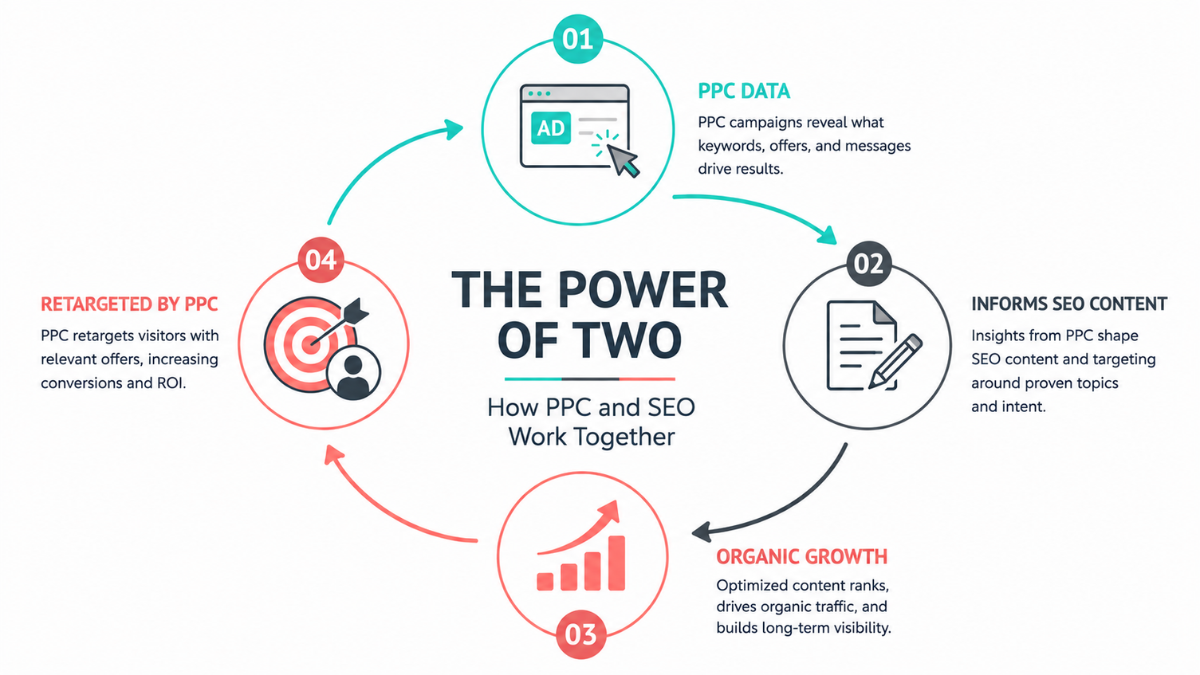
Yes, SEO and PPC often work better together because paid search can create faster testing data while SEO builds long-term visibility. The strongest marketing programs use both channels intentionally instead of treating them as competitors forever.
PPC can show you which keywords, headlines, and offers convert. SEO can then turn those insights into helpful content, service pages, and long-term search visibility.
Use PPC conversion data to decide which SEO pages deserve priority.
Use high-performing organic content as a landing page or retargeting asset.
Use SEO to lower long-term dependence on paid traffic.
Use PPC to promote important offers while SEO is still gaining traction.
Use both channels to understand search intent from different angles.
When Gabe Gibitz of Blue Guru Marketing came to Smart VAs, he was stretched across web development, SEO, client communications, and project management. Gabe’s experienceis a good reminder that growth often creates an execution problem before it creates a strategy problem.
That is why I rarely think of SEO and PPC as isolated tactics. They sit inside the same growth system. The more aligned they are, the clearer your data becomes.
That Are the Hidden Costs of SEO and PPC?
SEO and PPC both cost more than the obvious line item. SEO costs include content, tools, technical work, and maintenance. PPC costs include ad spend, campaign management, testing, landing page improvements, and tracking setup.
I do not recommend making this decision based only on “free traffic” versus “paid traffic.” Organic traffic is not free if it requires content, research, design, technical fixes, and consistent updates. Paid traffic is not simple if every click needs tracking, testing, and conversion review.
| Hidden Cost Area | SEO | PPC |
|---|---|---|
| Execution Time | Research, writing, optimization, publishing, updating, and reporting. | Campaign setup, keyword review, ad testing, audience checks, and reporting. |
| Technical Support | Crawlability, site structure, page speed, schema, and indexing fixes. | Conversion tracking, landing page performance, and analytics setup. |
| Creative Needs | Helpful content, graphics, service page copy, and internal links. | Ad copy, landing page copy, visuals, offers, and calls to action. |
| Maintenance | Old content needs refreshes as rankings, competitors, and search behavior change. | Budgets, bids, search terms, and assets need regular review. |
| Opportunity Cost | Slow execution delays long-term search visibility. | Poor tracking or landing pages can waste spend quickly. |
Bandwidth matters just as much as channel choice. When organic visibility needs more planning and execution than an internal team can handle, SEO outsourcing can help growing businesses keep the work consistent.
How Do You Decide Which Strategy Fits Your Business Right Now?
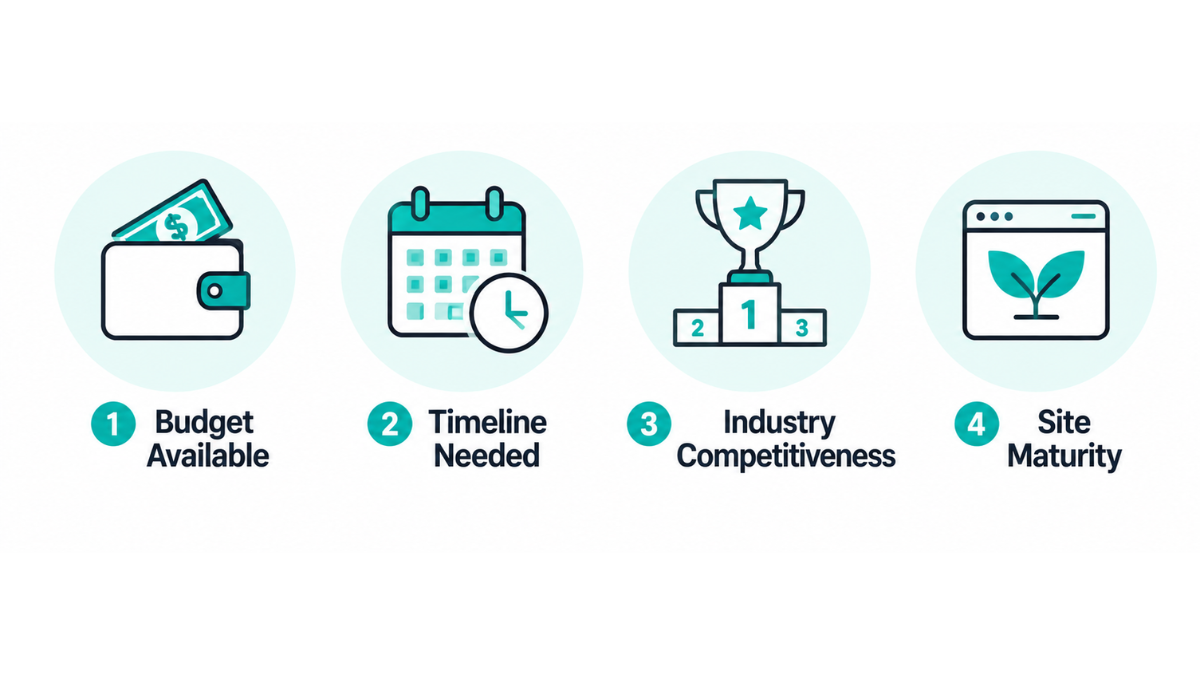
The right choice depends on your timeline, budget, website quality, market competition, and internal capacity. If you need leads quickly, PPC may help first. If you need durable visibility and trust, SEO should become a priority.
Here is the simple decision framework I would use before investing heavily in either channel.
| Question | Lean Toward SEO If... | Lean Toward PPC If... |
|---|---|---|
| How fast do you need results? | You can wait for traffic to build over time. | You need visibility or leads within weeks. |
| How strong is your website? | You have useful pages and can keep improving content. | You have a strong landing page ready for conversion. |
| How competitive is your market? | Organic opportunities still exist in local or niche searches. | Organic rankings are dominated and you need immediate presence. |
| How clear is your offer? | You need content to educate buyers before they act. | You have a clear offer that can be tested quickly. |
| How much can your team execute? | You can publish and optimize consistently. | You can monitor budget, tracking, and campaign performance consistently. |
If you answered “both” more than once, that does not mean you need to do everything at full speed today. It means you need sequencing. Start with the channel that solves the most urgent bottleneck, then build the other one in parallel when capacity allows.
How Can You Execute an SEO or PPC Strategy Without Doing It All Yourself?
Most businesses eventually need both SEO and PPC, but they do not always need to build a full internal department to manage them. The key is consistent execution, clear reporting, and specialist support that matches the stage of the business.
This is the part many founders underestimate. Choosing the strategy is only the beginning. Someone still has to research keywords, update pages, monitor campaigns, review conversions, improve landing pages, and connect the work back to business goals.
At Smart VAs, we help owners build the support structure around that execution. A Client Success Partner helps keep communication clear, while a Specialized Remote Professional can focus on SEO, paid campaigns, content updates, or website support depending on what the business needs most.
For companies comparing channels, our Professional SEO Experts can help with organic visibility, while our Google Ads Specialist support can help manage paid search campaigns and ongoing optimization. When traffic is coming in but conversions are weak, website design specialist support can also help improve the pages those visitors land on.
The same idea applies when search is only one part of a larger growth plan. Managed remote assistant services can help keep SEO, PPC, website updates, content, and reporting from falling back on the founder every week.
Delegation is not just a task — it is a strategy. When the right support system is in place, your business does not have to choose between staying visible and staying focused.
Ready to decide what your search strategy needs next? Book a discovery call with Smart VAs and let’s look at where SEO, PPC, or both can support your next stage of growth.
Conclusion: SEO vs PPC Is Really About Timing and Execution
SEO and PPC both work when they are matched to the right goal. SEO builds long-term visibility, authority, and trust. PPC creates faster reach, testing data, and controlled traffic when the campaign is managed well.
The smartest question is not “Which one wins?” It is “Which one does my business need first, and who will execute it consistently?”
Pick the strategy that solves today’s bottleneck, then build toward a marketing system where SEO and PPC support each other instead of competing for attention.
Smart Virtual Assistant
👍🤵
Smart Virtual Assistant 👍🤵
What if you could reclaim 40 hours this month?
Find out inside this free guide.
Frequently Asked Questions
-
SEO is usually better for long-term visibility, while PPC is better for faster traffic and testing. A small business should choose based on timing, budget, and website readiness. If you need leads quickly, PPC may help first. If you want lasting organic presence, SEO deserves priority.
-
Yes. SEO and PPC can work together when the budget and team capacity support both. PPC can reveal which keywords and offers convert, while SEO turns those insights into long-term content and service pages. The key is tracking both channels clearly instead of managing them separately.
-
PPC can start generating traffic soon after launch if tracking, targeting, and landing pages are ready. SEO usually takes longer because search visibility builds through content, technical quality, and authority. The exact timeline depends on competition, website history, content quality, and how consistently the strategy is executed.
-
PPC can still be useful if you want to test new offers, protect branded searches, retarget organic visitors, or support a launch. Strong organic rankings do not always cover every keyword, audience, or buying stage. Paid campaigns can add control and speed where SEO is less predictable.
-
SEO can become more cost-effective over time because strong pages may continue attracting traffic after the initial work. PPC usually requires ongoing ad spend to keep traffic flowing. However, SEO still needs content, technical updates, and reporting, so the better comparison is total execution cost, not only media spend.
About the Author:
Kristy Yoder, Founder

Kristy Yoder is the Founder of Smart VAs, a virtual assistant agency that helps entrepreneurs grow through reliable administrative and digital marketing support. With extensive experience building and managing remote teams, she specializes in delegation, operational efficiency, and scalable business growth.
Passionate about helping business owners reclaim their time, Kristy leads Smart VAs in connecting entrepreneurs with skilled virtual professionals who provide dependable support and contribute to long-term success.