Key Takeaways
Professional Shopify management includes technical maintenance, catalog updates, marketing support, reporting, and ongoing store improvement.
Slow pages, broken checkout paths, product catalog issues, and missed marketing follow-through are often symptoms of a larger management gap.
Shopify says web performance can affect customer experience, conversion rate, and discoverability, so maintenance is not just a technical concern.
DIY management can look cheaper at first, but it can cost more when owner time, missed sales, and preventable errors pile up.
Smart VAs is a better fit when a store needs consistent execution across website updates, SEO, paid ads, catalog tasks, and marketing support.

ARE YOU STILL TRYING TO DO IT ALL?
Discover the SMART way to delegate without losing control—and finally free up your time.
Shopify management is the ongoing work of keeping your online store accurate, fast, easy to use, and connected to your sales and marketing goals. If your store owner role has turned into product uploads, app issues, customer emails, site fixes, marketing tasks, and inventory checks, the problem may not be one isolated task. It may be that the store has outgrown casual maintenance.

I see this often with growing ecommerce businesses. A slow page looks like a small technical problem. A missed restock looks like a one-time mistake. A delayed campaign looks like a busy week. But when those issues keep repeating, they usually point to the same thing: no one is consistently managing the store as a business asset.
In this guide, I’ll walk through the clearest signs your Shopify store needs professional management, what that support can include, and how to decide whether a Dedicated Remote Professional or Managed Specialist Team is the right next step.
What Does Professional Shopify Management Actually Include?
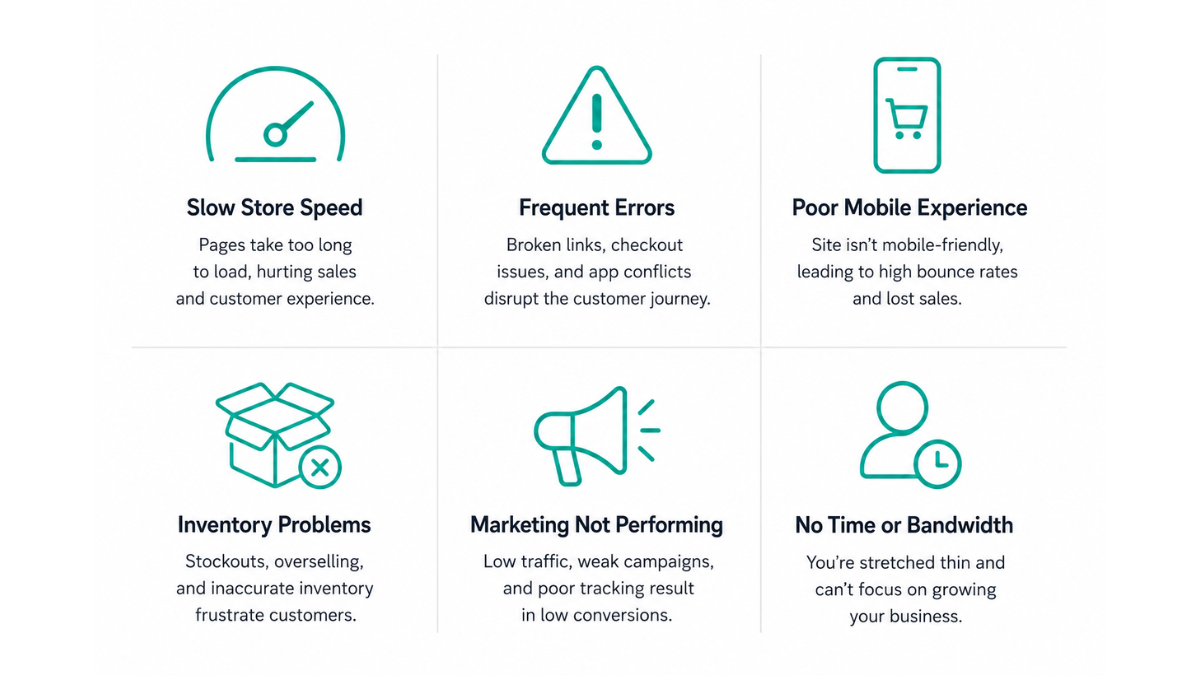
Professional Shopify management includes the recurring tasks that keep an ecommerce store running, selling, and improving over time. It usually covers technical maintenance, product catalog updates, inventory coordination, website improvements, reporting, SEO support, and marketing execution so the store does not depend on the owner catching every issue manually.
At Smart VAs, I look at Shopify management as a mix of operations and growth support. A store needs accurate products, working pages, clear reporting, and marketing follow-through. If only one of those areas is handled, the store can still feel messy behind the scenes.
Professional management may include product uploads, collection updates, app checks, broken link reviews, basic SEO edits, campaign support, customer service coordination, inventory tracking, and simple performance reporting.
This is why a Shopify store does not always need a full redesign first. Sometimes it needs consistent ownership of the small tasks that keep the customer experience clean.
| Area | What Professional Management May Include |
|---|---|
| Technical Maintenance | App checks, theme updates, broken links, page errors, speed review |
| Catalog Operations | Product uploads, variants, collections, pricing, inventory coordination |
| Marketing Execution | SEO updates, campaign support, conversion checks, reporting follow-through |
| Customer Experience | Mobile usability, navigation checks, checkout flow review, product clarity |
Is Your Site Speed Quietly Costing You Sales?
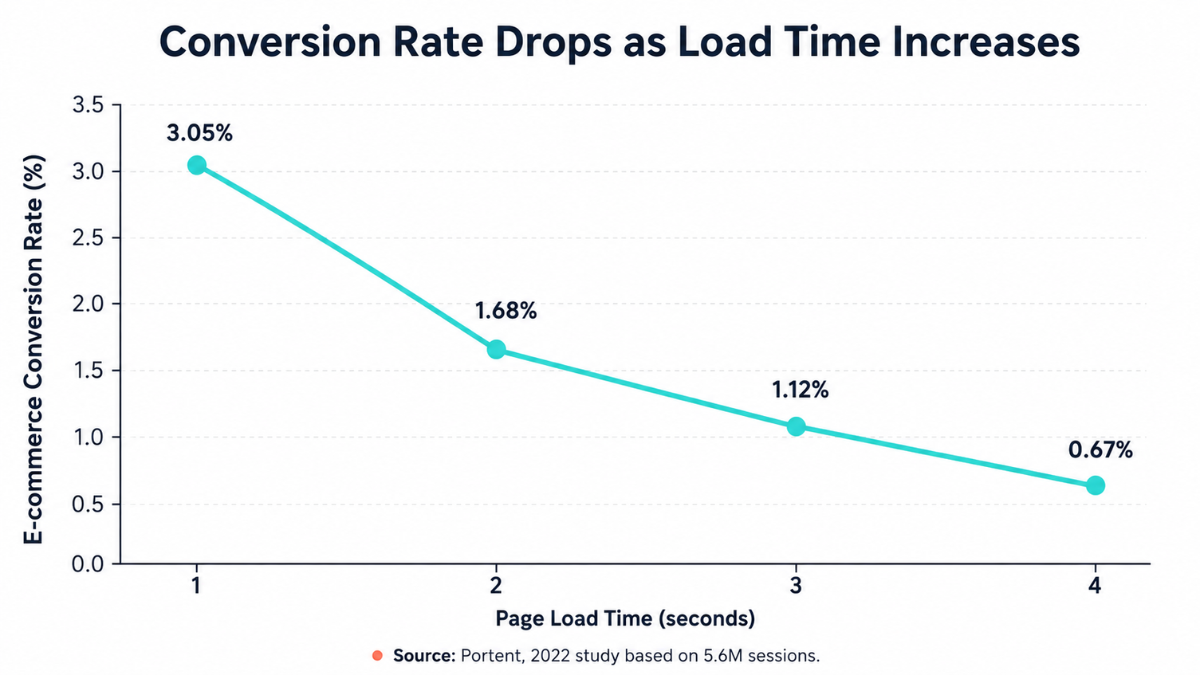
Site speed matters because customers expect online stores to load quickly and work smoothly. Shopify explains that web performance can affect the shopping experience, conversion rate, and discoverability, which means a slow store is not just a technical inconvenience. It can directly weaken sales performance.
A slow Shopify store can be caused by heavy images, too many apps, old theme code, large videos, pop-ups, third-party scripts, or changes that were added without checking performance afterward.
Google has also reported that many mobile visits are abandoned when pages take longer than three seconds to load. I do not use that as a scare tactic. I use it as a reminder that speed affects how quickly a shopper decides whether to stay or leave.
Inside Smart VAs, this is where website updates and user experience fixes matter. A beautiful store still needs to load well, guide shoppers clearly, and make buying feel easy.
Are Broken Links, Errors, or Security Issues Piling Up?
Broken links, checkout errors, outdated apps, and theme issues are signs that Shopify store maintenance is no longer happening consistently. One small error may be easy to fix, but repeated issues can create technical debt that affects trust, conversion, and the owner’s ability to focus on growth.
Common warning signs include 404 pages, broken navigation, discount codes that do not work, checkout confusion, apps that conflict with each other, outdated theme sections, and product links that lead nowhere.
Customers rarely know why a store feels unreliable. They just notice that something does not work, and many leave without saying anything.
A Managed Specialist Team helps because maintenance is not left to memory. Someone is responsible for reviewing the store, updating what needs attention, and flagging risks before they become bigger issues.
Is Your Store Actually Optimized for Mobile Shoppers?
A mobile-friendly Shopify store is more than a site that shrinks to fit a phone screen. It should load quickly, make products easy to browse, keep buttons simple to tap, reduce checkout friction, and help shoppers complete a purchase without confusion.
I always remind business owners that many shoppers experience the store on a small screen first. If product images are hard to view, buttons are too close together, forms are clunky, or checkout feels slow, the store may be losing buyers who were ready to act.
Mobile optimization also needs to be checked after new apps, banners, theme changes, and product page updates. A store can be mobile-friendly today and messy next month if changes are not reviewed.
For stores that need bigger design changes, outsourcing website design can help protect the customer journey without pulling the owner into every layout and usability decision.
This is one reason I like having website design support close to ongoing Shopify management. Design and maintenance should not live in separate silos when the customer experience depends on both.
Is Inventory or Product Catalog Chaos Slowing You Down?
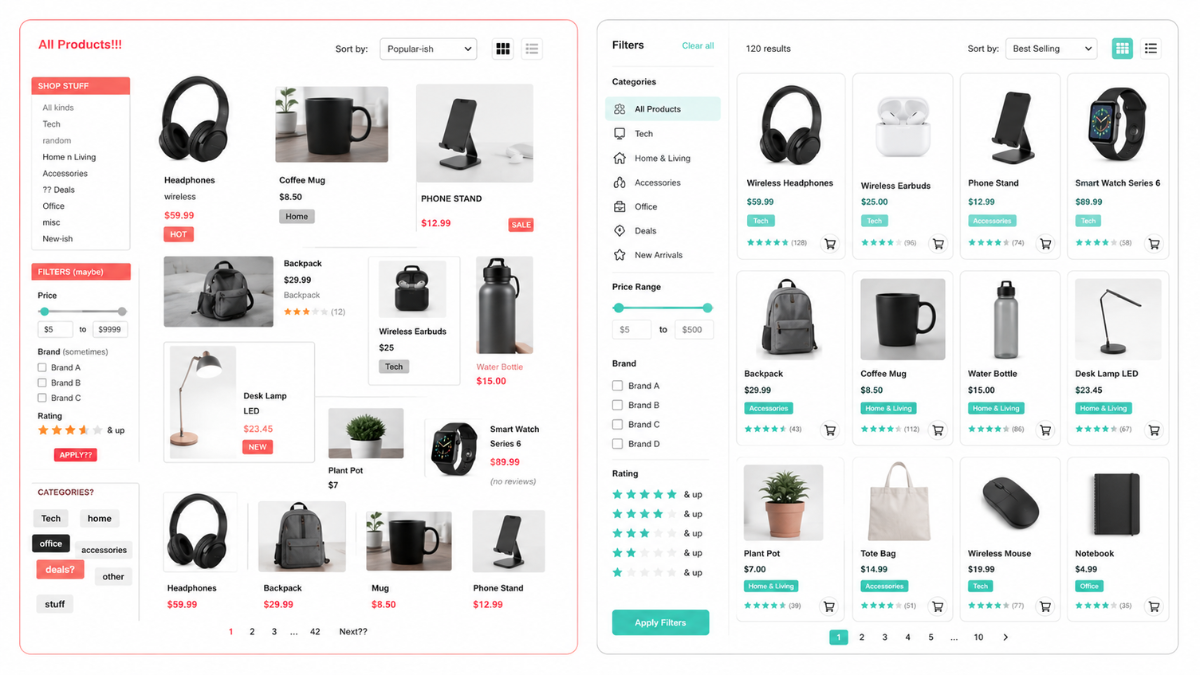
Catalog problems are one of the clearest signs a Shopify store needs better management. When product titles, variants, pricing, stock levels, descriptions, images, and collections are inconsistent, shoppers get confused and the owner spends too much time fixing preventable issues.
Catalog chaos shows up in practical ways: overselling, missing product images, inconsistent SKU naming, outdated product descriptions, duplicate products, incorrect collections, and inventory counts that do not match reality.
At first, these issues look like admin problems. As the store grows, they become customer experience problems. A shopper who cannot find the right variant or trust the stock status is less likely to complete the order.
A Dedicated Remote Professional can help keep product data organized while the owner focuses on sourcing, pricing, customer relationships, and growth planning.
Are You Struggling to Keep Up With Marketing and Conversion Optimization?
A Shopify store needs more than products and checkout functionality. It also needs consistent marketing, SEO, ad support, email follow-through, product page improvements, and reporting. When no one owns those tasks, traffic can stall and conversion problems can go unnoticed.
I often see store owners treat marketing as something they will handle after operations calm down. The problem is that operations rarely calm down on their own.
This is where SEO support and Google Ads support can work alongside store management. SEO helps improve search visibility over time, while paid campaigns can support launches, promotions, and seasonal pushes when the store is ready to convert.
The key is not doing every marketing activity at once. It is making sure the right tasks happen consistently and connect back to the store’s actual sales goals.
Are You Spending More Time on Technical Tasks Than Growing Your Business?
Your Shopify store may need professional management when technical tasks start replacing the work only you can do as the owner. If you spend your best hours fixing pages, checking apps, uploading products, or chasing small errors, your store is taking time away from growth.
This is the bandwidth signal I pay the most attention to. A founder can do many tasks, but that does not mean they should continue doing all of them.
The real cost is what those tasks displace: vendor relationships, new product planning, customer conversations, brand partnerships, pricing decisions, and long-term strategy.
Client feedback often reminds me that business owners are not only looking for task completion. They are looking for reliability, communication, and the peace of mind that work is not falling through the cracks.
Is DIY Shopify Management Actually Costing You More Than It Saves?
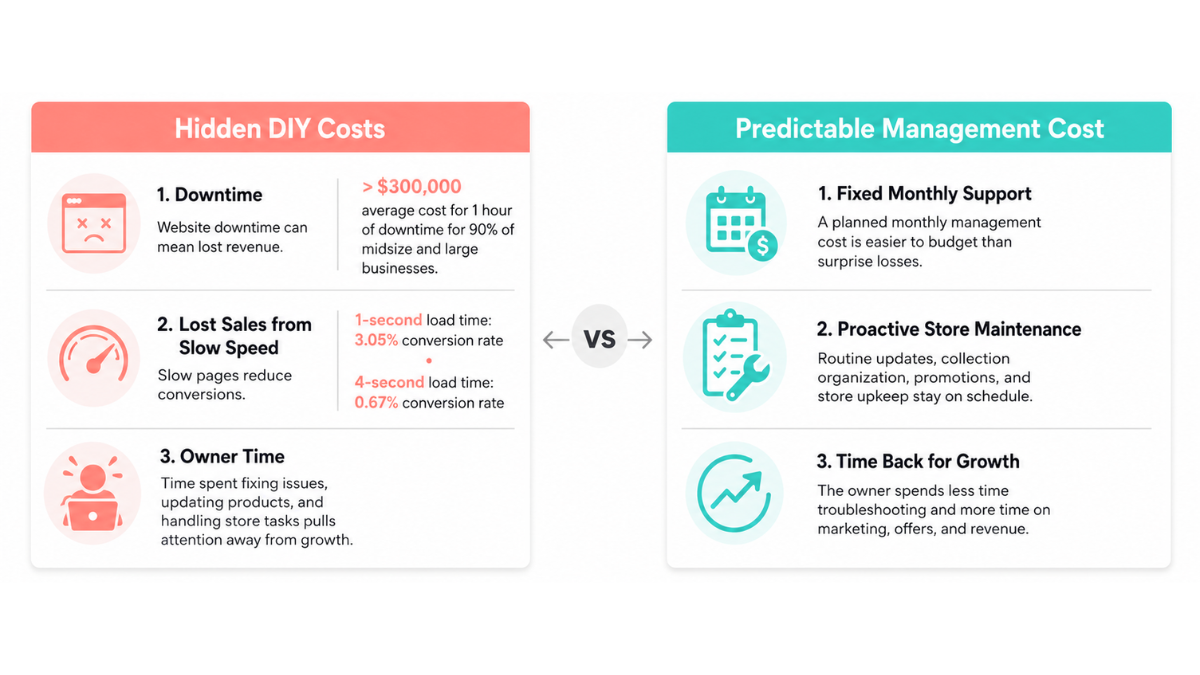
DIY Shopify management can look cheaper because there is no monthly service fee. But it may cost more when store issues lead to lost sales, missed campaigns, inconsistent inventory, weak reporting, customer frustration, or hours of owner time spent on work that should be delegated.
I do not believe every store needs professional management on day one. If the store is small, simple, and stable, DIY may be reasonable for a while.
But as the store grows, the math changes. A store owner may save money on support but lose time, focus, and opportunities every week.
The question I ask is simple: is managing the store yourself still protecting the business, or is it now slowing the business down?
How Much Does Professional Shopify Management Typically Cost?
Shopify management services cost depends on the scope of work, store complexity, task frequency, marketing needs, and technical support required. A basic maintenance plan will usually cost less than full store management that includes catalog updates, reporting, SEO support, paid campaign coordination, and ongoing optimization.
I avoid giving one flat price because Shopify stores are not all built the same way. A small product catalog with light monthly updates is very different from a store with frequent launches, multiple apps, active campaigns, and recurring product changes.
The better way to evaluate cost is by workload and risk. Ask what needs to happen weekly, what breaks most often, what work delays sales, and what tasks only the owner currently knows how to do.
A professional setup should give you clarity on scope, communication, turnaround expectations, and how support can adjust as the store grows.
What Should You Look For in a Shopify Management Partner?
A strong Shopify management partner should understand both the technical and commercial sides of ecommerce. Look for clear communication, practical platform experience, marketing awareness, transparent scope, responsive support, and a process for keeping store tasks organized instead of handled randomly.
Important questions to ask include: Who owns the task list? How are updates requested? How often are reports reviewed? What happens if the store has an urgent issue? How are product updates checked before going live?
Red flags include vague pricing, no dedicated point of contact, unclear turnaround times, rigid support that cannot adjust, and a provider that only fixes isolated tasks without looking at the store’s bigger workflow.
At Smart VAs, I prefer a managed structure because ecommerce support usually touches more than one skill set. Store owners may need product updates one week, SEO outsourcing support the next, and improving Google Ads ROI during a promotion.
| Area | What Professional Management May Include |
|---|---|
| Technical Maintenance | App checks, theme updates, broken links, page errors, speed review |
| Catalog Operations | Product uploads, variants, collections, pricing, inventory coordination |
| Marketing Execution | SEO updates, campaign support, conversion checks, reporting follow-through |
| Customer Experience | Mobile usability, navigation checks, checkout flow review, product clarity |
How Can a Managed Specialist Team Keep Your Store Running Without the Guesswork?
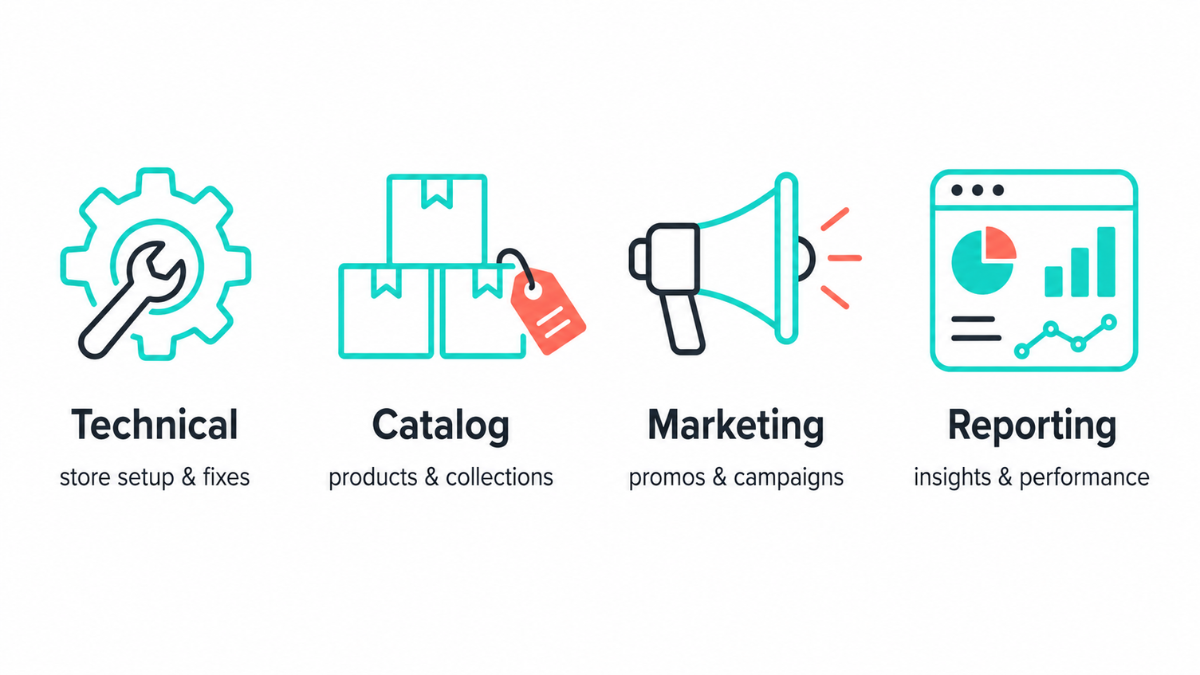
A Managed Specialist Team is a strong fit when your Shopify store needs ongoing execution across maintenance, website updates, catalog work, marketing support, and reporting. The goal is not to remove the owner from strategy. It is to remove the constant guesswork from daily store management.
Smart VAs gives business owners access to a fully managed team of specialists, coordinated with clear communication and accountability. That matters because Shopify management is rarely just one task. It often involves website, SEO, ads, product data, and customer experience working together.
If your store is starting to feel heavier than it should, the next step is not always hiring internally. It may be building a support structure that can keep the store clean, current, and ready to sell.
Delegation is not just a task — it is a strategy. Schedule your free discovery call when you are ready to talk through what your store needs most.
Smart Virtual Assistant
👍🤵
Smart Virtual Assistant 👍🤵
What if you could reclaim 40 hours this month?
Find out inside this free guide.
Frequently Asked Questions
-
Your Shopify store may need professional management when site issues, product updates, inventory tasks, mobile problems, or marketing follow-through start taking too much owner time. If the same issues repeat weekly or you are constantly reacting instead of improving the store, support can help.
-
Shopify store management services can include product uploads, catalog updates, app checks, theme maintenance, broken link reviews, mobile testing, reporting, SEO support, paid campaign coordination, and conversion improvements. The exact scope depends on the store’s size, complexity, and growth goals.
-
Shopify management services cost depends on how much support the store needs. Basic maintenance usually costs less than full management that includes technical updates, catalog support, marketing execution, and reporting. The best estimate comes from reviewing workload, store complexity, and update frequency.
-
Yes, you can manage your Shopify store yourself while it is simple and stable. But as products, apps, orders, campaigns, and customer expectations increase, DIY management can become harder to sustain. The right time to delegate is when store upkeep starts slowing growth.
-
Shopify maintenance can still be worth it if your store runs okay today but depends on consistent updates, active campaigns, product changes, or mobile performance. Maintenance helps prevent small issues from becoming sales, trust, or customer experience problems later.
About the Author:
Kristy Yoder, Founder

Kristy Yoder is the Founder of Smart VAs, a virtual assistant agency that helps entrepreneurs grow through reliable administrative and digital marketing support. With extensive experience building and managing remote teams, she specializes in delegation, operational efficiency, and scalable business growth.
Passionate about helping business owners reclaim their time, Kristy leads Smart VAs in connecting entrepreneurs with skilled virtual professionals who provide dependable support and contribute to long-term success.