How Managed Google Ads Services Improve Lead Quality
Key Takeaways
Lead quality in Google Ads is not the same as lead volume. A campaign can look healthy in the ad dashboard while still sending poor opportunities to sales.
The biggest lead-quality improvements usually come from cleaner conversion signals, stronger keyword intent, negative keyword cleanup, better landing pages, and CRM feedback loops.
Google Ads management services are most useful when someone reviews both the ad account and what happens after the click.
CRM integration and offline conversion imports help campaigns optimize toward qualified leads, sales opportunities, or booked calls instead of raw form submissions.
Managed support works best when Google Ads, CRM, landing pages, reporting, and follow-up are connected instead of handled as separate tasks.

ARE YOU STILL TRYING TO DO IT ALL?
Discover the SMART way to delegate without losing control—and finally free up your time.
As a Google Ads specialist, I see this often when a business starts getting leads from Google Ads but the sales team is still frustrated. The form fills are coming in. The cost per lead may even look acceptable. But when someone reviews the calls, inquiries, or CRM notes, too many of those leads are not a real fit.
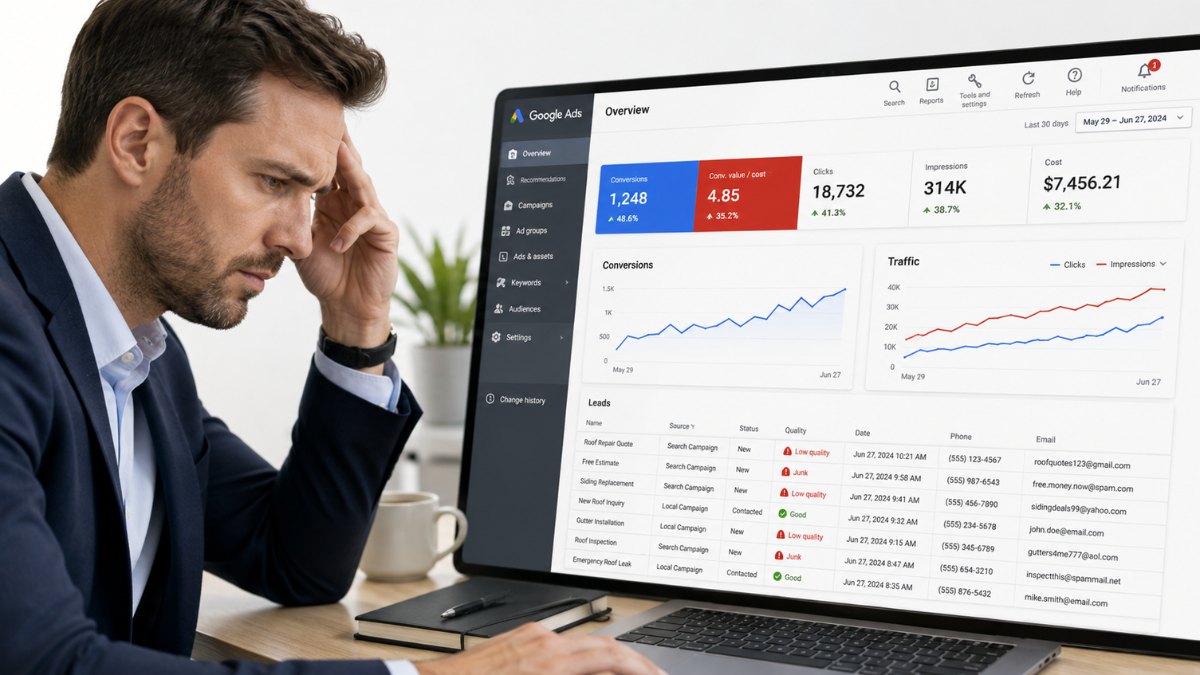
That is where the problem becomes clearer. More leads are not always better leads. If the campaign is only trained to chase volume, it can keep bringing in people who are curious, unqualified, outside your service area, or not ready to buy. The fix is not always a bigger budget. In many cases, the fix is better tracking, cleaner targeting, stronger filtering, and a tighter connection between Google Ads and the sales process.
In this guide, I will break down how managed Google Ads services improve lead quality and what I look at when a campaign is getting clicks but not enough qualified opportunities.
What Does Lead Quality Actually Mean in Google Ads?
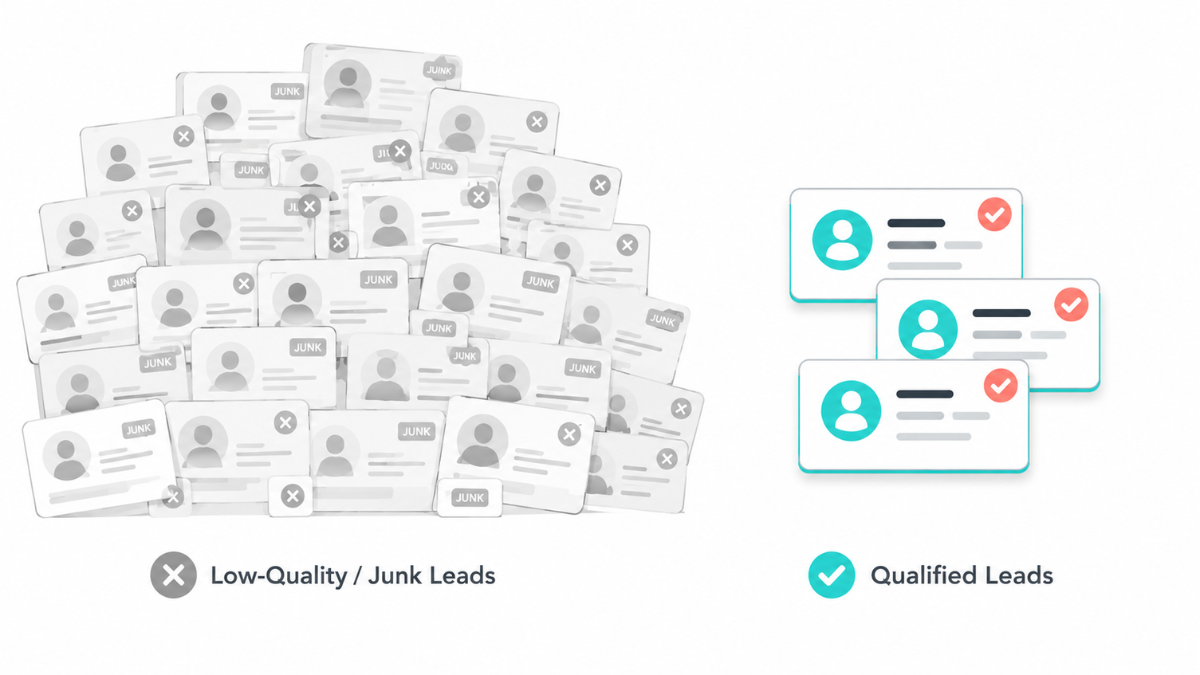
Lead quality is the difference between a person who submits a form and a person who is actually worth a sales conversation.
In Google Ads, that distinction matters because the platform can only optimize based on the conversion data it receives. If every form fill is counted equally, the campaign may treat a spam inquiry, a student doing research, and a high-value prospect as the same result.
When I review lead quality inside a Google Ads account, I look beyond the ad dashboard. I want to know which leads became qualified conversations, booked calls, proposals, pipeline opportunities, or closed revenue. That is the difference between a campaign that is generating activity and a campaign that is supporting growth.
Why Do More Leads Not Always Mean Better Leads?
More leads can look exciting at first, especially when the cost per lead drops. But if the campaign is optimized around the wrong conversion action, Google Ads may learn to find people who are easy to convert instead of people who are likely to buy. That is why the Google Ads optimization process needs to connect campaign activity with lead outcomes, not just clicks and forms.
This is how the common problem happens: CPA looks fine, the lead count looks strong, but revenue stalls. The campaign is technically producing conversions, but those conversions are not the ones the business needs.
A managed approach looks for that mismatch early. I review the search terms, conversion actions, form quality, call data, CRM notes, and landing page intent so the account does not keep rewarding weak leads.
What Do Google Ads Management Services Actually Include?
Google Ads management services include more than launching a campaign and adjusting bids. For lead generation, the work usually includes account structure, keyword research, ad copy, audience targeting, budget allocation, bid strategy, conversion tracking, landing page recommendations, call tracking, negative keyword cleanup, and reporting.
The difference between basic setup and managed support is consistency. A one-time setup can get ads live. Ongoing management checks whether the campaign is attracting the right people, whether lead quality is improving, and whether the data being sent back to Google is useful.
Inside Smart VAs, Google Ads Specialist support is not treated as a disconnected ad task. It often needs to work alongside CRM cleanup, landing page updates, content support, and reporting so the campaign has better signals to learn from.
How Does High-Intent Keyword Targeting Improve Lead Quality?
Keyword targeting is the first quality filter before anyone clicks the ad.
A broad, high-volume keyword can bring traffic, but traffic alone does not mean buying intent. For example, a person searching a general how-to query may not be ready to speak with a provider. A person searching for service pricing, local support, implementation help, or a specific solution is often much closer to a decision.
When I build or clean up a Google Ads lead generation campaign, I separate keywords by intent. Some keywords are for awareness. Some are for comparison. Some are for immediate service demand. If those are mixed too loosely, the campaign can spend money on people who are not ready for the offer.
How Does CRM Integration Help Google Ads Find Better Leads?
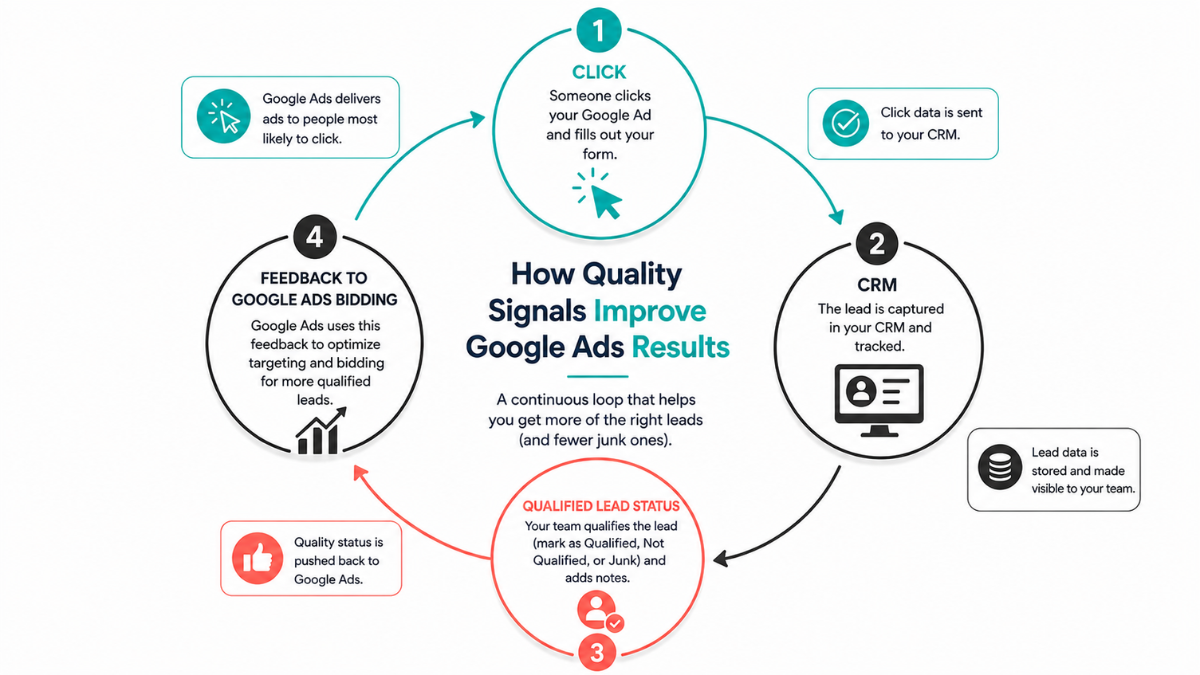
CRM integration matters because the most useful lead-quality data often lives outside Google Ads. The ad account may know that a form was submitted, but the CRM knows whether that lead was qualified, contacted, booked, quoted, won, or lost.
Google Ads supports offline conversion imports and enhanced conversions for leads, which can help connect later-stage lead data back to campaign activity. In plain language, that means the campaign can learn from what happened after the form submission, not just from the form submission itself.
This is where CRM Specialist support becomes valuable. If the CRM is messy, fields are inconsistent, or sales stages are not tracked clearly, the campaign does not get useful feedback. Better CRM data hygiene makes it easier to separate real opportunities from noise.
Why Does Call Tracking Matter for Lead Quality?
For many service businesses, the best leads do not fill out a form. They call.
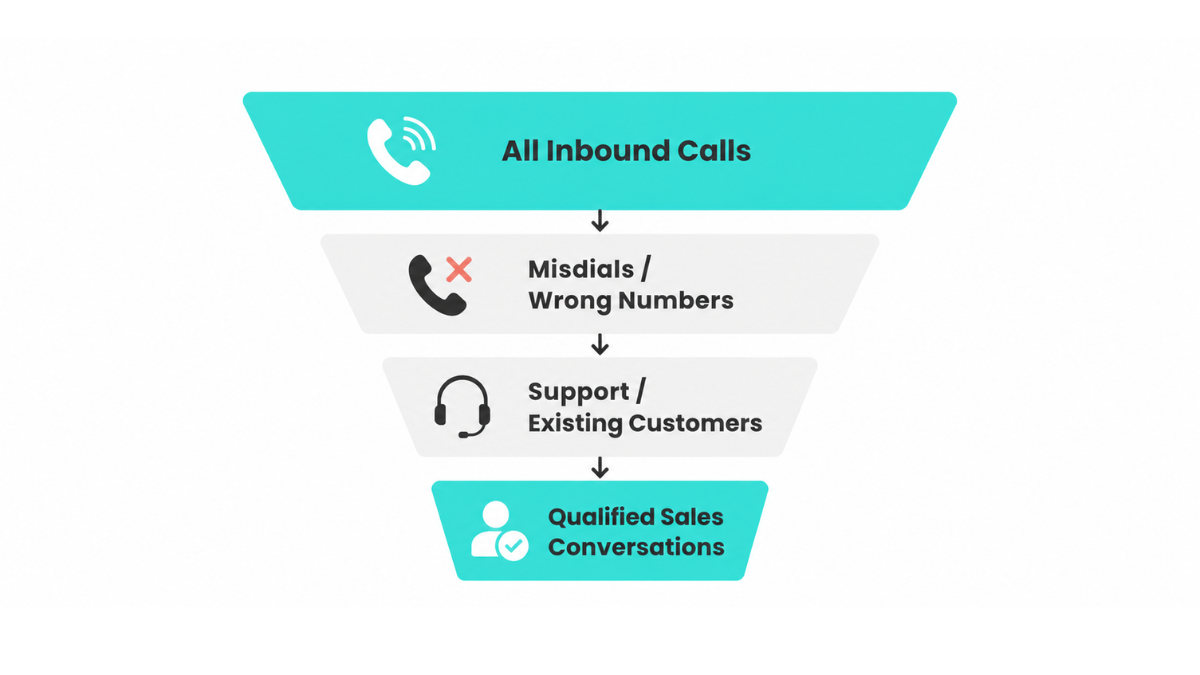
If calls are not tracked properly, the campaign may undervalue the people who were ready enough to speak with someone. Google Ads phone call conversion tracking can track different types of calls, and call length settings can help separate a meaningful conversation from a quick misdial or irrelevant call.
As a Google Ads specialist, I do not treat every call as equal. A 10-second call, a wrong-number call, and a five-minute sales conversation should not all carry the same weight. Managed PPC lead generation services should define what counts as a real call conversion before the campaign uses that data to optimize.
How Do Negative Keywords and Conversion Filtering Reduce Spam Leads?
Negative keywords are one of the simplest ways to improve lead quality because they help stop ads from showing on irrelevant searches.
If a campaign is getting clicks from job seekers, students, free-template searches, unrelated locations, or people looking for do-it-yourself help, those searches need to be filtered. Otherwise, the account keeps spending on traffic that was unlikely to become qualified in the first place.
Conversion filtering matters too. A campaign should not count every soft action as a lead. Newsletter signups, accidental clicks, unverified forms, spam submissions, and low-intent downloads can all distort the data if they are treated like qualified opportunities.
How Does Landing Page and Audience Targeting Improve Lead Relevance?
Lead quality does not stop at the ad. The landing page has to match the searcher's intent, explain the offer clearly, and make it easy for the right person to take the next step.
If the ad promises one thing and the landing page speaks too broadly, strong prospects may leave while poor-fit leads still submit the form. When I audit the post-click experience, I look for message match, location fit, service clarity, proof, mobile experience, and form friction. Sometimes improving Google Ads leads means improving the page after the click.
Audience and location targeting matter for the same reason. A campaign can generate many leads from people outside the service area, outside the target industry, or outside the budget range. Managed Google Ads work should regularly check whether the traffic matches the business the campaign is trying to attract.
What Is the Difference Between Managing Google Ads Yourself and Using a Managed Service?
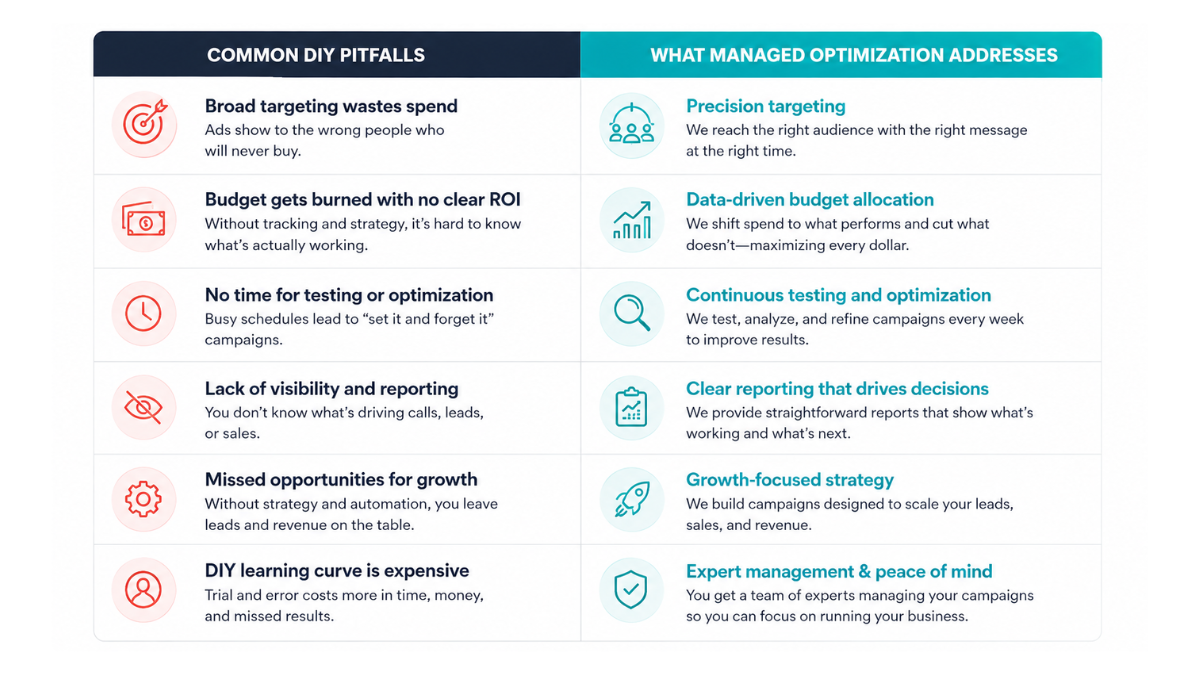
The biggest difference is not that a managed service clicks different buttons. It is that someone is responsible for the whole performance loop. DIY campaigns often struggle because keyword selection, conversion tracking, CRM feedback, search term reviews, landing page recommendations, and reporting are handled inconsistently. That inconsistency makes improving ROI harder than it should be.
A managed service should bring rhythm. Weekly checks catch wasted spend, tracking problems, disapproved ads, weak search terms, and poor lead signals. Monthly reviews connect the campaign back to business outcomes instead of only looking at surface-level metrics.
That is also why lead quality should be discussed as part of broader marketing ROI support, not as a separate ad metric. A cheaper lead is not useful if it never becomes a real opportunity.
In client feedback, clients often talk about feeling relieved and supported because they no longer have to manage every moving part themselves. That matters in paid search too. Better lead quality comes from consistent checks across search terms, calls, forms, CRM notes, landing pages, and follow-up gaps, not from one big fix.
How Do You Measure Whether Lead Quality Is Actually Improving?
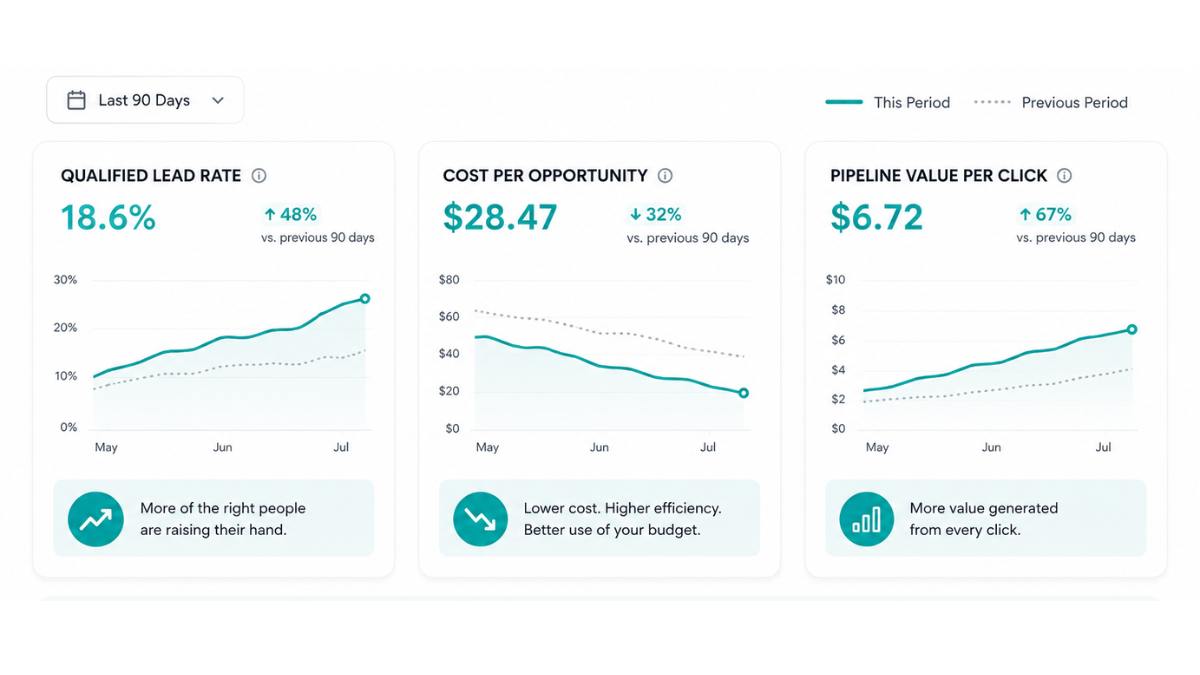
Raw lead count is not enough. If a campaign generates fewer total leads but more qualified opportunities, that may be an improvement.
The metrics I care about most in Google Ads lead generation depend on the business, but I usually look at qualified lead rate, cost per qualified lead, cost per opportunity, booked-call rate, pipeline value per click, sales acceptance rate, and the ratio of spam or poor-fit leads to total inquiries.
Lead Quality Improvement Framework
| Lever | What It Filters | Managed Action |
|---|---|---|
| High-intent keywords | Low-intent traffic and research-only clicks | Segment keywords by commercial intent and keep ad groups focused. |
| Negative keywords | Irrelevant searches, job seekers, unrelated DIY traffic | Review search terms regularly and exclude poor-fit patterns. |
| CRM feedback | Leads that submit a form but never become sales opportunities | Import qualified lead or opportunity data back into Google Ads. |
| Call tracking | Untracked phone leads and short irrelevant calls | Track call conversions and set rules for meaningful call duration. |
| Landing page alignment | Clicks from people who do not understand the offer | Match ad copy, landing page copy, proof, and form fields to the same intent. |
| Quality reporting | Dashboard wins that do not match sales reality | Report on qualified lead rate, cost per opportunity, and pipeline value, not only total conversions. |
Closing: How Can a Managed Specialist Team Keep Lead Quality Improving Over Time?
Lead quality is a system. It depends on tracking, targeting, filtering, landing pages, CRM feedback, and regular optimization. That is why Google Ads management for small business works best when the work is handled consistently, not only when someone has time to check the account.
Inside Smart VAs, a fully managed team of specialists can support the pieces around the campaign: paid search, CRM organization, website updates, reporting, and follow-up processes. For a growing business, that structure helps ads become less reactive and more connected to actual sales quality.
Delegation is not just a task. It is a STRATEGY.
Ready to Improve Lead Quality From Google Ads?
If your campaign is generating leads but too many are unqualified, Smart VAs can help you review the account structure, strengthen tracking, clean up lead signals, and build a more consistent optimization process. Book a free discovery call to see whether managed Google Ads support fits your next stage of growth.
Smart Virtual Assistant
👍🤵
Smart Virtual Assistant 👍🤵

What if you could reclaim 40 hours this month?Why does call tracking matter for PPC lead generation?
Find out inside this free guide.
Frequently Asked Questions
-
Lead quantity measures how many inquiries a campaign generates. Lead quality measures whether those inquiries are a good fit for the business. A high-quality lead usually matches the target audience, has real intent, can afford the offer, and is likely to move into a sales conversation.
-
CRM integration helps Google Ads learn what happened after the form submission or call. When qualified leads, booked calls, opportunities, or closed deals are imported back into the ad account, campaigns can optimize toward stronger business outcomes instead of only chasing raw form fills.
-
Call tracking matters because many high-intent prospects prefer to call instead of submitting a form. Without call tracking, the campaign may undervalue some of the best leads. Call duration and qualification rules also help separate real sales conversations from misdials or low-quality calls.
-
Yes, you can improve lead quality by reviewing search terms, adding negative keywords, tightening targeting, improving landing pages, and cleaning up conversion tracking. The challenge is consistency. Managed support helps when those checks are not happening often enough or when CRM and sales feedback are not connected.
-
Some improvements can appear within a few weeks, especially after negative keyword cleanup or tracking fixes. Bigger gains usually take longer because campaigns need enough data to learn from better signals. A realistic review window depends on budget, traffic volume, sales cycle length, and CRM data quality.
About the Author:
Say, Google Ads Specialist, SmartVAs

Say is a Google Ads Specialist at Smart VAs and a certified Google Ads professional who helps businesses reach the right audiences and achieve better results through paid search. She has worked with multiple Smart VAs clients across different industries, delivering successful Google Ads campaigns and receiving positive feedback for her results.
She works closely with Smart VAs clients to manage and optimize Google Ads campaigns based on their business goals. She also has experience managing Bing Ads campaigns, helping businesses strengthen their paid search presence across multiple platforms.