10 Marketing Strategies Every Growing Business Should Prioritize
Key Takeaways
Growing businesses do not need every marketing channel at once. They need the right 2-3 strategies for their current bottleneck.
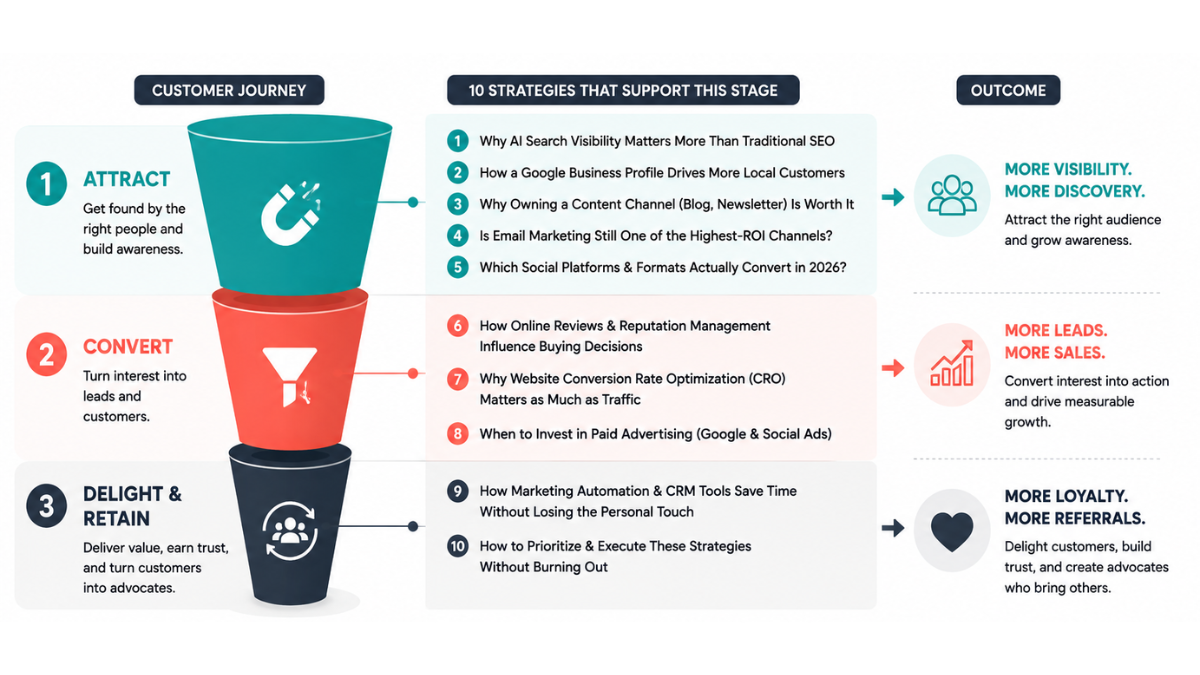
The 10 priority areas are AI search visibility, local search, owned content, email, social media, reviews, website optimization, paid ads, CRM automation, and consistent execution.
AI search and traditional SEO now work together. Clear answers, structured pages, FAQs, schema, and strong website experience all matter.
Marketing growth depends on execution. A good strategy fails when no one has the time or capacity to publish, optimize, follow up, and measure consistently.
Smart VAs can support growing businesses when execution becomes the bottleneck across content, SEO, website updates, CRM, social media, and reporting.

ARE YOU STILL TRYING TO DO IT ALL?
Discover the SMART way to delegate without losing control—and finally free up your time.
Growing businesses usually cannot outspend the biggest brands in their market. But they can often out-execute them.

I see this all the time as the founder of Smart VAs. A smaller company may not have a massive ad budget or an internal department for every channel, but it can still grow if it chooses the right marketing strategies, stays consistent, and measures what is actually moving the business forward.
That matters even more now. Search has changed because of AI-powered answers. Organic social reach is harder to rely on. Paid ads are more expensive in many industries. Customers compare more options before they talk to sales. A random marketing plan is not enough anymore.
This article is not a list of theories. It is a practical, prioritized guide to the marketing strategies for business growth I would want a busy founder, marketing manager, or operations leader to understand before deciding where to spend time and money.
How Should Growing Businesses Choose the Right Marketing Strategies?
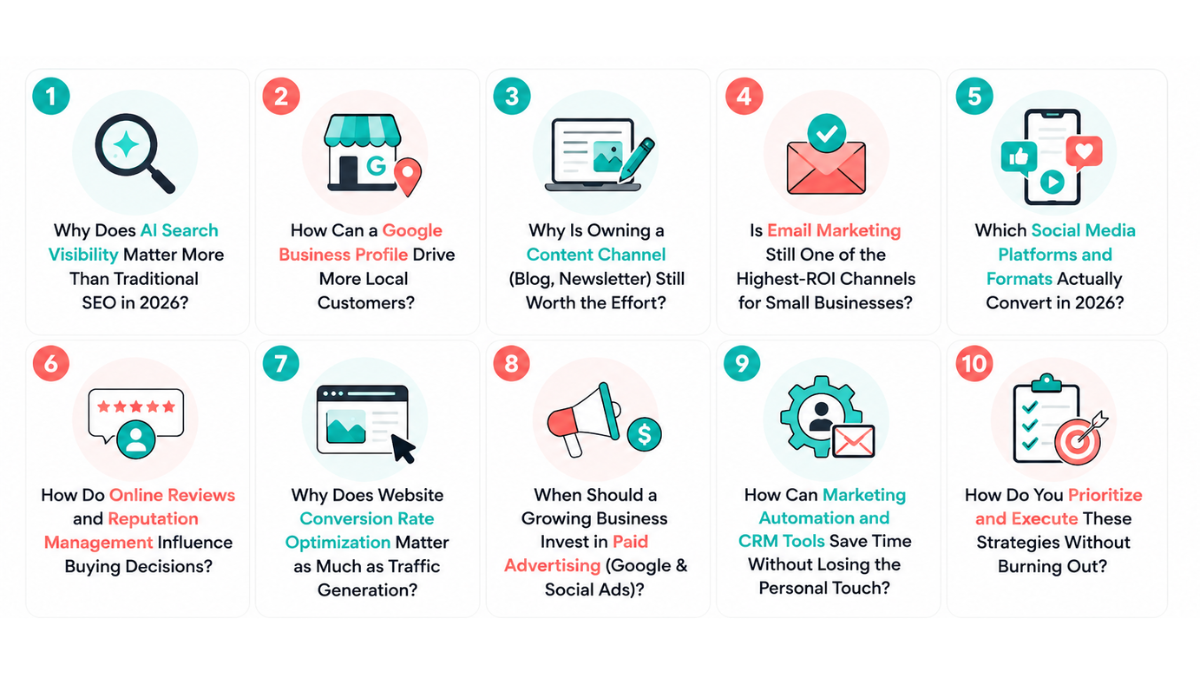
A growing business does not need to chase every marketing trend at once. The better approach is to choose the strategies that match the company's current bottleneck: visibility, conversion, lead quality, follow-up, or execution capacity.
If people do not know you exist yet, focus first on visibility channels like SEO, content, local search, social media, or paid ads. If people are finding you but not taking action, focus on website optimization, stronger proof, reviews, and clearer calls to action. If leads are coming in but slipping through the cracks, email marketing, CRM systems, and automation should move higher on the list.
The 10 strategies below are organized so a founder, business owner, or marketing manager can quickly see what each strategy does, why it matters, and how to decide whether it deserves attention now.
10 Marketing Strategies for Business Growth
Here are the 10 marketing strategies every growing business should prioritize:
AI search visibility
Google Business Profile optimization
Owned content channels like a blog or newsletter
Email marketing and nurture sequences
Social media platforms and formats that support conversion
Online reviews and reputation management
Website conversion rate optimization
Paid advertising when the business is ready
Marketing automation and CRM tools
A focused execution plan that prevents burnout
1. How Can AI Search Visibility Help Customers Find You First?
Traditional SEO is still important, but it is no longer the only way customers find answers. People now research companies through Google AI Overviews, ChatGPT, Gemini, Perplexity, and other answer engines. That means your content needs to be clear enough for humans and structured enough for machines to understand.
Google says the same foundational SEO best practices still apply to AI features in Search, including helpful content, technical accessibility, internal links, page experience, textual content, and structured data that matches the visible page. In other words, AI search does not replace SEO. It raises the bar for how organized and useful your content needs to be.
For growing businesses, this means every important service page, blog article, case study, and FAQ should answer real customer questions directly. Your content should make your expertise obvious: who you help, what problem you solve, what proof you have, and what the reader should do next.
At Smart VAs, this is where professional SEO support can help a business stay visible while search behavior keeps changing.
Write pages around specific customer questions, not just broad keywords.
Use clear H2s and FAQs so answer engines can understand the structure.
Keep internal links, schema, and page experience clean.
Build entity signals by connecting your services, author, case studies, and business location.
2. How Can a Google Business Profile Bring in More Local Customers?
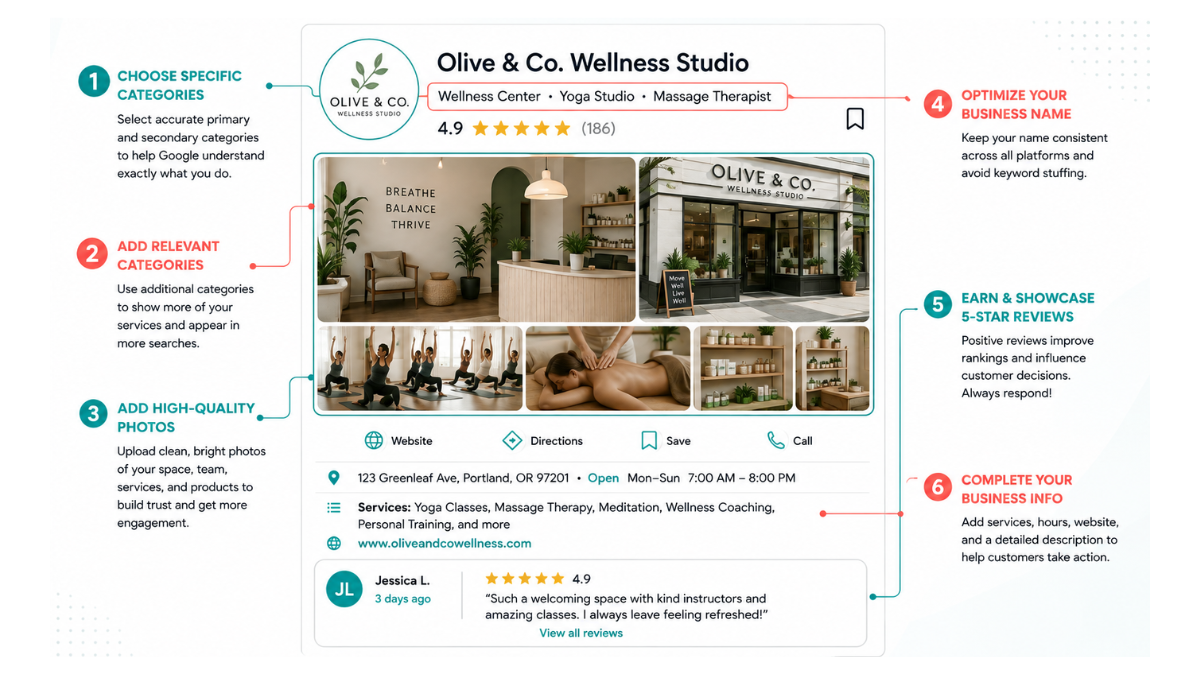
For local and service-based businesses, Google Business Profile is often one of the highest-impact marketing assets because it connects searchers with your business at the moment they are looking for help. It can influence local pack visibility, map discovery, phone calls, website clicks, and direction requests.
A strong profile is not just a listing. It is a small local landing page. Your categories, services, photos, business description, updates, reviews, and responses all shape how potential customers see you. If the information is incomplete or outdated, your business may look less active than a competitor who is easier to evaluate.
The practical move is simple: treat your Google Business Profile like an active marketing channel. Review it weekly, add fresh photos, answer questions, update services, and respond to reviews with the same care you would bring to a sales conversation.
Choose the most accurate primary and secondary categories.
List specific services, not vague descriptions.
Post updates for offers, events, new services, or seasonal reminders.
Respond to reviews consistently and professionally.
3. Why Should You Own a Content Channel Like a Blog or Newsletter?
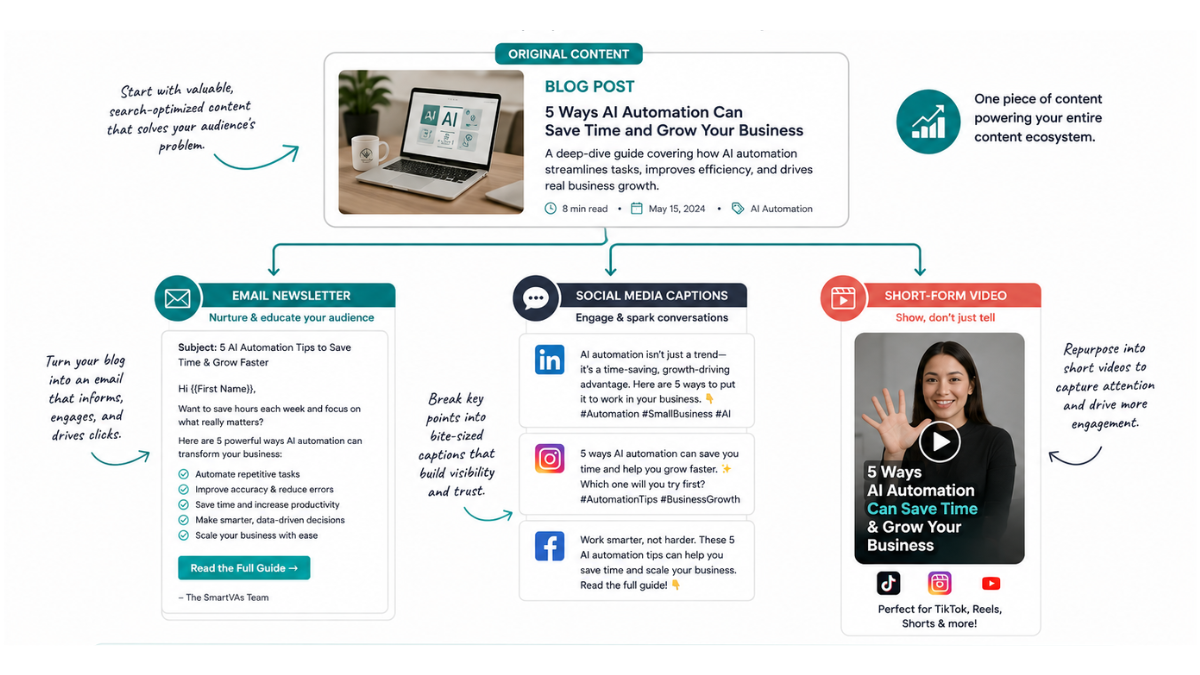
A blog, newsletter, or resource hub is one of the few marketing assets your business truly controls. Social media posts disappear quickly. Paid ads stop when the budget stops. A good blog article or email sequence can keep working for months or years if it answers a question your audience keeps asking.
Evaluating content marketing and SEO ROI helps businesses understand how educational content can generate long-term traffic while supporting search visibility and lead generation.
Content is also raw material. One strong article can become a newsletter, LinkedIn post, sales email, short video script, FAQ, lead magnet, or podcast talking point. That is why content marketing still matters even when platforms keep changing.
The U.S. Small Business Administration recommends that a marketing plan identify the target market, competitive advantage, sales plan, goals, and action plan. Content helps bring those pieces to life because it gives your audience something useful before they are ready to buy.
This is also why professional blog writing support is valuable for founders who have expertise but do not have time to turn that expertise into consistent published content.
4. Is Email Marketing Still Worth Prioritizing?
Yes, but only when it is used as a relationship channel instead of a random broadcast tool. Email works because it gives your business a direct line to people who already chose to hear from you. That makes it different from social media, where reach depends on algorithms and timing.
The best email marketing for a growing business usually starts with one clear lead magnet, a simple welcome sequence, and segmentation based on what the subscriber cares about. From there, the goal is not to send more emails. The goal is to send more relevant emails.
For example, a consultant might have one sequence for new leads, another for warm prospects who downloaded a pricing guide, and another for past clients who could benefit from a follow-up offer. That is where email becomes part of the marketing funnel instead of just another task on the calendar.
Build your list with a useful guide, checklist, webinar, or resource.
Write a welcome sequence that answers common objections.
Segment by interest, buyer stage, or service need.
Track clicks, replies, booked calls, and conversions, not just open rates.
5. Which Social Media Platforms Actually Help You Convert?
The best social media platform depends on where your buyers already spend time and how they prefer to evaluate trust. For many businesses, short-form video remains important because it allows people to quickly see your personality, process, and proof. But social media should not be treated as one channel with one rule. LinkedIn, TikTok, Instagram, Facebook, YouTube Shorts, and Pinterest all serve different buyer behaviors.
HubSpot’s 2025 marketing trend coverage points to social media as a major product discovery and sales channel, especially for younger buyers, while also showing that marketers continue to prioritize social content roles. The takeaway for a growing business is not to be everywhere. It is to choose the platform where your audience already looks for education, credibility, or inspiration.
If social media is part of your growth plan, social media management support can help turn scattered posting into a clearer publishing rhythm.
Use short-form video for quick education, proof, and visibility.
Use LinkedIn for B2B trust-building and founder-led insights.
Use organic social for consistency and community, paid social for targeted reach.
Repurpose blog, podcast, and email content into platform-specific posts.
This kind of support makes consistent social media marketing execution much easier by ensuring content is planned, created, and published on a regular schedule without overwhelming your internal team.
6. How Do Online Reviews Help Build Trust Before a Sales Call?
Reviews are no longer just a local SEO detail. They are part of the trust layer customers use before they call, book, buy, or request a proposal. A business can have a strong website and still lose buyers if the review profile looks neglected, outdated, or unanswered.
BrightLocal’s 2025 Local Consumer Review Survey found that consumers still read both positive and negative reviews to form opinions and that AI review summaries are also shaping decision-making. That means your review strategy now affects both human trust and how platforms summarize your reputation.
The best review system is simple: ask at the right moment, make the request easy, respond regularly, and learn from patterns. If the same praise keeps showing up, use it in your messaging. If the same complaint repeats, fix the experience behind it.
7. Why Does Website Optimization Matter as Much as Traffic?
More traffic does not automatically mean more revenue. If the website is slow, confusing, generic, or missing a clear next step, visitors will leave without converting. That is why website optimization is one of the most overlooked business growth marketing strategies.
A conversion-focused website should answer the buyer’s main questions quickly: What do you do? Who is this for? Why should I trust you? What happens next? The design should guide the person toward a clear action without making them work too hard.
If the site looks good but leads are weak, the problem may be messaging, user experience, page speed, service page structure, trust signals, or the call-to-action path. This is where website design support can make the difference between a site that exists and a site that helps sell.
Make the primary CTA visible on every important page.
Use testimonials, reviews, case studies, and clear service details.
Design pages for mobile-first browsing.
Track form submissions, booked calls, calls, and qualified leads.
8. When Should You Invest in Google Ads or Social Ads?
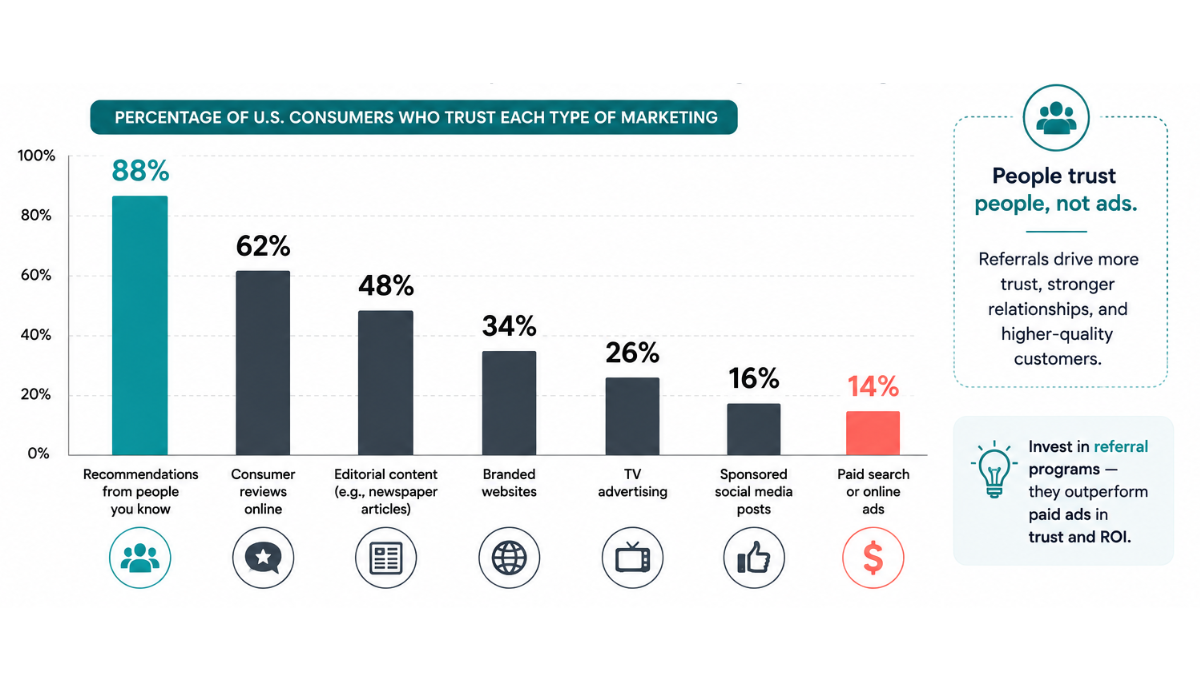
Paid ads can help a growing business move faster, but they should not be used to cover up weak positioning, poor tracking, or a website that does not convert. Ads work best when the business already knows the offer, audience, landing page, and follow-up process.
The question is not just, “Can we afford ads?” It is, “Can we turn paid traffic into measurable leads or sales?” WordStream’s 2025 Google Ads benchmarks reported an overall average CPC of $5.26 and average cost per lead of $70.11 across the campaigns it analyzed, but costs vary widely by industry. That is why every paid ad plan should be fact-checked against current industry benchmarks before budgets are finalized.
A good paid strategy usually separates search, social, and retargeting. Search ads capture people already looking. Social ads help introduce and re-engage. Retargeting reminds warm visitors to come back. If your business is ready for paid spend, Google Ads support can help keep campaigns structured and easier to manage.
9. How Can CRM and Marketing Automation Save Time?
Automation should make your customer journey smoother, not colder. The goal is to follow up faster, track pipeline movement, and reduce manual work while still making the customer feel seen.
For a growing business, the biggest CRM mistakes are usually simple: leads are not entered consistently, stages are unclear, follow-ups are manual, and no one knows which campaigns are driving actual opportunities. Once that happens, marketing decisions become guesswork.
A strong CRM setup helps you see where leads come from, what they need, which follow-ups are overdue, and which marketing channels are creating real opportunities. AI can help draft content, summarize notes, personalize campaigns, and pull reporting insights, but human review is still needed so the message stays accurate and on-brand.
If your follow-up process is scattered, CRM support can help organize your pipeline and make marketing activity easier to connect to revenue.
10. How Do You Execute Your Marketing Plan Without Burning Out?
This is the part many founders skip. They read a list like this and try to do everything at once. That usually fails because the business does not have enough time, capacity, or focus to execute ten channels well at the same time.
The better move is to choose two or three strategies based on your current bottleneck. If people do not know you exist, start with visibility: SEO, content, social, local search, or paid ads. If people are finding you but not converting, work on your website, offers, reviews, and follow-up. If you have leads but they are slipping away, fix email, CRM, and nurture systems. If you're unsure whether visibility should come from organic search or paid campaigns first, understanding SEO or PPC support for your marketing plan can help you prioritize the channel that aligns with your business goals.
A Simple Prioritization Framework
- Identify the bottleneck. Determine whether your biggest challenge is visibility, trust, conversion, or follow-up.
- Focus on the highest-impact actions. Choose the smallest set of strategies that directly improves that bottleneck instead of trying to fix everything at once.
- Commit to a 90-day execution rhythm. Give your strategy enough time to produce meaningful data before making major changes.
This is also where many growing businesses reach a practical turning point. The strategy may be clear, but execution becomes the bottleneck. At that stage, bringing in a Dedicated Remote Professional or a Managed Specialist Team can help keep content, SEO, website updates, CRM work, social media, and reporting moving without asking the founder to carry every detail. Many founders eventually begin comparing in-house vs. outsourced marketing ROI to determine whether expanding their internal team or partnering with external specialists is the more sustainable path for growth.
I saw this clearly in Melissa Martin’s Creative Island case study. Melissa built a digital marketing business around email, SMS, social media content, and copywriting, but demand eventually created more work than she could sustainably carry alone. Smart VAs supported her with social media design, copywriting, web development, blog writing, and graphic design, which helped her take on bigger projects, streamline operations, and focus more on growth.
For businesses that are at that stage now, the Smart VAs services overview can help identify which execution areas need support first. When you are ready to talk through your workload, you can also book a discovery call and map out what support should look like.
Conclusion: Pick the Right Strategies and Execute Consistently
The best marketing strategies for business growth are not always the newest or loudest tactics. They are the ones that match your stage, answer your customers’ real questions, and move people from awareness to trust to action.
Pick a few priorities. Execute them consistently. Measure what matters. Then improve what the data shows you.
If execution is the part slowing you down, Smart VAs can help you build support around the work that keeps your marketing moving. You can also use the existing “7 Days to Freedom” guide as a practical first step for identifying what needs to come off your plate before growth turns into burnout.
Smart Virtual Assistant
👍🤵
Smart Virtual Assistant 👍🤵
What if you could reclaim 40 hours this month?
Find out inside this free guide.
Frequently Asked Questions
-
The most cost-effective strategy depends on the business stage, but content, email, local SEO, and review generation are often strong starting points because they compound over time. Paid ads can work well too, but they usually perform best after the offer, website, and follow-up process are already clear.
-
Most businesses should think in months, not days. Some technical fixes or refreshed pages can create small improvements quickly, but SEO and content usually need consistent publishing, optimization, internal linking, and performance review over several months before the business can see meaningful patterns.
-
Hire in-house when the workload is steady, specialized, and large enough to justify a full-time role. Delegate execution when you need consistent marketing output but are not ready for several salaries, tools, and management layers. Many growing businesses use a hybrid model.
-
There is no single right number. The SBA notes that many businesses use revenue percentage as a guide, with budgets varying by industry, maturity, and growth goals. A startup building awareness may need a different budget than an established company focused on retention.
-
Traditional SEO focuses on helping search engines crawl, understand, rank, and display pages in search results. AI search optimization adds another layer: making content clear, structured, authoritative, and easy for answer engines to summarize or cite. The fundamentals still overlap heavily.
About the Author:
Kristy Yoder, Founder

Kristy Yoder is the Founder of Smart VAs, a virtual assistant agency that helps entrepreneurs grow through reliable administrative and digital marketing support. With extensive experience building and managing remote teams, she specializes in delegation, operational efficiency, and scalable business growth.
Passionate about helping business owners reclaim their time, Kristy leads Smart VAs in connecting entrepreneurs with skilled virtual professionals who provide dependable support and contribute to long-term success.