AI vs Website Design Services: Why Human Strategy Still Matters
Key Takeaways
AI website builders are useful for speed, simple layouts, content drafts, and early prototypes, but speed is not the same as strategy.
A successful business website needs more than a nice design. It needs customer clarity, trust signals, SEO structure, responsive layouts, accessibility, and conversion paths
Professional website design services help turn a website from an online brochure into a business asset that answers questions, builds credibility, and guides visitors toward action.
AI is a strong accelerator when paired with human strategy. The best result is not AI versus people. It is AI helping people move faster without removing judgment.
Smart VAs is a good fit for growing businesses that need website design support, website updates, SEO-ready structure, responsive layouts, and ongoing support without hiring a full internal web team.

ARE YOU STILL TRYING TO DO IT ALL?
Discover the SMART way to delegate without losing control—and finally free up your time.
Can AI Build a Website in Minutes, But Can It Build a Business?

AI website builders have made website creation feel easier than ever. A business owner can answer a few prompts, choose a template, generate a homepage, and have something online in a short amount of time. I understand why that feels exciting. When you are running a business, speed matters.
But I also see the other side. A website is not just a collection of sections, buttons, colors, and images. A real business website has to answer the right questions, guide the right customers, build trust, support search visibility, and make it easy for people to take the next step.
That is the difference between launching a website and building an online presence. AI can help assemble the structure quickly, but it does not replace the architect who understands how every part of the space should function. A building may look finished from the outside, but if the rooms do not support how people actually move, work, and make decisions, the design will create friction.
I think about websites the same way. The visible part matters, but the hidden strategy underneath matters just as much.
That is why I do not see the conversation as AI versus humans. I see it as speed versus strategy. AI can move fast, but strategy decides whether the website actually supports the business.
What Do Website Design Services Actually Include?
When people search for website design services, they are often thinking about the finished look of a website. They picture homepage sections, colors, fonts, images, and maybe a few service pages. Those are important, but they are only part of the work.
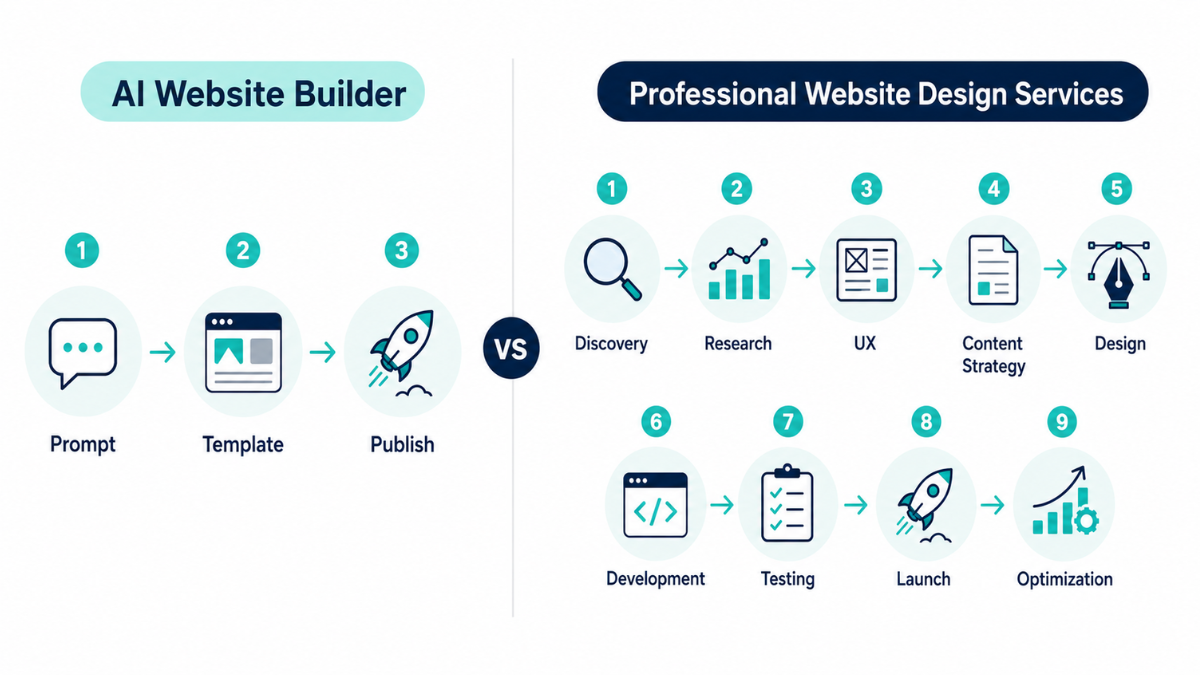
Professional website design services usually begin before a designer opens a page builder. The process should start with understanding the business, the offer, the audience, and the action the website needs to encourage. A website for a local service provider, a consultant, a SaaS company, an agency, and an online shop should not all be structured the same way.
A strong website design process may include:
Discovery around business goals, target audience, offers, and current website problems
Wireframing so the page structure is planned before the visual design starts
UX design that makes navigation, forms, buttons, and page flow easier for visitors
UI design that brings the brand to life visually through layout, spacing, typography, and imagery
Responsive website design so the site works well on desktop, tablet, and mobile
Website development services to turn the approved design into a working site
SEO fundamentals, including titles, headings, page structure, metadata, internal links, and crawl-friendly content
Testing across devices and browsers
Post-launch support, updates, and ongoing optimization
Two businesses can use the same template and get completely different results. One may treat the template like a placeholder and fill it with generic copy. The other may use the template as a framework, then customize the strategy, messaging, page flow, imagery, and calls to action around the customer journey. The second website will usually feel more useful because it was built with intent.
What Do AI Website Builders Do Really Well?
AI website builders are not the enemy. In fact, I think they can be incredibly helpful when used the right way. They can reduce blank-page stress and help business owners move from idea to draft faster.
AI tools can be useful for:
Creating quick website layouts for simple pages
Drafting starter copy that a human can refine
Suggesting color palettes, section order, or basic visual direction
Generating code snippets or simple page components
Creating prototypes before investing in a full build
Helping early-stage founders test an idea quickly
For a personal portfolio, temporary landing page, internal tool, event page, or early MVP, an AI website builder can be enough. Not every project needs a fully custom website from day one.
The issue starts when a growing business expects an AI-generated site to make the same strategic decisions as an experienced website team. AI can give you something that looks complete, but it may not know what your prospects need to hear before they trust you. It may not understand which objections stop people from booking a call. It may not know which service needs its own page, what local SEO opportunity you are missing, or how your website should support your sales process.
Used well, AI is a tool. Used without strategy, it can become a shortcut that creates more work later.
Where Do AI Website Builders Start to Fall Short?
AI-generated websites often look polished at first glance. The layouts are clean. The colors are coordinated. The sections feel complete. But when I look closer, the same problems usually appear.
The copy can sound generic. The business does not feel meaningfully different from competitors. The calls to action may be vague. The service pages may not answer real customer questions. The design may not consider accessibility, page speed, mobile behavior, or how visitors move from curiosity to trust.
Imagine two consulting firms using the same AI website builder. Both ask for a modern homepage. Both get a hero section, three service blocks, testimonials, and a contact button. On the surface, both websites look fine. But if the message is broad, the proof is thin, and the visitor cannot quickly understand who the firm helps and why it is different, the website will not do enough business work. This is where human strategy matters. A designer, strategist, or website support team does not only ask, “Does this page look good?” They ask, “Will this page help the right person understand, trust, and choose this business?”
Stanford Web Credibility research has long emphasized that website credibility is influenced by professional design, ease of use, usefulness, clear contact information, updated content, and a real organization behind the site. Those are strategic trust decisions, not just layout decisions.
This is where human strategy matters. A designer, strategist, or website support team does not only ask, “Does this page look good?” They ask, “Will this page help the right person understand, trust, and choose this business?”
Stanford Web Credibility research has long emphasized that website credibility is influenced by professional design, ease of use, usefulness, clear contact information, updated content, and a real organization behind the site. Those are strategic trust decisions, not just layout decisions.
How Do AI Website Builders Compare With Professional Website Design Services?
The better question is not whether AI is good or bad. The better question is what level of support your business needs. A simple project may only need a fast AI-generated site. A growing business usually needs more strategy, customization, and ongoing support.
This is why I often recommend a practical middle path. Let AI help with early drafting and efficiency, but do not let it make the strategic decisions alone. A conversion-focused website needs human judgment, not just fast generation.
Why Does Human Website Strategy Still Matter?
Website strategy is the thinking that happens before, during, and after design. It asks what the website needs to accomplish and how each page should support that goal.
A strategic website considers questions like:
Who is the ideal customer?
What problem brought them to the website?
What do they need to understand before they trust the business?
What objections might stop them from reaching out?
Which services need their own pages?
What proof should appear before the call to action?
How should the website support search visibility?
How will the business measure whether the site is working?
Google also encourages site owners to focus on helpful, reliable, people-first content and a good page experience. That matters because a website cannot only be designed for algorithms or aesthetics. It has to be useful to the actual people visiting it.
Human strategy helps organize the website around that reality. It shapes the messaging hierarchy, navigation, page flow, proof points, and calls to action. It also helps avoid the common mistake of making every page about the business instead of the customer.
The strongest websites usually feel simple to the visitor because the hard thinking was already done behind the scenes.
Can Your Website Sell for You Even When You Are Offline?
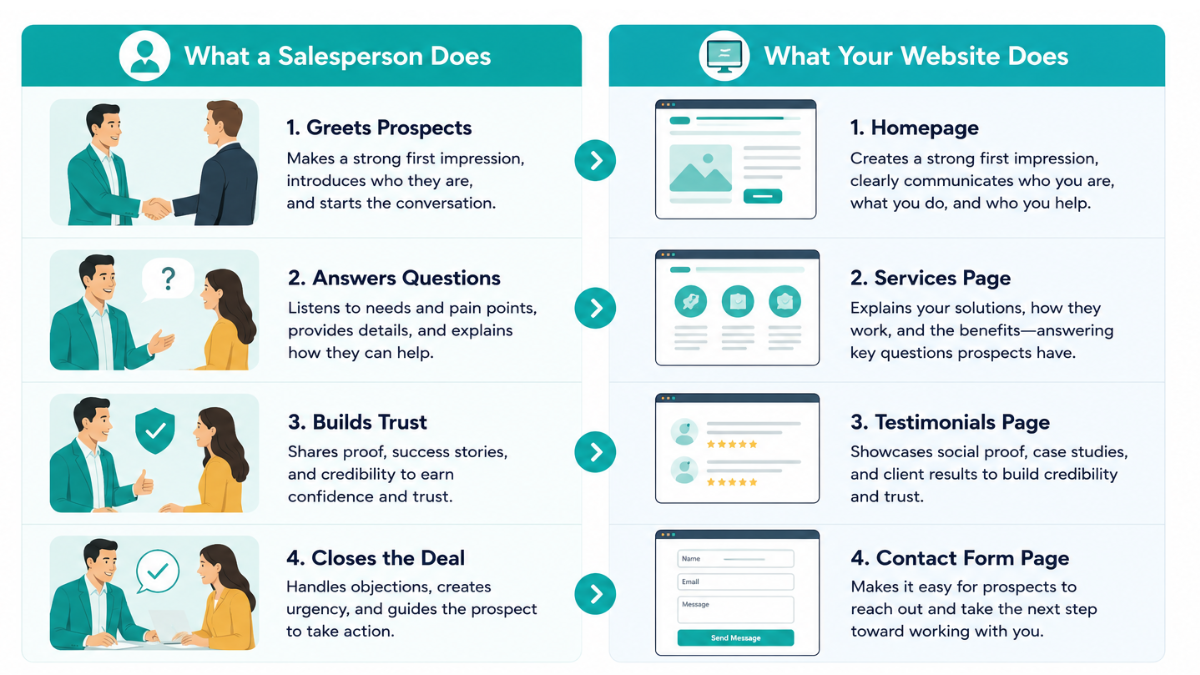
A website should not just explain that your business exists. It should support the sales process even when you are not available to answer questions.
Think about a visitor researching accounting services. They may want to know what type of clients the firm serves, whether the team understands their industry, what services are included, how communication works, how trustworthy the firm is, and what happens after they inquire. If the website only has a vague homepage and a contact form, the visitor may leave with unanswered questions.
A stronger website guides that visitor through a clearer journey:
The homepage confirms they are in the right place.
The service page explains the specific problem and solution.
Trust signals show experience, reviews, credentials, or examples.
Helpful content answers common questions.
The call to action explains the next step clearly.
The form or booking page makes it easy to reach out.
That is what I mean by a website that sells while you are sleeping. It is not pushy. It is useful. It gives the right people enough clarity to take the next step with confidence.
What Are the Hidden Costs of Choosing the Wrong Website?
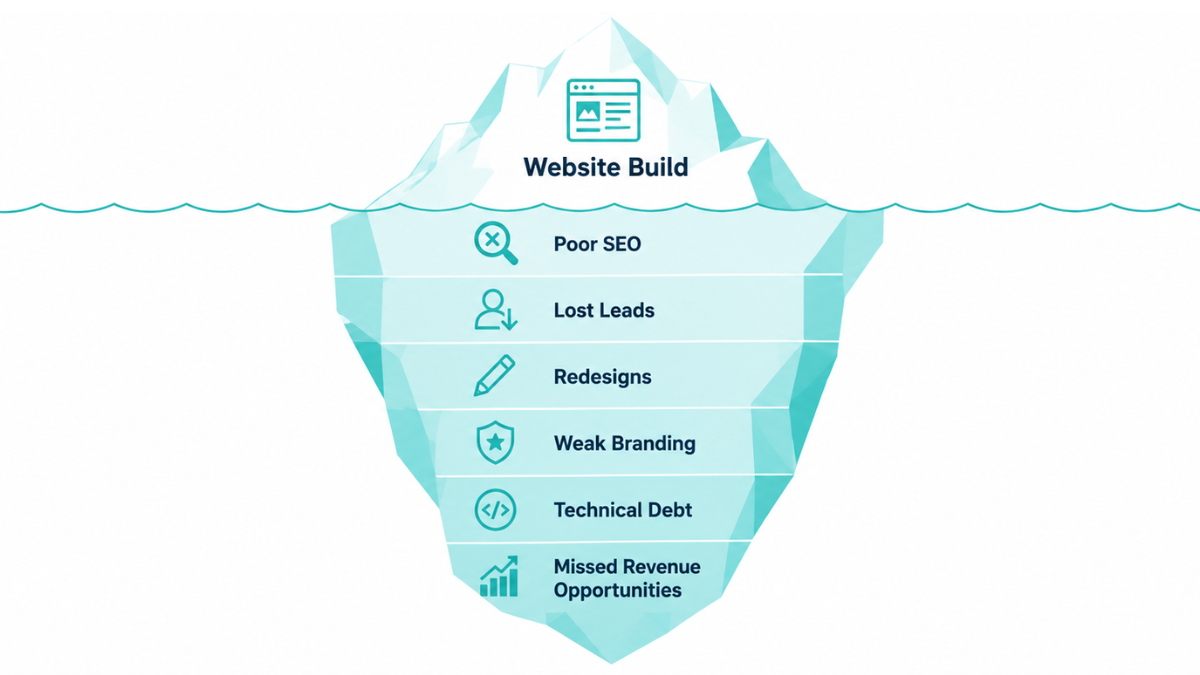
AI website builders often look cheaper upfront, and sometimes they are. But the first cost is not always the real cost.
A weak website can create hidden costs that show up later:
Lost leads because the website does not clearly explain the offer
Low conversion rates because visitors do not know what to do next
SEO cleanup because pages were not structured properly from the start
Redesign expenses when the first version no longer supports the business
Poor brand perception when the website looks generic or outdated
Technical debt from messy plugins, bloated templates, slow pages, or disconnected tools
Opportunity cost when a business keeps sending traffic to a site that does not convert
I see this most often when a business rushes to “just get a website up” and then spends months trying to patch problems after launch. Sometimes that is the right move for a very early-stage idea. But for a service business, consultant, agency, or company that depends on qualified leads, the website needs more care.
The wrong website does not only cost money. It can cost trust.
When Is an AI Website Builder the Right Choice?

There are times when AI is a practical choice. I do not think every business needs to start with a custom build. The right option depends on the stage of the business, the complexity of the offer, and the level of risk if the website underperforms.
An AI website builder may be a good fit for:
Personal portfolios that only need a simple online presence
Temporary event pages
Internal tools or private resource hubs
Early MVPs where speed matters more than polish
Simple landing pages used to test an idea
Businesses with very limited budgets and low website complexity
The key is being honest about what the website needs to do. If the website is only a quick placeholder, AI may be enough. If the website needs to generate leads, explain a complex offer, build trust, support SEO, or represent the business professionally, the decision changes.
When Do Professional Website Design Services Deliver Better Results?
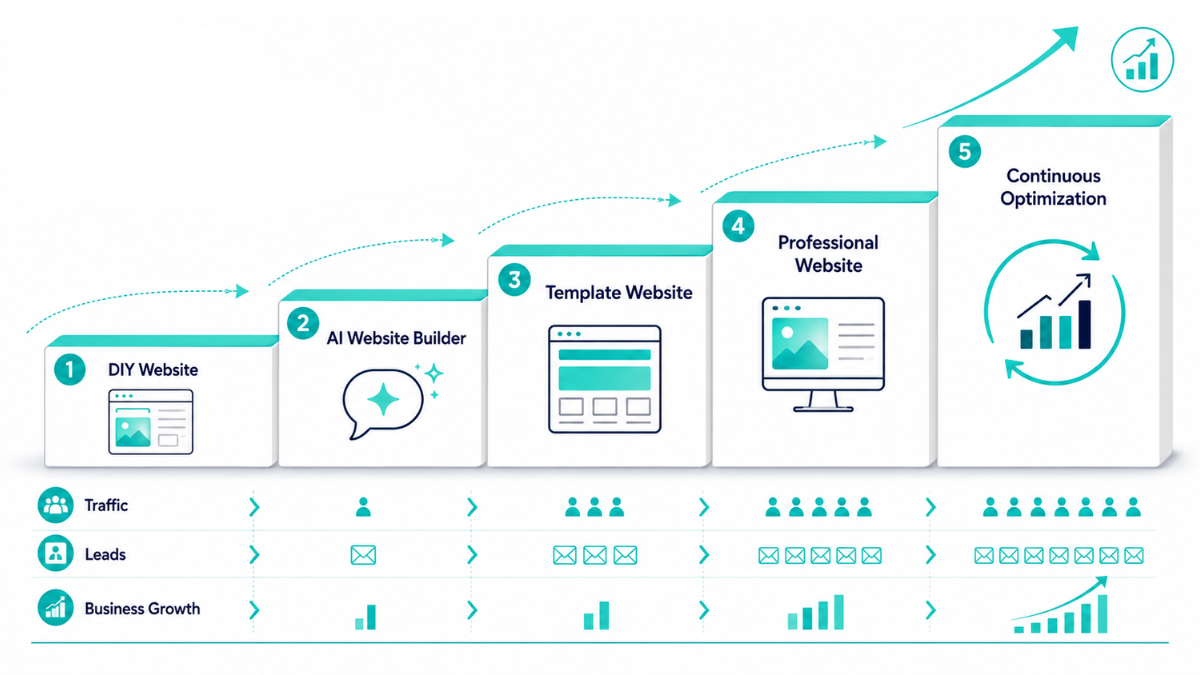
Professional support becomes more important when the website carries business risk. If people judge your credibility, request quotes, book consultations, compare services, or decide whether to trust your company based on your website, the site should be built with more than a quick template.
Professional website design services usually deliver better results for:
Growing service businesses that need stronger lead generation
Local businesses that need search visibility and trust signals
Professional service firms where credibility matters deeply
E-commerce businesses with product, checkout, and UX complexity
High-value B2B companies with longer decision cycles
Coaches and consultants with personal brands
Agencies that need to show authority and portfolio strength
Businesses planning website redesign services because the current site no longer reflects the brand
A redesigned website does not have to promise overnight growth to be valuable. Sometimes the real improvement is clearer messaging, better navigation, stronger trust signals, more useful service pages, and fewer visitors leaving confused. Those improvements matter because they support better conversations with the right prospects.
One example I would point to is Melissa Martin’s review of Smart VAs. She talks about how smooth and creative the project support felt, especially when it came to websites, and how having our team involved gave her more confidence to move forward. That is exactly the kind of difference I want business owners to notice: the website work should not only look good; it should make the next step feel clearer and easier.
This is also where custom website design can make a difference. The goal is not to make a website look different for the sake of being different. The goal is to make it better aligned with how the business actually grows.
How Does Smart VAs Combine AI Efficiency With Human Website Expertise?
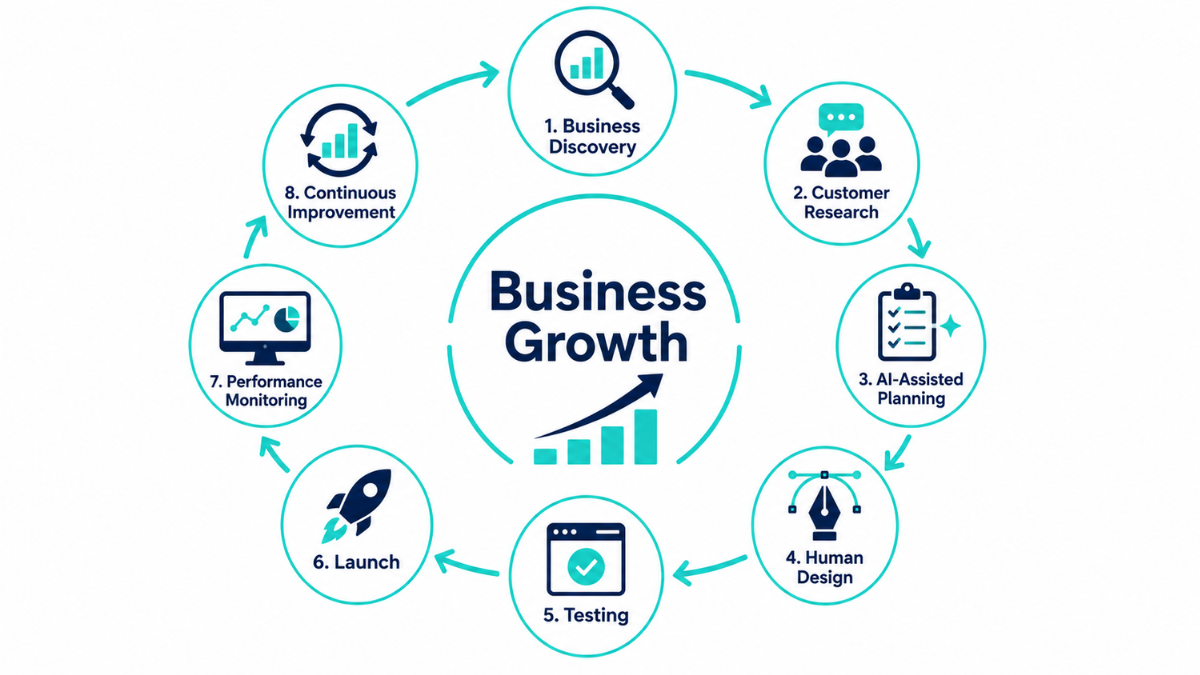
Inside Smart VAs, I see AI as a helpful tool, not a replacement for thinking. We can use AI-assisted workflows to speed up planning, brainstorming, content organization, and early drafts. But the final decisions still need human review, strategy, and quality control.
For website support, that means we focus on the business first. What are you trying to sell? Who needs to trust you? What pages do visitors need? What should happen after someone lands on the site? What should be updated after launch?
Smart VAs can support businesses with:
Business-first planning and website organization
UX-focused layouts that make information easier to understand
SEO-ready structure for headings, metadata, page hierarchy, and internal links
Responsive design that works across devices
Website updates and page improvements
Landing page support for campaigns and offers
Visual support through design coordination
Quality checks before pages go live
Ongoing website support as the business grows
Because Smart VAs is a fully managed virtual assistant team, businesses can get support across website design, SEO, content, graphics, and operations without trying to manage every moving part alone.
That matters because a website rarely exists by itself. It connects to your offers, blog content, lead magnets, email marketing, CRM, social media, and sales process. When those pieces are disconnected, the website feels disconnected too.
If your site needs more than a quick template, Smart VAs can provide website design services for growing businesses and ongoing support that helps your website keep up with the company you are building.
We can also support the pieces around the website, including graphic design support for brand consistency and SEO support for website architecture, so the site is not only attractive but easier to understand and maintain.
How Should You Choose Between AI and a Website Design Company?
The best choice depends on what you need the website to do. I would not choose based only on cost or speed. I would look at the role the website plays in the business.
| Situation | Best Fit | Why |
|---|---|---|
| You need a temporary page or quick concept test. | AI Website Builder | Speed matters more than long-term strategy. |
| You need a simple personal portfolio. | AI Website Builder or Light Designer Support | The site may not need complex conversion planning. |
| Your website supports lead generation. | Professional Website Design Services | The site needs clear messaging, proof, SEO, and conversion paths. |
| Your current site feels outdated or confusing. | Website Redesign Services | You need strategy, structure, and cleanup—not just a new look. |
| You have a growing service business. | Website Design Company or Managed Website Support | The website needs to scale with offers, content, and marketing campaigns. |
| You need ongoing updates after launch. | Managed Website Support | The site needs maintenance, improvements, and coordination over time. |
A good website partner should ask more than, “What colors do you like?” They should ask about your customers, offers, competitors, goals, analytics, and sales process. They should understand that a website is not just a design project. It is a business tool.
Ready to Build a Website That Supports Your Business Goals?
AI has changed the way websites are created, and I think that is a good thing. It can make the process faster, reduce friction, and help business owners see possibilities sooner.
But AI has not replaced the strategic thinking required to build a website that earns trust, answers real customer questions, supports search visibility, and turns visitors into leads.
The best websites combine AI efficiency with human strategy. AI can help move the work forward. Human expertise makes sure the work is moving in the right direction.
If your website no longer reflects your business, feels too generic, or is not helping visitors take action, it may be time to look beyond a fast build and think about the system behind the site.
Smart VAs can help you plan, update, and improve your website with practical design support, SEO-aware structure, responsive layouts, and ongoing execution. Schedule a free Smart VAs discovery call to talk through what your website needs next.
Helpful Smart VAs Resources for Website and Design Support
If you are still deciding how much support you need, these resources can help. Start with why web design is important for business growth if you want a broader explanation of why design affects trust, SEO, and conversions. You can also read what a web design virtual assistant can handle if you want to understand the role more clearly.
Smart Virtual Assistant
👍🤵
Smart Virtual Assistant 👍🤵
What if you could reclaim 40 hours this month?
Find out inside this free guide.
Frequently Asked Questions
-
AI can help create layouts, draft copy, and speed up production, but it cannot fully replace human strategy. A designer or website team brings judgment around business goals, user experience, brand trust, SEO structure, accessibility, and conversion planning.
-
AI website builders can be useful for simple websites, early prototypes, event pages, personal portfolios, and temporary landing pages. For businesses that rely on their website for leads, sales, SEO, or credibility, professional support is usually a better long-term investment.
-
Website design services may include discovery, website strategy, wireframes, UX design, UI design, branding support, responsive design, website development, SEO fundamentals, testing, launch support, and ongoing updates.
-
AI can help with basic content and metadata, but SEO-friendly websites need more than generated text. They need clear page structure, helpful content, technical health, internal links, crawlable architecture, performance checks, and ongoing optimization.
-
You may need a redesign if your website looks outdated, does not explain your current offers, loads slowly, is hard to update, does not work well on mobile, receives traffic but few inquiries, or no longer reflects the quality of your business.
-
A website builder gives you tools or templates to create a site. A website design company or managed website support team helps plan the structure, message, user experience, visual design, SEO setup, and conversion path around your business goals.
-
Timeline depends on scope. A simple refresh may take a few weeks, while a larger business website with strategy, copy, custom pages, integrations, and testing may take longer. The planning stage is important because it prevents delays and rework later.
-
Look for a partner that asks about your business goals, audience, offers, SEO needs, conversion paths, brand voice, analytics, and post-launch support. The right partner should care about how the website performs, not only how it looks.
About the Author:
Kristy Yoder, Founder

Kristy Yoder is the Founder of Smart VAs, a virtual assistant agency that helps entrepreneurs grow through reliable administrative and digital marketing support. With extensive experience building and managing remote teams, she specializes in delegation, operational efficiency, and scalable business growth.
Passionate about helping business owners reclaim their time, Kristy leads Smart VAs in connecting entrepreneurs with skilled virtual professionals who provide dependable support and contribute to long-term success.