Key Takeaways
Marketing is bigger than advertising. Paid promotion is only one part of how a business earns attention, trust, leads, and repeat customers.
AI and automation can make execution faster, but neither replaces clear positioning, customer context, quality control, or human judgment.
Growing businesses do not need to market to everyone or be active on every channel. Focus usually produces stronger execution than spreading the team too thin.
Outsourcing does not automatically mean losing control. Clear guidelines, approvals, ownership, and a managed workflow protect the brand better than keeping work in-house without a process.
Data-driven marketing is not reserved for enterprise companies. A small set of meaningful metrics can help a growing business make much better decisions.
Different channels work on different timelines. Paid media can move quickly, while SEO, content, and brand building usually require sustained execution.
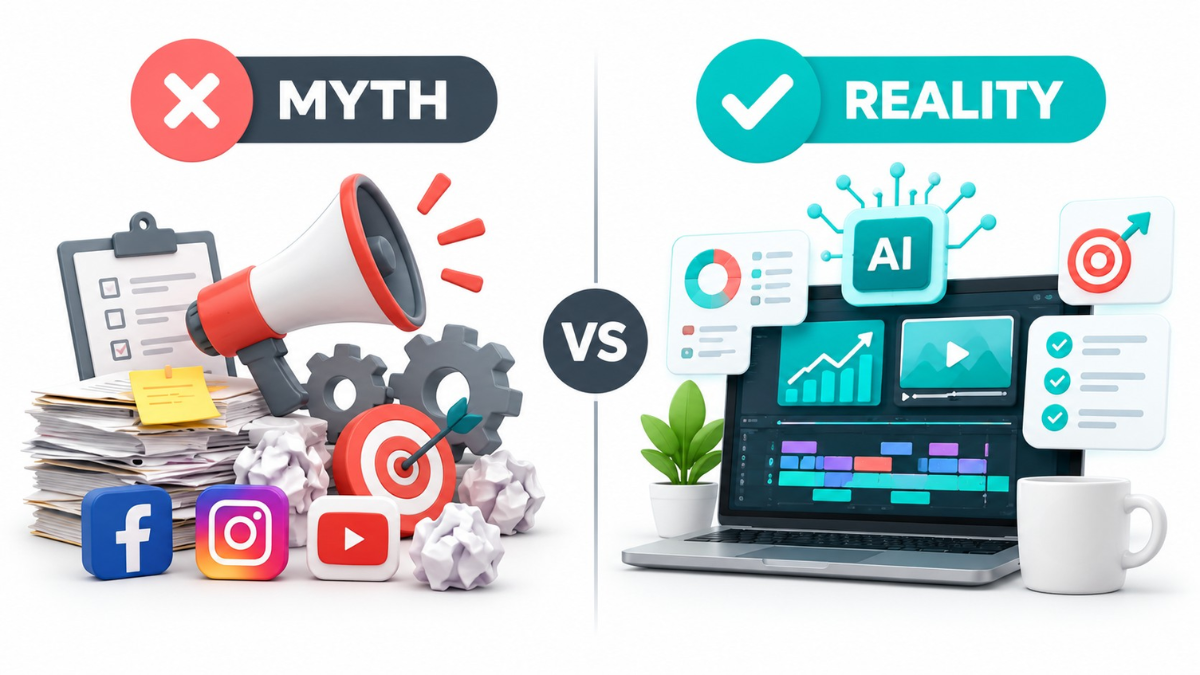
Marketing decisions get expensive when they are built on assumptions that sound true but are not. As a business owner myself, I have made decisions based on ideas that felt logical in the moment, only to realize later that the real problem was not the channel or the tool. It was the thinking behind it. The most common marketing myths I see today are not only old ideas like "marketing equals advertising." They are newer assumptions about AI, automation, outsourcing, data, and how quickly results should happen.
The short answer is this: good marketing is not one tactic, one platform, or one tool. It is a connected system that helps the right people find you, understand you, trust you, take the next step, and stay connected after the first conversion. Below are 10 marketing myths I see holding growing businesses back, what is actually true, and what I would do instead.
Founder perspective: At Smart VAs, I talk with business owners who are often doing plenty of marketing activity. The problem is that the activity is not always connected. Posts go out, ads run, emails get sent, and tools are added, but nobody has stopped to ask whether the whole system is helping the business move toward the same goal.
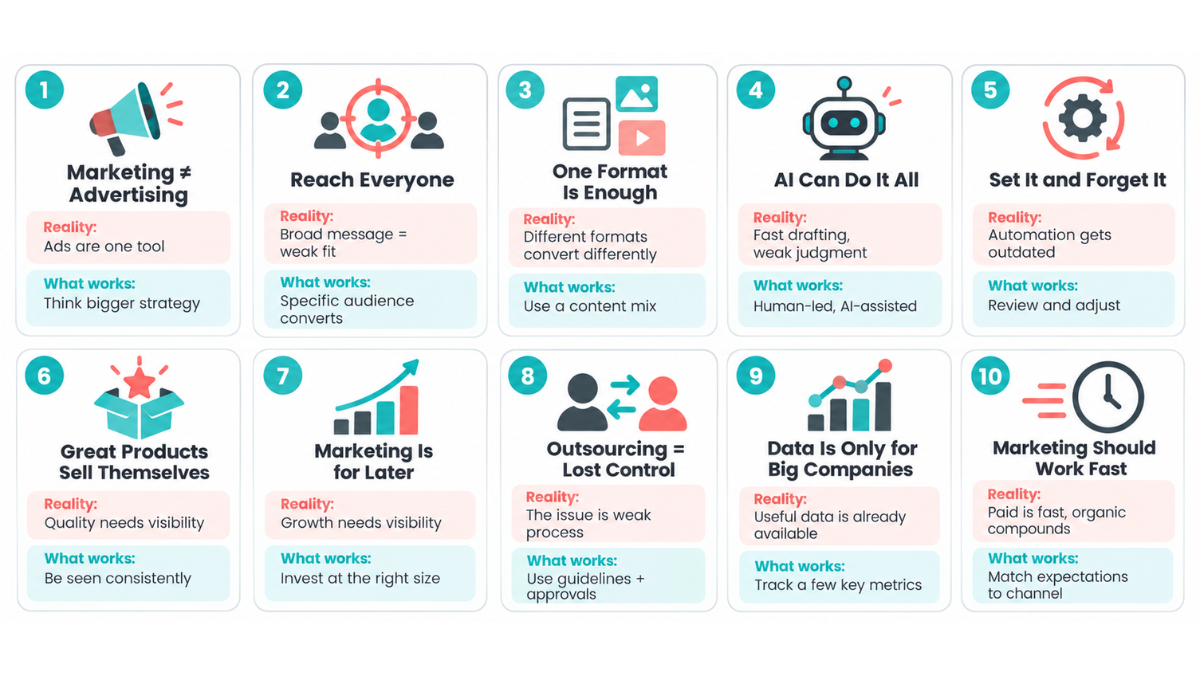
What Are the 10 Marketing Myths Businesses Should Stop Believing?
Marketing and advertising are the same thing.
You need to reach everyone to grow.
One type of content is enough for a complete strategy.
AI can handle your marketing strategy on its own.
Automation means you can set marketing up once and forget it.
A great product or service will sell itself.
Marketing is a luxury small businesses should delay.
Outsourcing means losing control of your brand.
Data-driven marketing is only practical for big companies.
Good marketing should deliver fast results across every channel.

WHAT’S KEEPING YOU STUCK IN THE WEEDS?
This guide reveals the roadblocks and tools you need to delegate smarter—not harder.
1. Is Marketing the Same Thing as Advertising?
| MYTH | Marketing and advertising are interchangeable. |
| REALITY | Advertising is paid promotion. Marketing includes the broader work of understanding the audience, positioning the offer, building visibility, creating content, nurturing leads, improving the customer journey, measuring performance, and retaining customers. |
| WHAT ACTUALLY WORKS | Treat advertising as one tool inside a broader marketing system. Decide what the business is trying to achieve first, then decide whether paid media is the right way to support that goal. |
I understand why business owners blur these two together. Ads are visible, measurable, and easy to point to. You put money in, traffic comes out, and it feels like marketing is happening. But I have seen businesses run ads to a weak offer, an unclear landing page, or a follow-up process that is not ready. The ad is doing its job. The rest of the marketing system is not.
When I look at marketing inside Smart VAs, I do not start with, "What should we advertise?" I start with the audience, the offer, the message, the conversion path, and what happens after someone shows interest. Advertising can amplify a good system. It cannot fix a disconnected one.
2. Do You Really Need to Reach Everyone to Grow Your Business?
| MYTH | The wider the audience, the more customers you can win. |
| REALITY | When a business tries to speak to everyone, the message usually becomes so general that nobody feels like it was written for them. |
| WHAT ACTUALLY WORKS | Define who the offer is for, what problem they are trying to solve, what objections they have, and what makes them ready to act. Relevance matters more than raw audience size. |
This is one of the first things I notice when I review a business's marketing. The copy says things like "we help businesses grow" or "we provide solutions for companies of all sizes." Technically, that could be true. Practically, it gives the buyer very little reason to pay attention.
At Smart VAs, our message became much clearer when we stopped trying to sound useful to everybody and focused on the kinds of growing businesses that actually need managed support. A smaller, better-defined audience makes the website easier to write, the content easier to plan, the sales conversation easier to qualify, and the offer easier to explain.
3. Is One Type of Content Enough for a Complete Marketing Strategy?
| MYTH | If you post consistently on one platform or publish one type of content, your content strategy is covered. |
| REALITY | Different formats do different jobs. Short-form content can build familiarity, longer content can answer deeper questions, email can nurture people who already know you, and website content helps convert interest into action. |
| WHAT ACTUALLY WORKS | Build a deliberate content mix around the customer journey instead of producing the same format over and over because it is familiar. |
I am a big believer in consistency, but consistency by itself is not a strategy. I have seen business owners post every week and still feel invisible because the content never connects to the questions buyers ask before they purchase.
A better approach is to decide what each channel is responsible for. I use the same thinking in our own multi-channel brand awareness strategy: one channel may create discovery, another builds trust, another nurtures, and another gives the buyer a clear next step. You do not need every format. You need the right mix for your audience and your team capacity.
4. Can AI Alone Handle Your Marketing Strategy?
| MYTH | AI can generate a full marketing strategy, content calendar, copy, and campaigns with very little oversight. |
| REALITY | AI is excellent at speeding up research, drafting, variation, summarization, and repetitive execution. It is much weaker when the work depends on first-hand customer context, brand judgment, prioritization, trade-offs, and knowing what not to do. |
| WHAT ACTUALLY WORKS | Use AI as an assistant inside a human-directed strategy. Give it strong context, review the output, add original experience, and keep a person accountable for the final decision. |
I use AI. Our team uses AI. I would be wasting time if I pretended these tools were not useful. But I do not hand the business over to them.
Google's current guidance on generative AI content makes a similar practical point: AI can help with research and structure, but the finished work still needs accuracy, quality, relevance, and real value for the user. That is how I think about AI in marketing too.
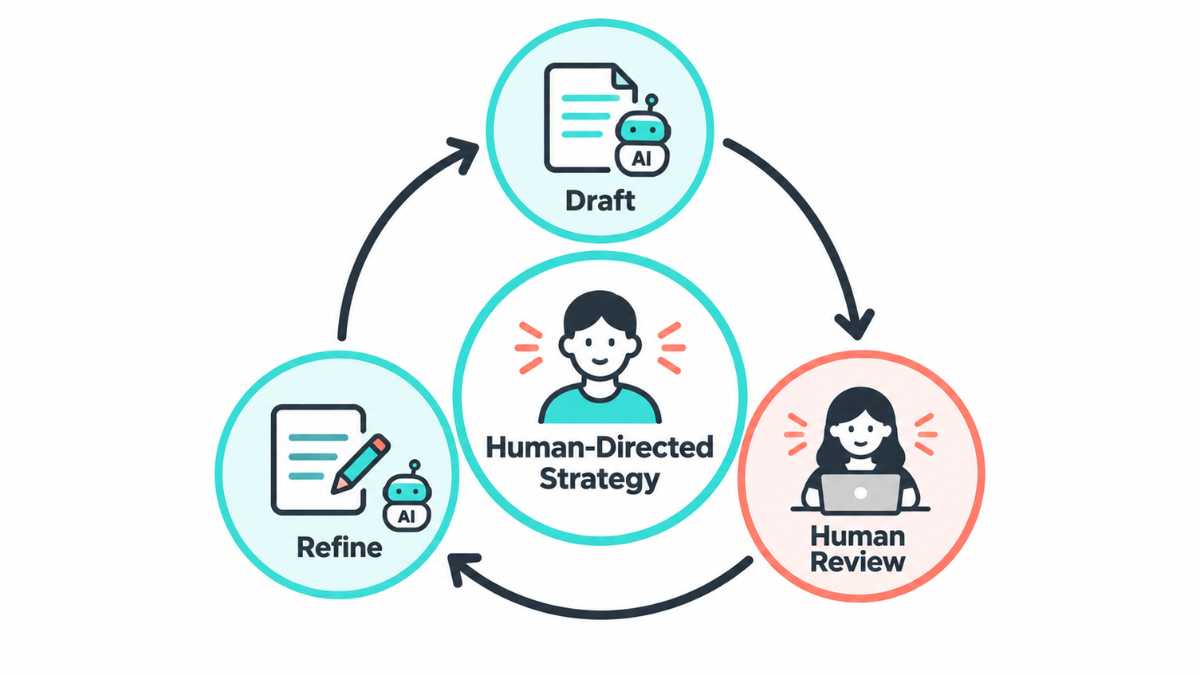
A tool can give me 30 content ideas in seconds. It cannot sit in a client call, hear the hesitation behind a question, understand why a particular offer is difficult to sell, or know which promise I am unwilling to make because it does not fit our values. Strategy depends on context. AI helps me move faster once that context is clear.
5. Does Marketing Automation Mean You Can Set It and Forget It?
| MYTH | Once the workflows, emails, reminders, and automations are built, marketing can run itself. |
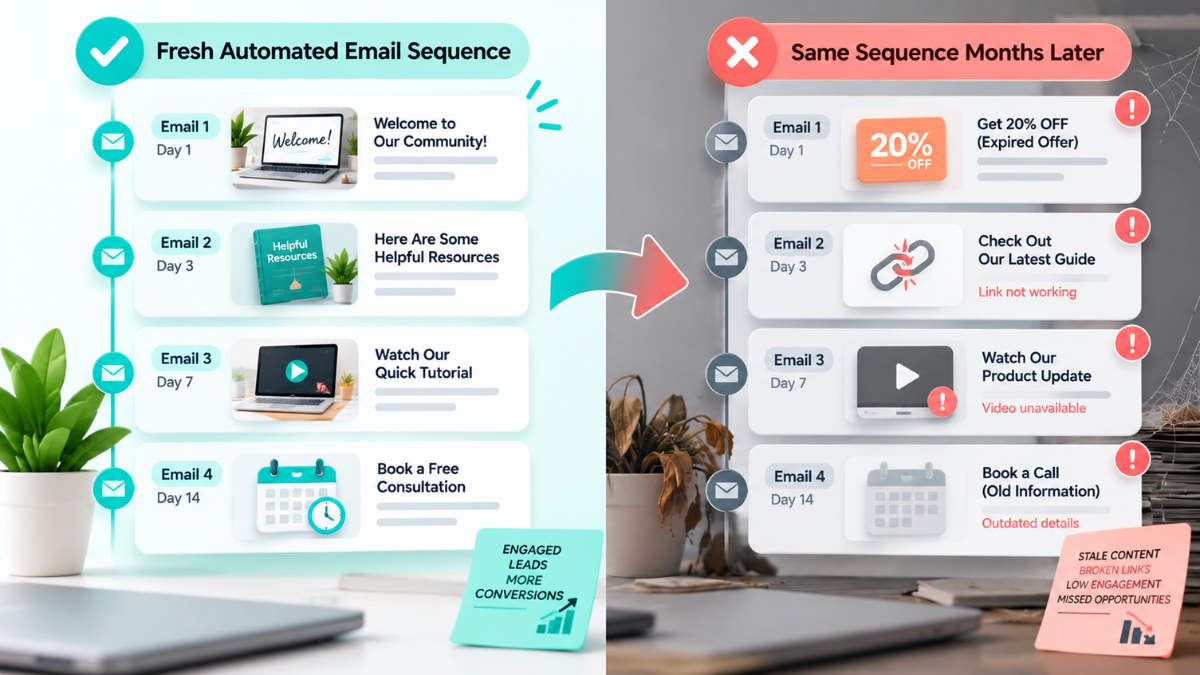
| REALITY | Automation reduces repetitive work, but messages age, offers change, links break, teams change, tags accumulate, and customer behavior shifts. An automation can keep running while quietly becoming less useful. |
| WHAT ACTUALLY WORKS | Review automation on a schedule. Check triggers, stop conditions, routing, messages, links, ownership, performance, and whether the workflow still matches the current sales process. |
I have seen this happen with CRM systems more than once. The business is proud that everything is automated, but nobody has looked at the workflows in months. A lead gets the wrong sequence. An old offer is still mentioned. A follow-up continues after someone already booked. The automation is technically working, but the business logic behind it is outdated.
That is why our approach to GoHighLevel management and marketing ROI focuses on ongoing ownership, not just setup. When a client needs deeper implementation help, our GHL Experts can support pipelines, workflows, forms, calendars, contact organization, testing, and routine maintenance while the business keeps control of the goals and approvals.
6. Will a Great Product or Service Sell Itself Without Marketing?
| MYTH | If the product or service is genuinely good, customers will eventually find it and word of mouth will do the rest. |
| REALITY | Quality matters, but quality that stays invisible is still invisible. Buyers cannot choose a business they do not know exists or do not understand well enough to trust. |
| WHAT ACTUALLY WORKS | Pair a strong offer with consistent visibility, proof, education, and a clear way for interested buyers to take the next step. |
I wish this myth were true because it would make life easier for every founder. Build something good, take care of customers, and growth just happens. In reality, some of the best businesses I have seen are also some of the hardest to discover because the owner assumes the work should speak for itself.
The work does speak, but only after people find it. That is why I look at reviews, case studies, SEO, social proof, content, email, referrals, and sales follow-up as part of the same trust-building system. Marketing should not make a weak offer look better than it is. It should make a strong offer easier for the right people to discover and understand.
7. Is Marketing a Waste of Budget for a Small, Growing Business?
| MYTH | Marketing is something to invest in later, after the business is bigger and has more cash. |
| REALITY | A growing business still needs visibility, demand, follow-up, and customer acquisition. The mistake is not investing in marketing. The mistake is investing at the wrong scale, in the wrong channels, without knowing what the business can realistically support. |
| WHAT ACTUALLY WORKS | Use right-sized marketing. Protect cash, focus on the channels closest to the current goal, and scale spend or execution only when the business has evidence that the system is working. |
As a business owner, I am sensitive to the difference between a smart investment and a bill that sounds strategic but does not move anything forward. I do not think small businesses should copy the marketing structure of a larger company. I also do not think they should wait until growth magically appears before building demand.
This is why I look at the real cost and management load when comparing in-house versus outsourced marketing ROI. A small business may not need a full department, but it does need a dependable way to execute the few marketing activities that matter most right now.
8. Does Outsourcing Marketing Mean Losing Control Over Your Brand?
| MYTH | If someone outside the company touches the marketing, the brand will become generic or the owner will lose control. |
| REALITY | Control is usually lost when there are no clear brand guidelines, approval rules, ownership, documentation, or feedback loops. An internal employee can create inconsistency too if those systems do not exist. |
| WHAT ACTUALLY WORKS | Keep strategy, account ownership, approvals, and brand standards clear. Delegate execution through a structured workflow with documented expectations and one accountable point of coordination. |
I understand this fear personally because I care deeply about how Smart VAs sounds and looks. I would never tell a business owner to hand over the keys and disappear. That is not delegation. That is abdication.
What I have learned from building Smart VAs is that good outsourcing actually requires more clarity at the beginning: What does the brand sound like? Who approves sensitive content? Which claims are off-limits? Which assets are approved? Who owns the accounts? Where does feedback live? Once those answers are documented, execution gets easier without the founder rewriting every caption or checking every small task.
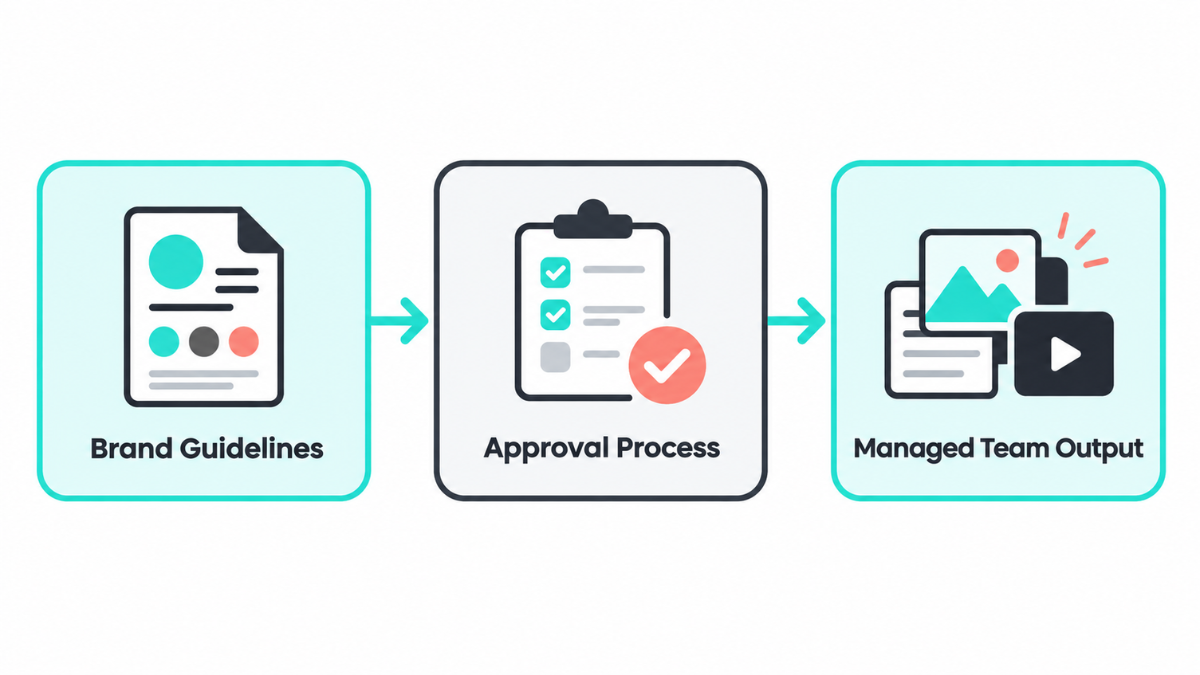
I saw this clearly with Melissa Martin of Creative Island. As her agency grew, our team supported design, web development, blog writing, social content, and copywriting execution. With a stronger support structure around the work, she was able to take on larger projects, step away for a 10-day vacation, and grow the business without personally carrying every deliverable.
For businesses that are starting to feel the same execution bottleneck, I usually recommend looking at the practical signs it is time to outsource marketing instead of treating outsourcing as an all-or-nothing decision. At Smart VAs, our managed specialist services are designed so strategy and approvals can stay close to the business while specialists handle the recurring execution that keeps slipping.
9. Is Data-Driven Marketing Only Realistic for Big Companies?
| MYTH | Useful marketing analytics require an enterprise budget, a data team, and an advanced reporting stack. |
| REALITY | Most growing businesses already have access to useful data inside their website analytics, CRM, email platform, ad accounts, social platforms, and sales process. The bigger problem is usually deciding which numbers matter. |
| WHAT ACTUALLY WORKS | Choose a small set of metrics tied to business outcomes, review them consistently, and use them to make the next decision. More dashboards do not automatically create more clarity. |
I have sat in meetings where a business had more reports than decisions. That is not data-driven marketing. That is reporting overload.
Google Analytics, for example, lets businesses define important actions as key events and conversions so marketing can be measured against outcomes that actually matter. Google's current conversion guidance specifically connects conversion measurement with understanding and improving marketing performance across channels such as search, email, social, and paid campaigns.
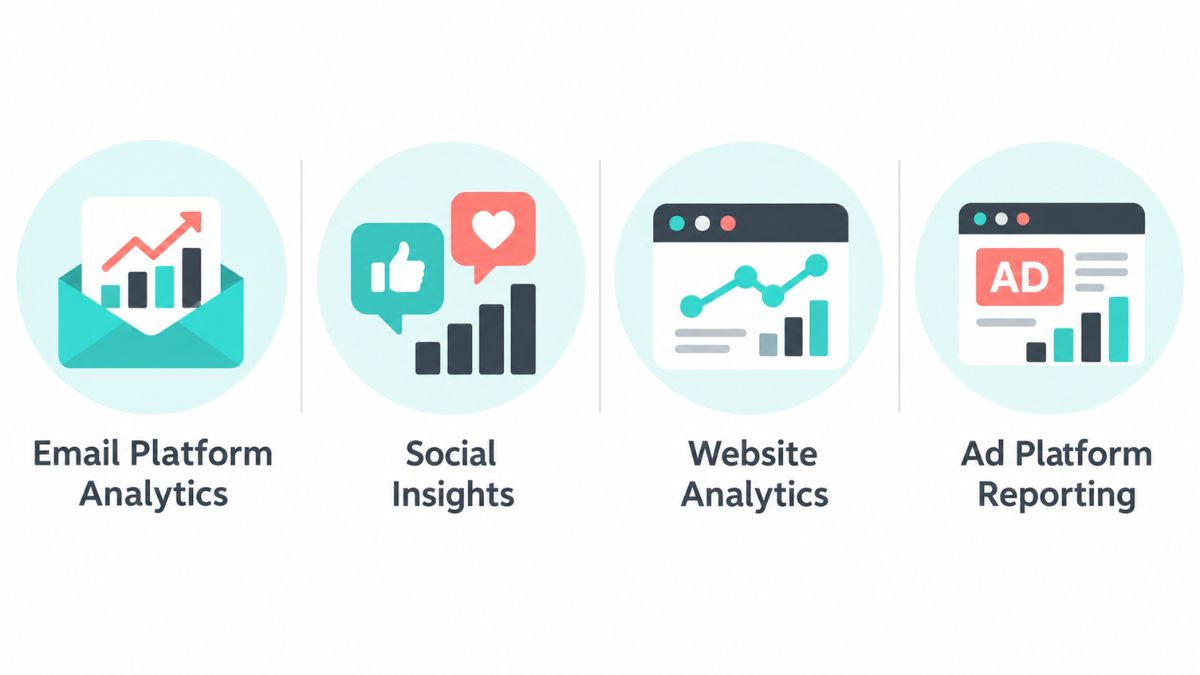
For a growing business, I would rather track five useful numbers every month than 50 numbers nobody knows what to do with. Start with qualified leads, conversion rate, sales opportunities, revenue, cost to acquire a customer, and the channel that influenced the opportunity. Add more detail only when it changes a decision.
10. Should Marketing Deliver Fast Results, or Does It Take Time?
| MYTH | If the marketing is good, results should appear within a few weeks. |
| REALITY | Different channels have different feedback loops. Paid ads can produce data quickly. Email can produce immediate clicks from an existing list. SEO, content, reviews, brand awareness, and organic social often build value over a longer period. |
| WHAT ACTUALLY WORKS | Set timeline expectations by channel. Judge fast-response channels quickly, and evaluate compounding channels with enough time and consistency to see a meaningful trend. |
This is one of the hardest conversations for business owners because we all want to know, "When will this work?" I want that answer too. But I have learned not to use one timeline for every channel.
If an ad is spending money and the tracking is clean, I expect to learn quickly. If we are rebuilding organic search visibility, publishing expert content, strengthening reviews, or building brand awareness, I expect the signal to develop over time. The mistake is not wanting results. The mistake is expecting every marketing investment to mature at the same speed.
Moving Past the Marketing Myths
Most marketing myths are dangerous because they do not sound ridiculous. They sound efficient. Reach everyone. Use one channel. Let AI do it. Automate it once. Keep everything in-house for control. Wait until the business is bigger. Expect quick results. Each idea contains just enough truth to be tempting, which is why I see business owners lose time and money to them.
The approach I trust is less dramatic: know who you are trying to reach, decide what business outcome matters, choose the channels that fit, give each channel a clear job, measure what happens, keep improving, and build enough execution capacity that the strategy does not die in a to-do list.
That is also how I think about marketing support at Smart VAs. I do not believe a business needs to outsource everything, and I do not believe one person should be expected to master every channel. I believe the business should keep control of the direction while the right specialists help keep the work moving. If your marketing plan is stronger than your current capacity to execute it, that is usually the point where a managed team becomes useful.
HOW MANY HOURS ARE YOU WASTING?
See how successful CEOs save 40+ hours a month by building a Smart VAs team.
Frequently Asked Questions
-
No. Advertising is paid promotion, while marketing is the broader system that includes audience research, positioning, content, brand building, lead generation, nurturing, sales support, customer retention, and measurement. Ads can support a marketing strategy, but they cannot replace the rest of the customer journey.
-
No. AI can speed up research, drafting, analysis, variation, and repetitive production, but it still needs business context, clear goals, human review, brand judgment, and accountability. I use AI as a tool inside a strategy, not as the person responsible for deciding what the strategy should be.
-
No. Automation reduces manual work, but workflows still need review. Offers change, teams change, links break, messaging becomes outdated, and customer behavior shifts. I recommend reviewing automations on a regular schedule and checking triggers, routing, stop conditions, content, ownership, and performance.
-
It can be if the business has no brand guidelines, approval process, account ownership, or communication system. With clear standards and documented workflows, outsourced specialists can execute consistently while the business keeps control of strategy and approvals. The process matters more than whether the person is physically in-house.
-
There is no universal percentage that fits every business. The right budget depends on revenue, margins, growth stage, sales cycle, customer acquisition economics, and which channels are being used. I prefer a right-sized budget tied to clear goals and measurable outcomes rather than copying another company’s spending level.
Kristy Yoder | Founder & CEO, Smart VAs

Kristy Yoder is the Founder of Smart VAs, providing growing businesses with a fully managed team of specialized remote talent. With a focus on seamless, timezone-flexible support and high-quality execution, Kristy helps founders stop working in their business so they can focus on scaling on it.