Digital Marketing Mistakes: 12 Common Mistakes Businesses Should Avoid
Key Takeaways
The most expensive digital marketing mistakes usually come from disconnected strategy, execution, and measurement, not from a lack of activity.
More traffic does not fix a weak website, poor targeting, unclear offers, or missing follow-up.
Businesses should choose channels based on audience fit, goals, available resources, and actual performance instead of trying to be everywhere.
Likes, views, and impressions are useful context, but they do not replace lead, conversion, revenue, and acquisition metrics.
Delegation becomes important when one person is expected to handle SEO, social media, content, ads, design, video, website work, email, and reporting at the same time.
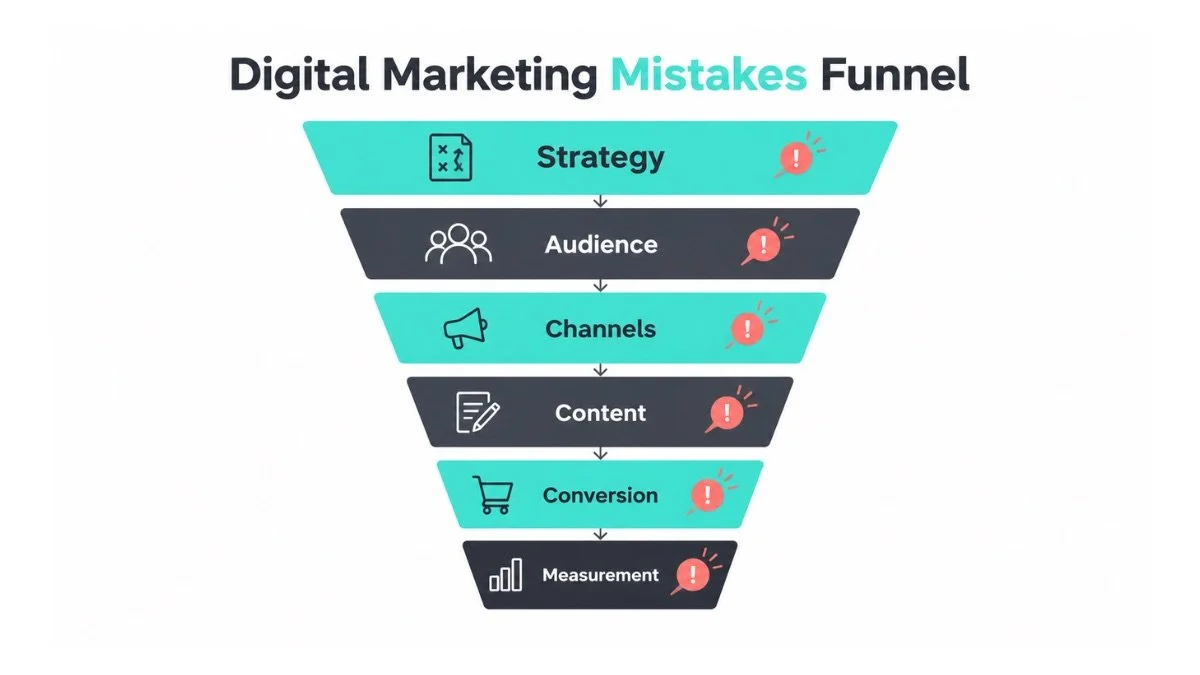
As a business owner myself, I know how easy it is to look at marketing and think the answer is simply to do more. Post more. Send more emails. Run more ads. But the digital marketing mistakes that cost businesses the most are usually not about missing one post or choosing the wrong font. They happen when the audience, goals, channels, website, content, paid campaigns, follow-up, and measurement are not working together. I see this with clients too: good content reaching the wrong people, paid traffic landing on a weak page, or strong engagement that never turns into a qualified lead. The 12 mistakes below are the ones I would fix first because they affect how efficiently the whole marketing system works.
One thing I have learned from building Smart VAs is that more activity does not automatically create better marketing. I would rather see a business understand what it actually needs, choose the right channels, build a clear conversion path, measure the right outcomes, and fix one weak point at a time than keep adding tactics just to feel busy.
Related Article: 5 Brand Awareness Strategies To Scale Your Business

DELEGATE SMART. SCALE FAST.
The step-by-step guide to reclaim your time and grow with confidence.
What Are the Most Common Digital Marketing Mistakes Businesses Make?
If I were auditing a growing business today, these are the 12 common digital marketing mistakes I would look for first:
1. Marketing without clear goals
2. Not understanding the target audience
3. Trying to be everywhere at once
4. Ignoring the website experience
5. Treating SEO as an afterthought
6. Creating content without a strategy
7. Focusing on selling instead of helping
8. Spending on ads before fixing the conversion path
9. Ignoring email and lead nurturing
10. Measuring vanity metrics instead of business outcomes
11. Failing to test and optimize
12. Trying to manage everything without the right expertise
At Smart VAs, this is how we tend to look at marketing problems with clients: not as isolated tasks, but as connected parts of one system. Weak targeting makes content less relevant. Weak content makes ads harder to convert. Weak tracking makes it difficult to know what to fix. When one part is off, it usually affects several others.
Smart Virtual Assistants
👍🤵
Smart Virtual Assistants 👍🤵
1. Why Is Marketing Without Clear Goals a Costly Digital Marketing Mistake?
As a business owner, I have learned that activity can feel productive even when it is not moving the business forward. Posting three times a week, sending a newsletter, or launching an ad campaign may keep the team busy, but none of those activities tells me whether marketing is actually helping the business.
When I look at our own marketing or talk through a client’s marketing, I prefer to work backward from the business goal. If the company needs more qualified sales conversations, the marketing goal may be to increase qualified leads. If retention is the issue, the marketing goal may be stronger repeat engagement or customer communication. If the business needs more awareness in a new market, the measurement should reflect that stage rather than forcing every campaign to prove immediate revenue.
How should businesses set digital marketing goals?
A simple structure is: Business goal → Marketing goal → KPI → Target → Channel → Campaign → Measurement. That keeps the team from choosing a tactic before it knows what success is supposed to look like.
For example, “grow Instagram” is not a business goal. “Generate 30 qualified discovery calls from our target market this quarter” is much closer because the team can connect content, outreach, landing pages, follow-up, and reporting to a real outcome.
2. How Does Failing to Understand Your Target Audience Hurt Digital Marketing Results?
This is another mistake I see often with clients: the business wants to reach everyone, so the message ends up sounding like it was written for no one in particular. When the audience is too broad, the content feels safe, the ads feel generic, and the website tries to cover so many problems that no one feels like it was made for them.
When we work through positioning at Smart VAs, I want to know more than age, job title, or company size. I want to understand the problem the customer is trying to solve, what has already frustrated them, what objections come up before they buy, what language they use, where they look for answers, and what would make them trust one provider over another.
What happens when you try to market to everyone?
The pattern is usually simple: broad audience → generic message → weak relevance → lower engagement → wasted time or spend. Good targeting does not make an audience smaller for the sake of being narrow. It makes the message more useful to the people who are most likely to need it.
3. Is Trying to Be on Every Digital Marketing Channel a Mistake?
Yes, when the business does not have the capacity to manage those channels well. I have made this decision in my own business too. Every platform has a cost, even when the channel itself is free. Someone still has to plan, create, approve, publish, engage, and report on the work.
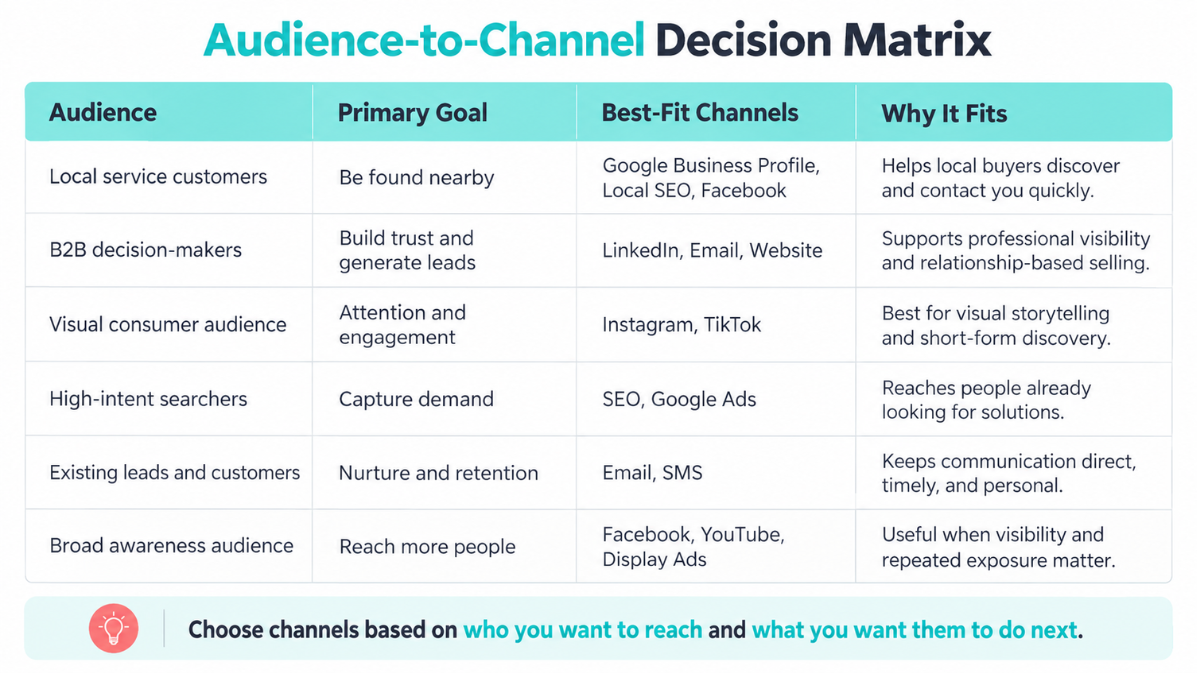
One thing I have learned from leading a growing team is that focus matters. I would rather see a business run three or four channels consistently than open accounts everywhere and leave half of them quiet. The right mix depends on where the audience spends time, what the business is trying to achieve, what formats the team can realistically produce, and which channels have already shown useful signals.
This is also why I think about brand awareness across multiple channels as a coordinated system rather than a checklist of platforms. The message should stay consistent even when the format changes.
How should a business decide which digital marketing channels to prioritize?
Use four filters: audience fit + business objective + available resources + historical performance. If a channel scores poorly on most of those, adding it because it is trending usually creates more work than value.
4. How Can an Outdated or Poorly Designed Website Undermine Digital Marketing?
A lot of digital marketing eventually points back to a website or landing page. I see this with clients all the time: the campaign itself may be doing its job, but the page people land on creates the real bottleneck.
When I review a website from a business-owner perspective, I am looking for the things that make a potential customer hesitate or leave: slow pages, confusing navigation, weak calls to action, outdated service information, broken forms, poor mobile layouts, unclear proof, or pages that make visitors work too hard to understand what happens next.
Why does website optimization matter even when traffic comes from social media or ads?
Because the journey is still traffic → website or landing page → conversion. If the middle step is weak, sending more traffic only sends more people into the same problem. Before increasing spend or publishing more aggressively, fix the page that is supposed to turn interest into action.
5. Why Is Treating SEO as an Afterthought a Digital Marketing Mistake?
I do not see SEO as something you sprinkle onto a finished article at the end. At Smart VAs, we treat it as part of how the site, content, customer questions, and internal links are planned from the beginning.
I want the team to understand search intent, topic relevance, on-page structure, internal linking, technical issues, and whether the page actually answers the question a real customer is asking. Google’s own people-first content guidance makes the same distinction: content should be created primarily to help people, not simply to manipulate rankings.
What SEO mistakes should businesses avoid?
Targeting keywords without understanding search intent
Keyword stuffing or writing unnaturally for search engines
Publishing thin pages that add little useful information
Ignoring internal linking and site structure
Leaving outdated pages untouched for years
Ignoring technical problems that affect crawling, usability, or page experience
When the team needs deeper search expertise, professional SEO experts can support the technical and content work while the business keeps control of positioning, offers, and customer insight.
6. What Happens When Businesses Create Content Without a Content Strategy?
One of the most common things I hear from business owners is, ‘We need to post more.’ I understand the pressure, but posting more is not a content strategy. I see teams create blogs, reels, emails, and social posts because the calendar is empty, while the content itself is not connected to a customer problem, funnel stage, or conversion goal.
When we plan content at Smart VAs, I like to start with the audience problem first. Then we look at what people are searching for or asking about, which format fits the channel, what action makes sense next, how the content will be distributed, and how we will judge whether it actually helped.
That is also why I separate content marketing and inbound marketing. Content can attract attention, but the broader system still needs a way to capture, nurture, and convert that attention.
How should businesses decide what content to create?
Use this flow: Audience problem → Search or interest → Content → CTA → Distribution → Measurement. If a piece of content has no clear audience problem or no reason to exist in the customer journey, I would question whether it deserves production time.
7. Why Is Focusing Only on Selling a Digital Marketing Mistake?
As a business owner, I never want our marketing to sound like we are asking people to buy every time they hear from us. If every message is promotional, the audience has very little reason to stay connected between buying moments.
In our own marketing, I prefer a mix of educational content, problem-solving content, social proof, case studies, service information, and direct promotion. The exact balance changes, but the principle stays the same: help people understand the problem and the value before asking them to take the next step.
Selling is not the problem. Selling without first helping the audience understand the problem, trust the business, or see why the offer matters is where the marketing starts to feel disconnected.
8. Why Can Spending Too Much on Paid Ads Hurt Your Digital Marketing Strategy?
Paid ads are not the mistake. I have seen businesses make the mistake of treating more budget as the fix when the audience, message, offer, landing page, or tracking still needs work.
When a client tells me an ad campaign is underperforming, I do not automatically assume the budget is too small. I want to know whether the ad is reaching the right person, whether the creative matches the offer, whether the landing page is clear, whether the form works, and whether the campaign is tracking the action the business actually cares about.
When should a business invest more in paid advertising?
I would want four things in place first: working conversion tracking, a clear offer, a validated audience, and a conversion path that has already shown it can move people from click to action.
Google Ads’ official conversion measurement guidance explains why this matters: conversion tracking connects ad interactions to valuable actions such as purchases, sign-ups, or calls, which gives the business a much better basis for optimization than clicks alone.
If paid search is already part of the mix, optimizing Google Ads for better ROI should focus on targeting, conversion quality, landing pages, and ongoing testing instead of simply increasing spend. A Google Ads Specialist can help manage that execution when the account needs consistent attention.
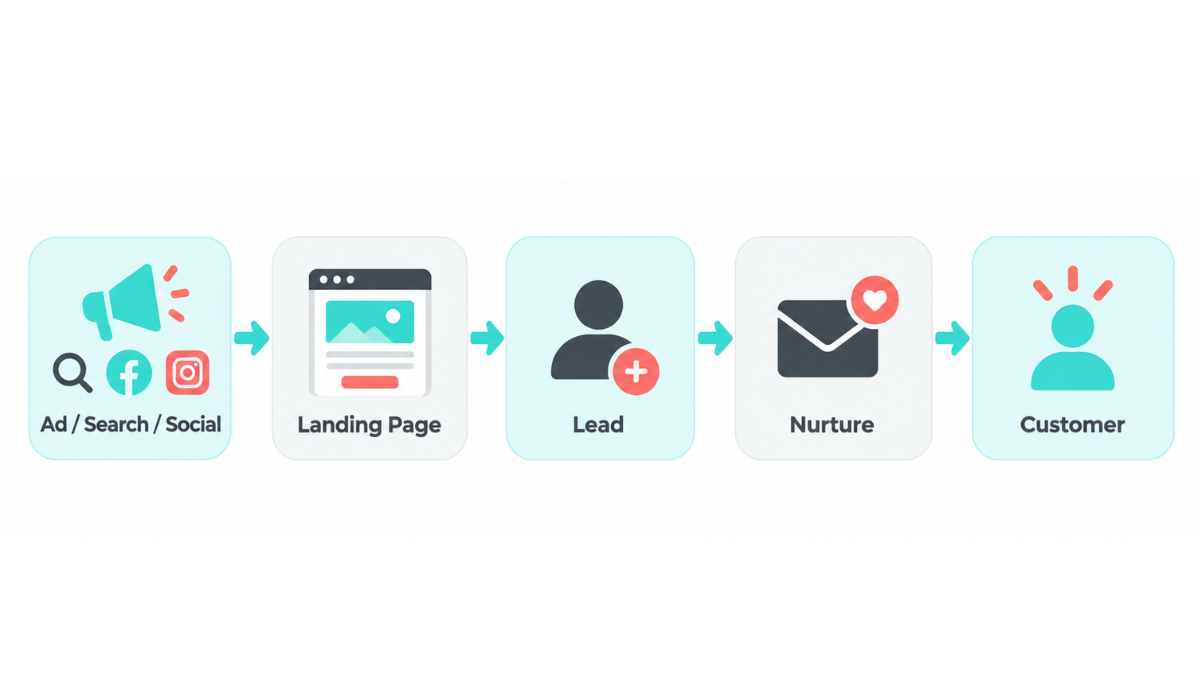
9. How Does Ignoring Email Marketing and Lead Nurturing Limit Digital Marketing ROI?
Generating a lead is not the same thing as converting a lead. This is something I have had to think about in our own marketing too. A person can download a guide, request information, or fill out a form and still be nowhere near ready to buy.
When I look at follow-up with our team, I want the system to make it easier for a real conversation to continue. That can mean welcome emails, educational follow-up, segmentation, reminders, re-engagement, and clear next steps based on what the person actually showed interest in.
Why isn't generating a lead the same as converting a lead?
Because the lead still needs context, confidence, timing, and a reason to continue the conversation. Marketing brings people into the system. Nurturing helps the business stay useful and relevant until the prospect is ready to take the next step.
10. Are You Measuring Vanity Metrics Instead of Business Results?
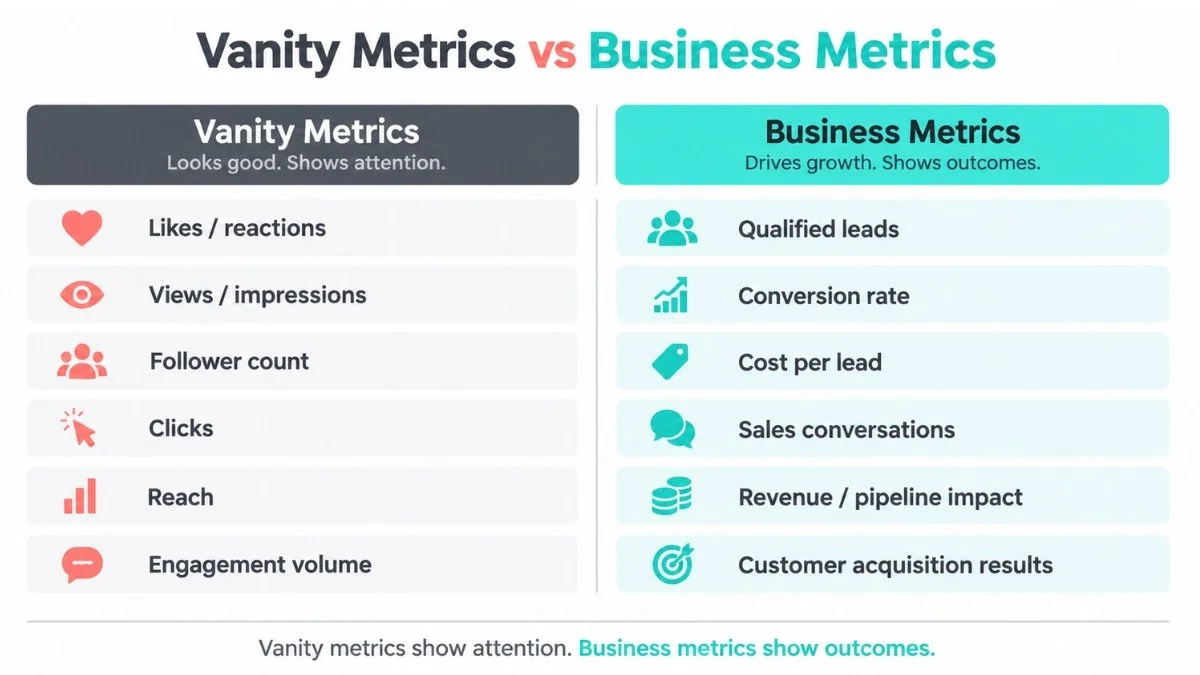
I do not dismiss likes, followers, impressions, or views. We track those at Smart VAs too because they tell us something about visibility and engagement. But I never want the team stopping there.
What matters to me as a business owner is what happened next. Did the campaign create qualified conversations? Did the email lead to clicks or conversions? Did website traffic produce the right kind of leads? If the answer is no, the bigger number on the dashboard does not tell the whole story.
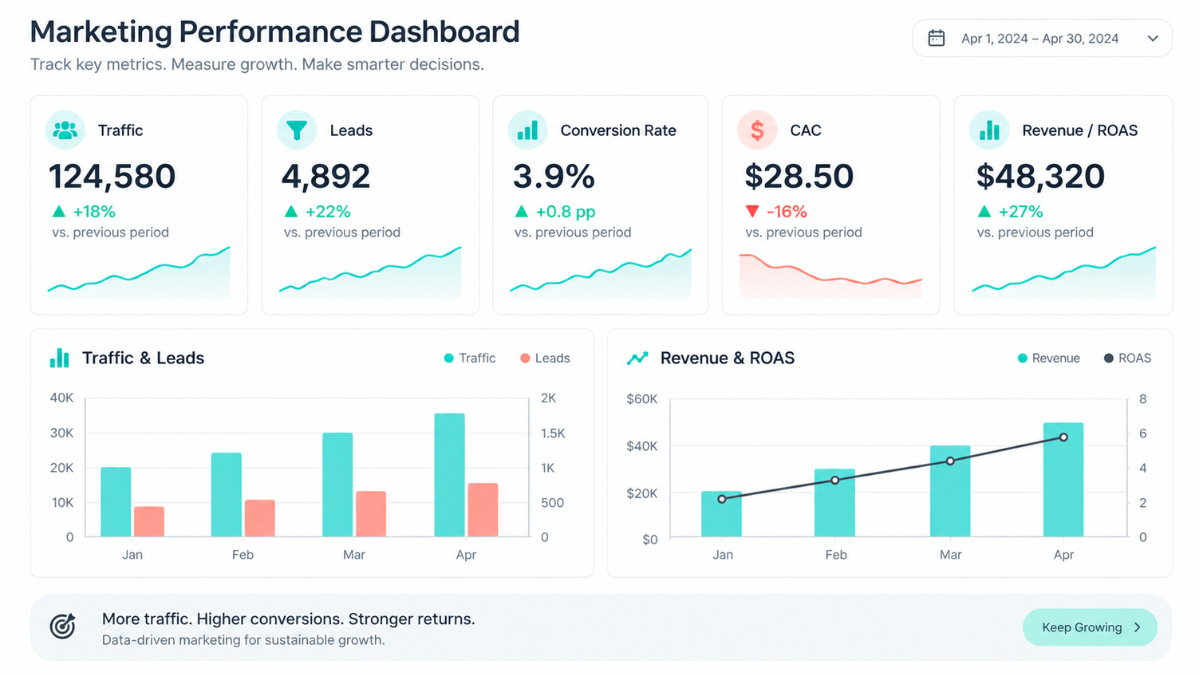
Which digital marketing KPIs should businesses actually track?
| Goal | Useful KPI |
|---|---|
| Awareness | Reach, impressions, branded search, direct traffic |
| Traffic | Organic traffic, referral traffic, engaged sessions |
| Leads | Conversion rate, qualified leads, booked appointments |
| Sales | Revenue, customer acquisition cost, lead-to-customer conversion |
| Click-through rate, replies, conversions | |
| Paid ads | Cost per acquisition, return on ad spend, qualified conversions |
| Retention | Repeat purchases, renewals, customer lifetime value |
The useful KPI is the one that matches the goal. Awareness content should not be judged exactly like a direct-response campaign, and a lead-generation ad should not be celebrated only because it earned impressions.
11. Why Is Failing to Test and Optimize Digital Marketing Campaigns a Mistake?
One thing I remind our team is that the first version is rarely the final version. Marketing improves when we learn what the audience is actually responding to instead of getting attached to an idea simply because we spent time creating it.
I like simple tests with a clear question. Does a stronger offer improve conversion? Does a different audience produce better lead quality? Does a simpler landing page reduce drop-off? Does a clearer email subject line improve clicks? At Smart VAs, I would rather learn one useful thing from a clean test than change five things at once and have no idea what made the difference.
What should you test first?
1. Offer
2. Audience
3. Messaging
4. Landing page
5. Call to action
6. Creative
I prioritize the changes most likely to affect the business outcome. A new button color is rarely more important than an offer the audience does not understand.
12. Why Is Chasing Every New Digital Marketing Trend a Mistake?
I know how tempting new platforms, AI tools, content formats, and ad features can be, especially when everyone is talking about them. But as a business owner, I have also learned that chasing every new thing can pull attention away from what is already working.
My rule is simple: test, measure, compare, then scale or stop. A trend earns a place in the strategy when it serves the audience and improves a business outcome, not because it is popular that week.
We use AI in our work too, but I still look at it the same way I look at any other tool. It can speed up research, production, or analysis, but faster output is not automatically better strategy. The business still needs judgment, positioning, quality control, and a clear reason for creating the work.
How Can Trying to Manage Every Digital Marketing Task Yourself Hurt Your Business?
This is the mistake I understand most personally because I have been the business owner trying to carry too much. I also see it with founders and small teams we support. One person ends up responsible for SEO, social media, content, email, ads, design, video, website updates, CRM work, and analytics. The issue is not effort. The role itself has become unrealistic.
One of the reasons I built Smart VAs around specialist support is because I do not believe one person should be expected to be excellent at every part of marketing. When that happens, execution becomes inconsistent, campaigns get delayed, specialist work gets rushed, and strategy is usually the first thing to disappear because urgent tasks always win.
I saw this clearly with Gabe Gibitz, founder of Blue Guru Marketing. Before working with Smart VAs, Gabe was stretched across web development, SEO, client communication, project management, and the day-to-day work of running a digital marketing business. As we built more support around recurring execution, he had more room to focus on leading the business instead of being the person every task depended on.
That is also why I think the decision about when to outsource your marketing team should start with bottlenecks and missing expertise, not with a belief that every business needs the same staffing model.
Which digital marketing tasks should businesses consider delegating?
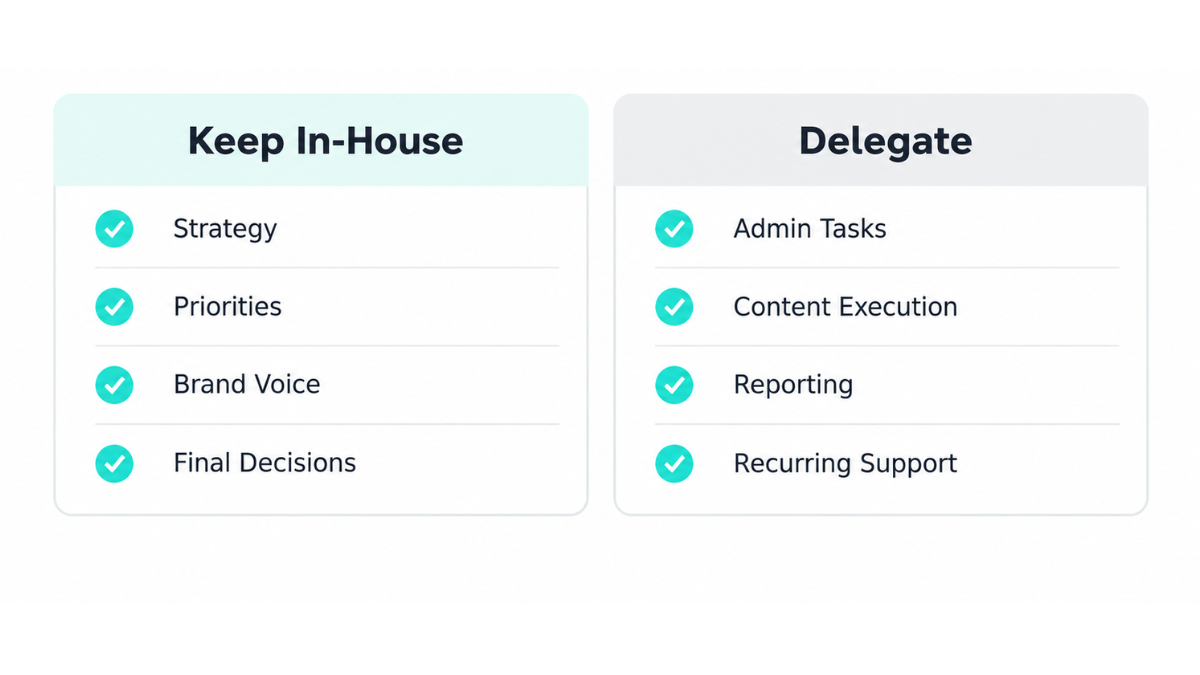
| Task | When delegation makes sense |
|---|---|
| Social media | Consistent planning, publishing, or engagement keeps slipping. |
| SEO | Technical or content expertise is missing internally. |
| Content writing | Publishing is inconsistent or the internal team cannot keep up. |
| Graphic design | Creative requests consume too much team time or create bottlenecks. |
| Video editing | Video production is slowing content output. |
| Google Ads | Campaigns require specialist management, testing, and reporting. |
| Website updates | Pages, forms, or landing pages are delayed because no one owns them. |
How Can Businesses Fix Digital Marketing Mistakes Before They Become Expensive?
When I see several marketing problems at once, I do not try to fix everything in one week. I have learned that doing that usually creates another layer of chaos. This is the five-step process I use to get clear on what actually deserves attention first.
1. Audit: Document what is currently happening across channels, campaigns, website, follow-up, and reporting.
2. Identify: Find the real problem behind the symptom. Low leads could be targeting, traffic, conversion, or follow-up.
3. Prioritize: Fix the issue with the biggest likely business impact first.
4. Test: Make one meaningful change that can prove or disprove the hypothesis.
5. Measure: Compare the result against the KPI that actually matters.
That is how I approach these situations at Smart VAs too. A weak metric is not automatically a reason to launch another tactic. Sometimes the best marketing move is fixing the system you already have before adding anything new.
When Should a Business Get Professional Help With Digital Marketing?
From what I see with our clients, professional support starts to make sense when marketing is important enough to require consistency but the internal team no longer has the time or specialist knowledge to execute it well. The business usually already knows marketing matters. The problem is that the work keeps getting pushed behind client delivery, operations, sales, and everything else that feels more urgent that day.
Campaigns are regularly delayed or unfinished.
The team cannot explain which channels are producing useful results.
Leads are entering the business but follow-up is inconsistent.
SEO, paid ads, content, or website work has stalled.
Creative production has become a bottleneck.
The founder or senior team members are still the backup for routine marketing execution.
What can a digital marketing virtual assistant help with?
At Smart VAs, I see this work best when the business keeps ownership of strategy and customer insight while the right specialists handle the recurring execution. Depending on the role, that can include social media, blog production, SEO tasks, graphic design, video editing, Google Ads support, website updates, CRM organization, email setup, reporting, and campaign coordination.
At Smart VAs, our fully managed virtual assistant team is designed around that idea: the business keeps ownership of strategy, positioning, customer insight, and approvals while specialists help carry the recurring execution that would otherwise sit on the owner or one overloaded employee.
What Is the Best Way to Avoid Digital Marketing Mistakes?
The best way to avoid digital marketing mistakes is to keep the whole system connected: know your audience → set measurable goals → choose the right channels → create useful content → build a strong conversion path → follow up → track results → test → optimize → delegate where needed.
As a business owner, I do not expect a growing company to get every part of marketing perfect on the first try. I do expect the team to know what it is trying to achieve, what it is measuring, and what it will change when the data says something is not working. That is the standard I try to hold in our own marketing at Smart VAs too.
More activity is not the goal. Better marketing decisions are.
What if you could reclaim 40 hours this month?
Find out inside this free guide.
Frequently Asked Question
-
The most common digital marketing mistakes include unclear goals, weak audience targeting, trying to use too many channels, poor website conversion, weak SEO, random content, over-selling, scaling ads too early, poor lead nurturing, vanity-metric reporting, limited testing, and trying to manage every marketing specialty with one person.
-
The biggest mistake is usually disconnection. A business may have good content, ads, and traffic, but if those activities are not tied to a clear audience, conversion path, follow-up system, and measurable business goal, the marketing becomes difficult to evaluate and improve.
-
Campaigns can fail for many reasons, including poor targeting, an unclear offer, weak creative, a poor landing page, broken tracking, inconsistent follow-up, or unrealistic expectations. I would diagnose the customer journey before assuming the channel itself is the problem.
-
Start with a clear audience and business goal, choose only the channels you can manage well, build a working conversion path, track meaningful KPIs, test one variable at a time, and document what the team learns. Delegation can help when specialist execution or capacity is missing.
-
Common SEO mistakes include targeting keywords without understanding intent, publishing thin or repetitive content, keyword stuffing, ignoring technical issues, neglecting internal links, leaving outdated pages untouched, and writing mainly for search engines instead of creating useful content for the intended audience.
-
Common social media mistakes include posting without a clear audience, using the same message on every platform, focusing only on promotion, ignoring comments and conversations, chasing trends that do not fit the brand, and measuring success only by followers or views instead of business-relevant outcomes.
-
Tracking shows whether marketing activity is creating the outcome the business actually wants. Without it, teams can mistake visibility for performance or keep funding campaigns that do not produce qualified leads, sales, or other meaningful actions. Good tracking makes optimization less dependent on guesswork.
-
Common paid-advertising mistakes include broad or weak targeting, unclear offers, poor landing pages, missing conversion tracking, scaling spend before proving the campaign, changing too many variables at once, and optimizing toward clicks or impressions instead of the conversions that matter to the business.
-
Some should, and some should not. Outsourcing makes sense when marketing is important but the internal team lacks time, capacity, or specialist expertise. A small business can also use a hybrid model where strategy and approvals stay in-house while recurring execution is delegated.
-
Your strategy is working when the metrics tied to your business goals improve over time. That may include qualified leads, conversion rate, booked calls, customer acquisition cost, revenue, retention, or other outcomes. Channel-level metrics are useful, but they should connect back to a business result.
Kristy Yoder | Founder & CEO, Smart VAs

Kristy Yoder is the Founder of Smart VAs, providing growing businesses with a fully managed team of specialized remote talent. With a focus on seamless, timezone-flexible support and high-quality execution, Kristy helps founders stop working in their business so they can focus on scaling on it.