How Managed Business Support Helps Businesses Scale Efficiently
Key Takeaways
Managed Business Support helps scaling businesses protect consistency when admin, marketing, customer follow-ups, and operations are all competing for the owner’s time.
Scalability depends on structure, not just demand. More clients can create more risk when the backend cannot absorb the added volume.
A managed support model gives growing businesses a coordinated way to delegate recurring work without building several full-time roles too early.
The strongest support partner should provide clear scope, communication cadence, task visibility, and a Client Success Partner for coordination.

ARE YOU STILL TRYING TO DO IT ALL?
Discover the SMART way to delegate without losing control—and finally free up your time.
A business can look healthy from the outside while the owner is quietly holding the whole thing together with reminders, late-night inbox checks, and half-finished follow-ups. I have seen this happen when a company gets a rush of new inquiries, but client updates start slipping because the same person is handling sales, admin, marketing, and customer questions at the same time.

That is usually not a motivation problem. It is a structure problem. Scalability is not only about bringing in more revenue or more clients. It is about whether the systems behind the business can handle more volume without quality dropping.
In this guide, I will walk through what Managed Business Support actually means, what it can handle day to day, and how to know when your business is ready for a support structure that can grow with you.
What Is Managed Business Support, and How Is It Different From Hiring an Employee?
Managed Business Support is a structured external support model that helps a growing business handle defined functions such as admin, marketing, customer communication, task tracking, and operations. Instead of expecting one employee to cover every moving part alone, the business works with a coordinated support structure that has clearer roles, oversight, and room to expand as the workload grows.
A single employee can be the right choice when the role is narrow, consistent, and deeply tied to internal decision-making. But many growing businesses do not have one neat gap. They have five small gaps happening at the same time: the inbox needs sorting, client notes need updating, posts need scheduling, reports need preparing, and follow-ups need to go out on time.
At SmartVAs, I think about managed support as building a practical operating layer around the owner. The goal is not to add random hands to the business. The goal is to create a fully managed team of specialists that can keep recurring work moving while the owner stays focused on direction, decisions, and growth.
Quick Comparison: Employee vs. Managed Business Support
| Area | Single Employee | Managed Business Support |
|---|---|---|
| Coverage | Usually one defined role | Defined scope across several recurring functions |
| Capacity | Limited to one person’s time and skill set | Can adjust support based on workload and priorities |
| Oversight | Managed internally by the owner or leadership team | Supported by coordination, task tracking, and reporting |
Why Does Business Scalability Depend on More Than Just Growth Ambition?
Growth ambition matters, but it does not automatically create capacity. A business becomes scalable when it can take on more clients, orders, campaigns, or service requests without relying on the owner to personally rescue every delayed task.
I have seen businesses reach the point where demand is no longer the biggest problem. The bigger issue is that the support system behind the demand is too thin. A founder may know exactly how to sell, serve, and lead, but still lose momentum because the calendar is messy, the inbox is crowded, and no one is keeping the operational details organized.
That is where managed support services for business become useful. They make the behind-the-scenes work easier to repeat. When daily tasks have clear owners, deadlines, and reporting, growth feels less like chaos and more like something the business can absorb.
What Happens When a Business Tries to Scale Without the Right Support Structure?

The first sign is usually the owner becoming the bottleneck. Every client update waits for them. Every draft needs their reminder. Every admin question lands in their inbox. At first, that may feel manageable because the business is still small enough for personal oversight. But as growth speeds up, the same habit turns into delayed responses, rushed decisions, and avoidable mistakes.
The second sign is inconsistency. A client gets a fast response one week and silence the next. A marketing campaign starts strong, then disappears because delivery work gets busy. A proposal sits half-finished because the owner has to choose between following up with leads and handling active clients.
One reason Gabe Gibitz's story stands out to me is that his business did not only need task relief. It needed a support structure that could expand. His work with SmartVAs started with project-based help and later grew into a much larger coordinated support arrangement across technical project management, social media, and operations. That is a clear example of how managed remote support can scale with the business instead of forcing the owner to rebuild support from scratch every time the workload grows.
What Day-to-Day Tasks Does Managed Business Support Typically Handle?
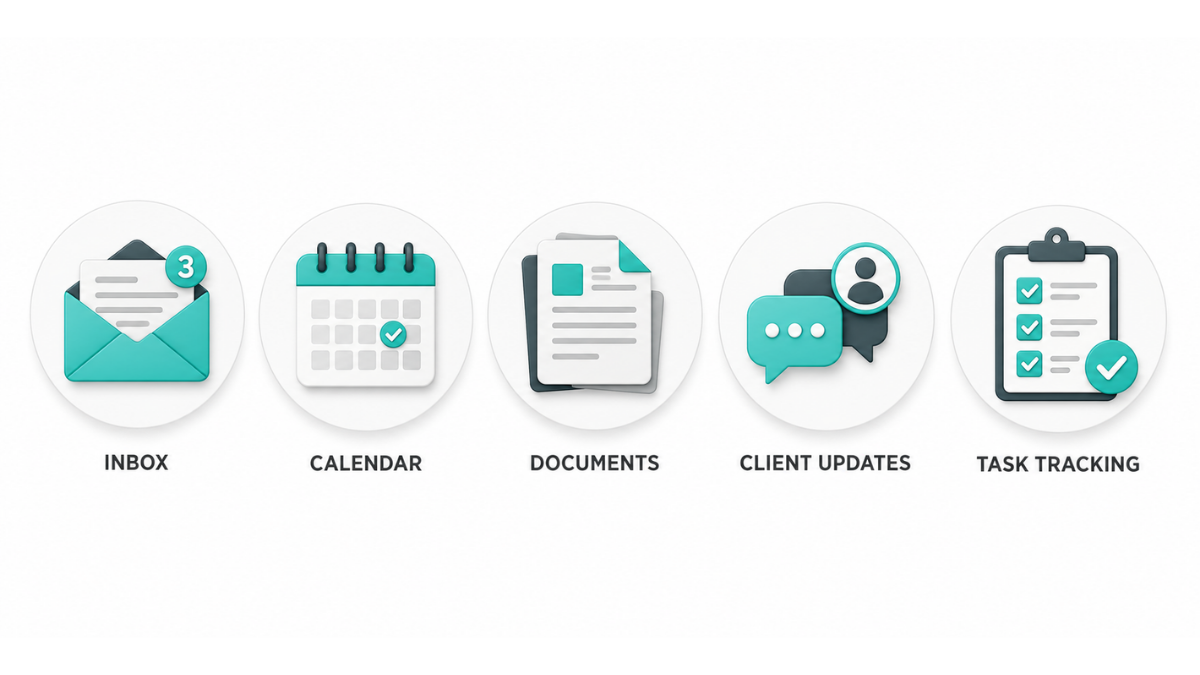
Managed Business Support usually starts with the recurring work that keeps a company organized. Inbox management is a good example. This does not mean someone simply opens emails. It can mean sorting urgent messages, flagging client requests, drafting simple responses for approval, and making sure important follow-ups do not disappear under newsletters and notifications.
Calendar coordination is another common need. A support specialist can confirm meetings, avoid double bookings, prepare agenda notes, and make sure the owner is not jumping from a sales call into a client meeting without the right context.
Document and report preparation can also make a big difference. For example, a business owner may need a weekly client update pulled from task notes, completed items, and pending decisions. When that preparation happens before the meeting, the conversation becomes clearer and more useful.
Task tracking is often where the biggest relief happens. Instead of relying on memory, the support team can keep project boards updated, assign next steps, confirm due dates, and surface delays before they become client-facing problems.
How Does Managed Business Support Strengthen Marketing and Customer Engagement?
Marketing often suffers when business owners are busy serving clients. The ideas are there, but the posting, drafting, scheduling, repurposing, and follow-up do not happen consistently. Managed business support helps by turning marketing into a repeatable workflow instead of a task that only happens when the owner has extra time.
A social media management specialist can help plan content themes, schedule posts, coordinate visuals, and keep the business visible even during busy delivery weeks. That matters because brand trust is built through steady presence, not occasional bursts of activity.
The same applies to customer engagement. If a prospect asks a question through email or social media, the response should not depend on whether the owner has a quiet afternoon. A simple follow-up system can protect leads, support client relationships, and create a more reliable experience. In the same way, customer support structure should grow with ticket volume so response quality does not collapse as the business gets busier.
How Does Managed Business Support Help Control Costs While Scaling?
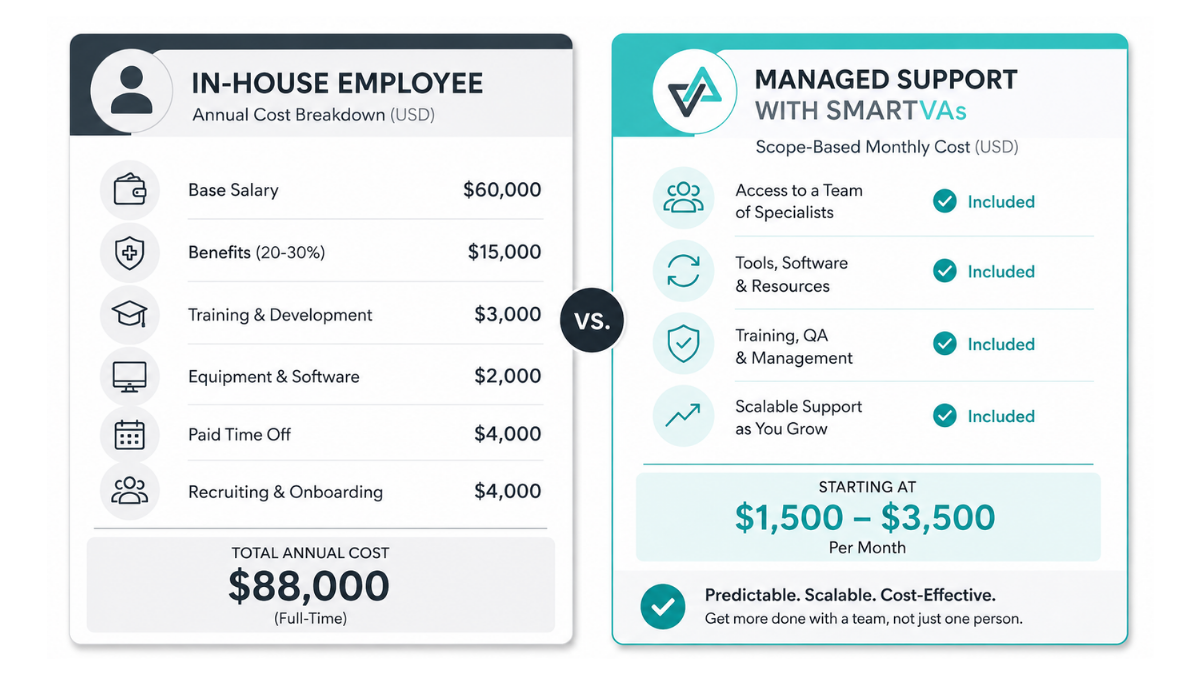
Hiring full-time can be the right decision, but it comes with more than salary. Employers also carry the cost of benefits, payroll taxes, paid leave, training, software, recruiting time, and management time. BLS Employer Costs for Employee Compensation data shows that benefits make up about 30 percent of total employer compensation costs for civilian workers, which is why the real cost of hiring is usually higher than the wage line alone.
Managed support does not remove every cost, but it changes the structure of the cost. Instead of hiring several full-time people before the workload is ready for that, the business can pay for a defined scope of work and adjust support as needs change.
For many growing businesses, that is the real advantage. They may need admin support every week, social content support during campaign months, and customer follow-up support when leads increase. A managed structure can give them access to the right help without forcing every function into a permanent internal seat too early.
Is Managed Business Support More Flexible Than Hiring Full-Time Staff?
Managed support can be more flexible because the structure can change with the workload. A retail business may need more customer communication during holiday periods. A service business may need extra admin support after a successful referral push. A consulting company may need help preparing documents and follow-ups during a launch window.
With full-time hiring, every change usually means recruiting, onboarding, training, and managing another person. With managed operations support, the business can often adjust scope, priorities, and coverage without starting the whole hiring cycle again.
That flexibility matters most when growth is uneven. Many businesses do not grow in a perfectly predictable line. They grow in spikes, launches, busy seasons, and referral waves. Support should be able to move with that reality.
How Does a Managed Specialist Team Provide Support Across Multiple Business Functions at Once?
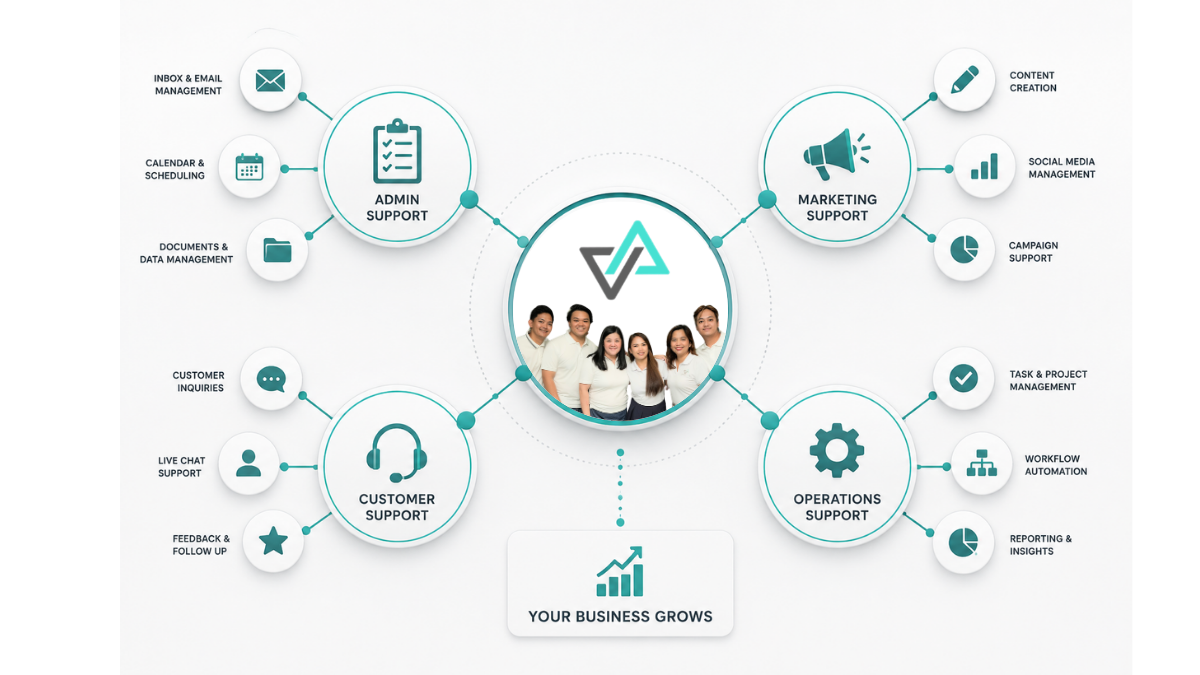
The biggest difference is coordination. A business may not need separate departments yet, but it may already need help across several functions. Admin, marketing, customer communication, and operations are connected. When one falls behind, the others often feel it.
For example, a marketing campaign may generate new leads, but someone still needs to answer questions, update the CRM, schedule calls, send follow-ups, and keep the owner informed. If those functions are handled in silos, the business owner becomes the person connecting all the pieces again.
A Managed Specialist Team is designed to reduce that gap. It gives the business a clearer support structure where tasks can be assigned, tracked, reviewed, and improved across functions. That is why marketing execution needs the right structure just as much as creative ideas. Good execution depends on people knowing who owns what, when it is due, and how the work supports the bigger goal.
What Should You Look for When Choosing a Managed Business Support Partner?
The first thing I would look for is clear scope. A good partner should help define what is included, what is not included, what needs approval, and how priorities will be handled when everything feels urgent.
The second thing is communication rhythm. You should know how updates will be shared, how tasks will be tracked, and when you can expect progress reports. Without that rhythm, support can become another thing the owner has to manage.
The third thing is a Client Success Partner or similar point of contact. Growing businesses need a clear place to go when priorities shift, scope changes, or something needs attention. A support partner should also have an escalation path, not vague promises.
Red flags include unclear deliverables, no reporting cadence, no documented handoff process, and support that depends too heavily on one person knowing everything. If the business is trying to scale, the support model should protect continuity, not create another single point of failure.
How Do You Know When Your Business Is Ready for Managed Business Support?
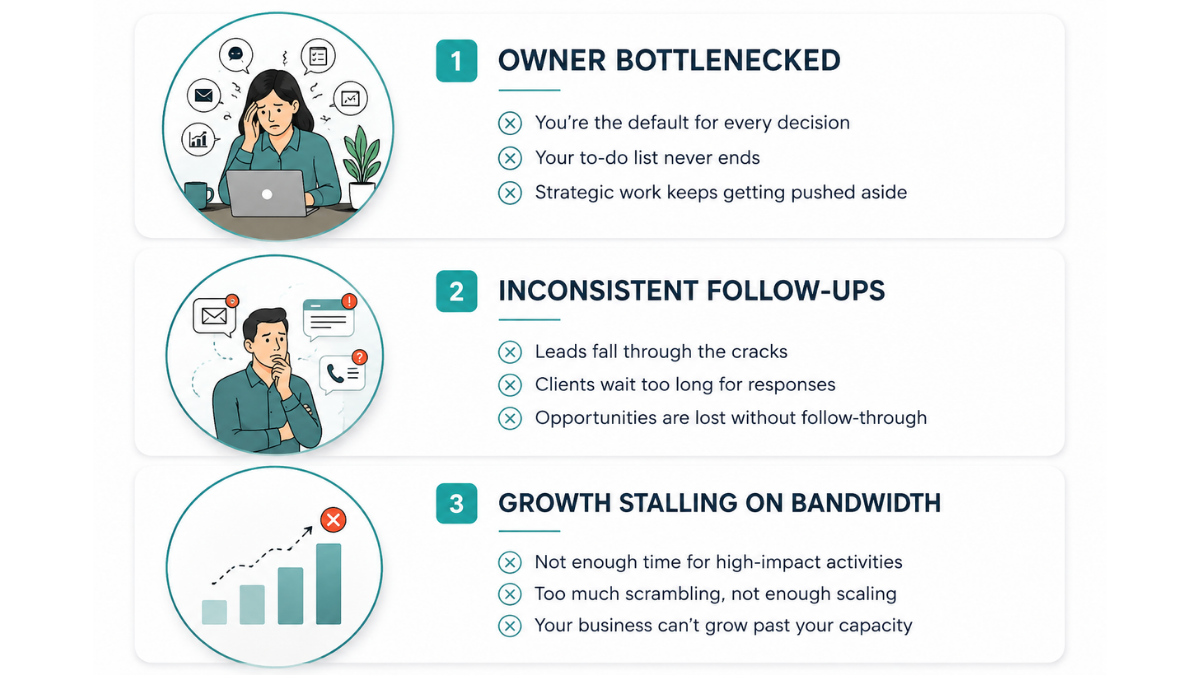
A business is usually ready when the owner is still involved in too many operational details that someone else could handle with the right process. That may look like answering routine emails at night, chasing missing files, rescheduling meetings, preparing reports at the last minute, or checking whether follow-ups were sent.
Another signal is inconsistent client follow-through. If your team is doing good work but updates are late, next steps are unclear, or leads are slipping through the cracks, the issue may not be effort. It may be that no one owns the support system around the work.
I also pay attention to stalled growth. If the business has demand but the owner cannot take on more because daily tasks keep pulling them back in, business scalability support becomes more than helpful. It becomes part of protecting the next stage of growth. Remote admin support is usually a sign that the owner needs more operational breathing room, but managed support goes further by connecting admin work with marketing, client communication, and operations.
Simple Readiness Check
I am still the person chasing routine follow-ups.
Client updates sometimes wait because I am too busy with delivery work.
Marketing stops whenever operations get busy.
I have recurring tasks that someone else could own with the right process.
Growth feels exciting, but the backend feels stretched.
Partnering With the Right Managed Support Team
Scaling a business takes more than ambition. It takes structure. When the owner is still the center of every admin task, client update, marketing follow-up, and operational decision, growth can quickly become exhausting instead of exciting.
Managed Business Support gives growing businesses a more sustainable way to delegate. The right structure helps recurring work happen consistently, keeps communication clearer, and gives the owner more time to focus on the decisions only they can make.
At SmartVAs, our Managed Specialist Team can support admin, marketing, customer communication, and operations so business owners are not trying to carry every moving part alone. If your business is growing but the backend is starting to feel stretched, it may be time to build a support system that can grow with you.
wn operations.
Related Article:Content Marketing Vs Social Media Marketing: Which One is Best?
Smart Virtual Assistants
👍🤵
Smart Virtual Assistants 👍🤵
READY TO FINALLY DELEGATE LIKE A CEO?
Learn the 7-day plan to build your dream VA team and step out of the weeds.
Frequently Asked Questions
-
Managed business support is a structured support model where an external team helps manage recurring business functions such as admin, marketing, customer communication, task tracking, and operations. The goal is to create consistent execution behind the business so the owner is not personally carrying every day-to-day task as the company grows.
-
A full-time employee usually fills one defined internal role. Managed business support gives the business access to a coordinated support structure that can cover several functions based on scope. It can be more flexible for growing businesses that need help across admin, marketing, customer follow-up, and operations before hiring multiple internal roles.
-
Managed business support can handle inbox organization, calendar coordination, client follow-ups, document preparation, task tracking, social media scheduling, customer communication, CRM updates, and reporting. The exact scope depends on the business needs, but the strongest setup focuses on recurring tasks that protect consistency and free the owner for higher-value work.
-
It can be cost-effective when a small business needs consistent support but is not ready to hire several full-time employees. Instead of paying for separate roles too early, the business can define a scope of work and adjust support as workload changes. The value comes from structure, flexibility, and saved leadership time.
-
You may be ready for managed support if client follow-ups are slipping, your inbox is constantly behind, marketing is inconsistent, or growth is creating more admin than you can handle. Another sign is when you have demand, but taking on more work feels risky because the backend is already stretched.

Kristy Yoder is the Founder of Smart VAs, a virtual assistant agency that helps entrepreneurs grow through reliable administrative and digital marketing support. With extensive experience building and managing remote teams, she specializes in delegation, operational efficiency, and scalable business growth.
Passionate about helping business owners reclaim their time, Kristy leads Smart VAs in connecting entrepreneurs with skilled virtual professionals who provide dependable support and contribute to long-term success.