Social Media Marketing vs Social Media Management
Social media marketing and social media management serve different purposes. Marketing focuses on promoting products and reaching a target audience. Management focuses on planning, posting, organizing, and engaging. A business grows faster when both are used together.
Social media marketing vs social media management remains one of the most common questions business owners ask when they want to improve their online visibility and performance. Do you really need two different approaches for your social media presence, or is one enough to grow online?
Many people mix up these two concepts because they appear connected. A closer look shows that each one plays a unique role in helping a brand show up consistently and reach more people. This is why the topic boldly stands out in conversations about modern business growth.
Both approaches support a business in different ways. One focuses on promoting content and building attention. The other focuses on daily organization, consistency, and communication. When combined correctly, they create a digital presence that helps a business look active, reliable, and ready to grow.
Related Article: Top Benefits of Outsourcing Social Media Management

STOP MANAGING TASKS. START LEADING.
SMART Delegation helps you reclaim your role as CEO while building a stronger team.
Understanding the Difference
Many business owners jump into online platforms without fully understanding the difference between social media marketing vs social media management. These two functions might seem similar at first because both rely on content, planning, and audience interaction. Still, their main focus and daily tasks do not match.
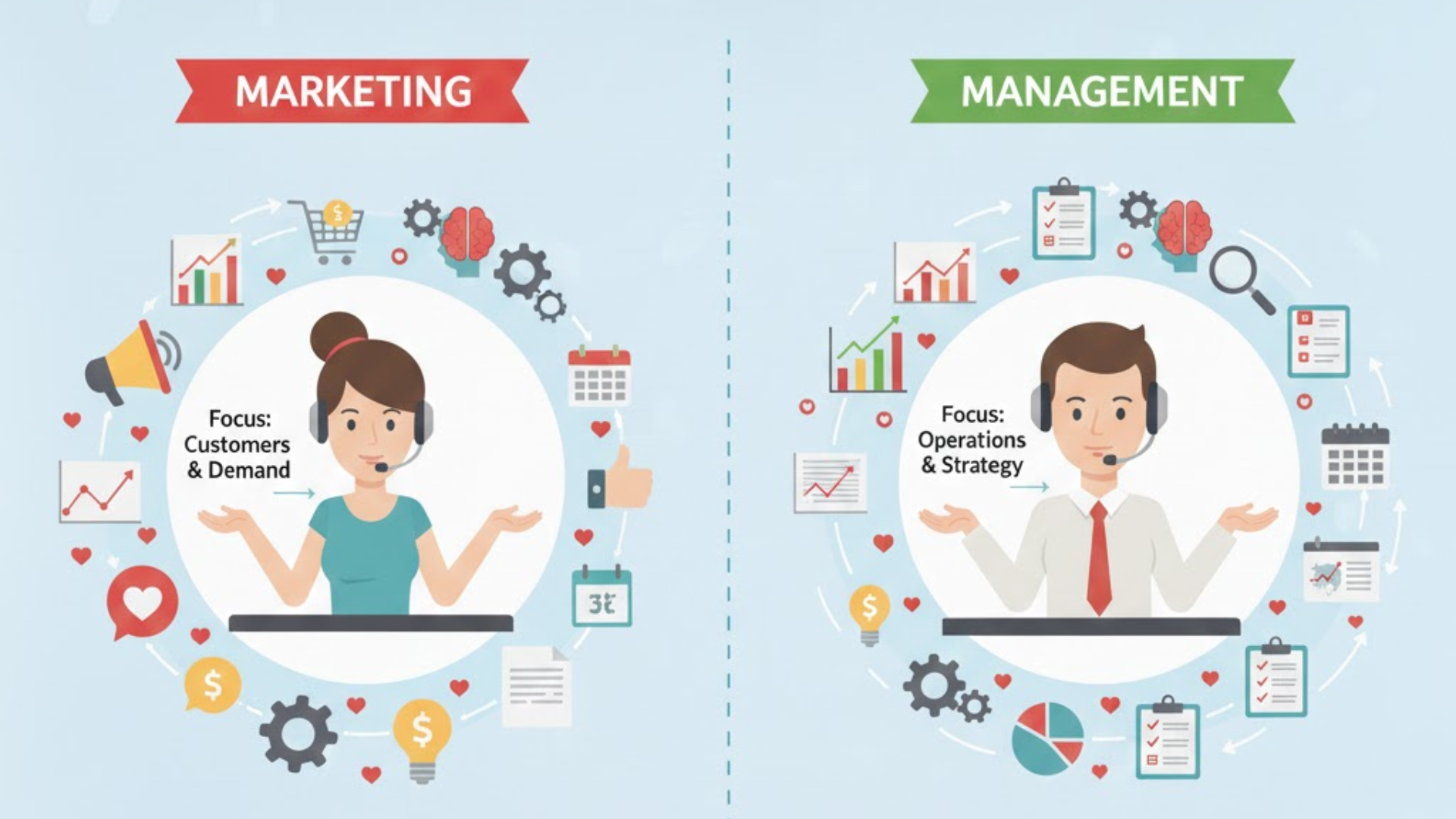
Marketing prioritizes reach. Management prioritizes consistency. Marketing helps introduce a business to new people. Management helps take care of the audience already following the brand. Marketing works like a voice that promotes. Management works like an organizer that keeps everything running smoothly.
This difference is important because it affects how a business creates content, manages tasks, assigns roles, and measures results. A clear understanding helps avoid confusion and guides business owners to use the right strategies for the right needs.
Related Article: Outsource Tasks to a Virtual Assistant for a Stress-Free Summer
What Is Social Media Marketing?
Social media marketing focuses on promoting a business to gain visibility and attract new audiences. It uses strategies designed to increase awareness and generate results. A typical marketing plan evaluates what type of content attracts attention, what platforms bring the best reach, and what actions will lead people to visit a website or buy a product.
Marketing also involves running paid ads, creating campaigns, tracking performance, and adjusting plans based on the data collected. It requires creativity and analytical thinking because everything revolves around finding what works. This function works best for businesses that want stronger exposure, more leads, or audiences who respond to targeted promotions.
Marketing is usually handled by professionals who understand digital strategy. A business may also hire a social media virtual assistant to support the tasks that come with maintaining these campaigns. When these tasks are performed consistently, a brand becomes more visible to people who match the ideal customer type.
Strategic Planning
Strategic planning in marketing guides all the decisions for future campaigns. This includes identifying the target audience and deciding what type of content encourages action. It also includes planning promotions, mapping out content ideas, and choosing suitable platforms. Every decision is based on data, insights, and expected results.
Planning takes time because it requires a clear understanding of the business goals. The marketing team also reviews competitors, industry trends, and audience behavior. By doing so, the brand knows how to stand out in a crowded digital environment. This planning stage plays an important role because it helps avoid wasted time and resources. Each move is intentional and designed to support long-term growth.
Creative Campaign Development
Campaign development involves creating the actual content a business shares for promotion. This includes designing visuals, writing captions, and crafting messages that capture attention. Each piece of content contributes to the main campaign goal. Campaigns may run for a short period or extend longer, depending on the business's needs.
Developing campaigns requires a blend of creativity and strategy. The marketing team ensures that the visuals match the brand identity and the message remains clear. They also test what content receives the most engagement. Adjustments are made based on the results of earlier posts.
A business may also rely on a team of social media virtual assistants to assist with content creation. Their support helps speed up the process, especially when a brand has many ongoing campaigns.
Paid Advertising
Paid advertising is a major part of marketing. It allows businesses to reach audiences who might not see their posts naturally. Paid ads follow specific rules based on the platform. They also come with tools for setting budgets, choosing target groups, monitoring results, and adjusting the ads for better performance.
Running ads requires skill because it involves combining creativity with data. Advertisers test different versions of an ad to determine which one brings better results. They also keep track of the cost per click, reach, and conversions. This information helps them make informed decisions.
Using paid ads helps a brand grow faster. Many business owners seek guidance from professionals who have experience in creating effective ad campaigns. Smart VAs also assists in this area by providing Google Ads or Meta Ads virtual assistants with marketing knowledge who can support these advertising tasks.

What Is Social Media Management?
Social media management takes care of the day-to-day operations of all social media accounts. It focuses on consistency because online growth becomes difficult without regular content and engagement. Management includes planning the content calendar, posting on schedule, responding to comments, and keeping the page active.
A social media manager handles many tasks that keep the page organized. Their role is operational and continuous. They monitor messages, manage interactions, and maintain brand voice across various platforms. They also keep track of routine analytics such as likes, comments, and follower activity to ensure the brand stays connected with its audience.
Businesses often hire a social media virtual assistant to complete these tasks efficiently. This type of support is useful for business owners who do not have time to manage their accounts daily.
Related Article: What Skills are Required for Social Media Manager? A Must-Have
Daily Content Scheduling
Scheduling content is a major part of management. Each post must be prepared ahead of time and arranged on a calendar. The goal is to maintain consistency because followers expect regular updates. Scheduling also helps avoid rushed posts that do not align with the brand.
The process includes preparing captions, images, videos, and other content needed for the post. Managers check the best times to post and make sure everything is aligned with current promotions or events. This helps the page stay active without constant manual effort.
A team of social media virtual assistants can help with scheduling. They prepare and queue posts, making it easier for businesses to maintain a steady online presence.
Community Management
Community management focuses on interacting with followers. This includes answering questions, responding to comments, and engaging with messages. Building a good relationship with the audience improves trust. People are more likely to support a brand that communicates with them regularly.
This function requires patience and attention. The manager must be familiar with the brand voice and respond in a polite and helpful manner. Community management also includes monitoring comments for harmful behavior or spam and making sure the page remains a safe and positive space.
Many businesses rely on a social media manager to handle this part because it takes significant time.
Content Organization
Content organization ensures that everything posted aligns with the brand and follows a clear flow. This includes sorting images, videos, captions, and scheduled posts. The organization helps the manager track what content has been used and what content should be prepared next.
This process prevents repeated posts and keeps future ideas fresh. It also allows the team to check what themes or topics need more focus. Good organization reduces confusion, especially when multiple people work on the social media accounts.

6 Key Differences Between Marketing and Management
The topic of social media management vs social media marketing often gets confusing because both roles support each other. A deeper look shows that these two functions operate differently. Each one follows its own process, focuses on unique responsibilities, and produces different outcomes. Understanding these differences helps business owners decide what support they need and how these roles contribute to long-term growth. Here are the six key distinctions explained in detail.
Difference 1: The Main Goal
The main goal of marketing is growth. Marketing looks for ways to reach more people, create awareness, and attract potential customers. This can include promoting campaigns, creating attention-grabbing posts, and identifying what content leads people to take action.
Management has a different goal. Its priority is daily consistency and maintaining healthy engagement with the current audience. A business may grow through marketing, but the audience stays connected through management.
Both goals are important and work better together.
Difference 2: The Overall Approach
Marketing uses a planned approach that involves analyzing data, researching trends, and setting clear strategies. Every campaign or promotional effort has a defined purpose. Each action is measured against specific goals such as reach, website clicks, or sign-ups.
Management follows a more routine-based approach. It focuses on organizing tasks, scheduling posts, responding to messages, and keeping the brand active each day. The approach is steady and consistent because the main focus is on maintaining the page and staying connected with followers.
These two approaches support each other, but they work in very different ways.
Difference 3: The Daily Tasks
Marketing handles a wide range of tasks related to promoting the brand. These tasks include designing campaigns, writing promotional content, preparing targeted messages, and optimizing paid ads. It also involves researching competitors and adjusting plans based on the data collected from previous campaigns.
Management handles another set of responsibilities. These include posting content on time, organizing files, responding to comments, and handling direct messages. It also includes monitoring community activity and making sure followers receive timely responses. These daily responsibilities keep a business visible and active.
Difference 4: The Skills Required
Marketing requires skills based on strategy. A marketing professional must understand data, audience behavior, and how different types of content perform. They also need creative skills to design appealing graphics, produce engaging videos, and develop strong campaign ideas. Management requires another set of skills.
A social media manager must be organized, responsive, and familiar with brand voice guidelines. They must also handle high-volume interactions and maintain a positive tone. These skills support the daily flow of activities that keep the account running smoothly.
Difference 5: The Expected Outcome
Marketing aims for measurable results that help the business grow. These results include more leads, increased reach, higher website traffic, and improved brand awareness. The outcomes usually appear after reviewing campaign data or analyzing ad performance.
Management aims for stable engagement. It helps keep the audience interested, encourages conversations, and maintains a consistent brand presence. The expected outcome is an active and trustworthy page that reflects professionalism.
Both outcomes benefit the business, but in different ways.
Difference 6: The Way Success Is Measured
Marketing measures success through data gathered from campaigns and promotions. These metrics include cost per click, return on ad spend, click-through rate, and conversions. These numbers show if the strategy is working and what adjustments are needed.
Management measures success based on page activity and engagement. These metrics include likes, comments, shares, saves, message response times, and follower activity. Each measurement reveals how well the brand connects with its audience.
Both sets of metrics are useful because they guide future decisions.
Why Businesses Need Both
A business grows faster when both marketing and management work together. Using only one, limits the results. Marketing brings new people to the page while management keeps those people engaged. Marketing builds attention. Management builds connection.
If a business focuses on marketing only and ignores management, followers lose interest because the page feels inactive. If a business focuses on management only and ignores marketing, growth becomes slow because the content reaches fewer people.
Having both provides balance. It gives the business stronger visibility and better engagement. It also helps maintain a professional presence that attracts potential customers.

Partnering with Experts
Smart Virtual Assistant
👍🤵
Smart Virtual Assistant 👍🤵
Businesses gain a stronger online presence when they work with experts who understand both marketing and management. Skilled support helps prevent common mistakes and keeps the strategy on track. Smart VAs provides this level of support by offering an entire team trained to handle both areas. Their team covers content creation, campaign development, scheduling, organization, community interaction, and ongoing optimization. This gives business owners access to a full range of skills without needing to hire several separate employees.
Smart VAs also guides business owners in choosing services that match their goals. They take the time to review a brand’s needs so that the support given fits the business instead of forcing a single approach. Each plan is designed to help the brand stay consistent, visible, and prepared for growth. With a dedicated team managing both daily tasks and larger marketing actions, business owners can focus on other responsibilities without worrying about gaps in their social media presence.
Smart VAs delivers a coordinated system where every part of social media work aligns. Their team can build campaigns, monitor performance, respond to messages, maintain the content calendar, and keep the brand active across multiple platforms. This setup helps businesses stay organized and reach more people. With this type of support, brands have a stronger chance to grow steadily and maintain long-term engagement online. Book a call now!
FROM OVERWHELMED TO CEO IN 7 DAYS
Your shortcut to building a team of specialists who keep your business moving without you doing it all.
Frequently Asked Questions
-
One person can handle both functions if the workload is light and manageable. The challenge appears when the business grows because each function requires different skills. Marketing needs strategic planning while management requires daily attention. A single person may struggle to handle both long-term. Most businesses eventually divide these roles for better results.
-
Yes. Management focuses on keeping the page active, while marketing brings new audiences to the page. If a business wants stronger growth, both are needed. Management supports existing followers while marketing attracts new ones. Using both helps the business reach its full potential.
-
Yes. Smart VAs provides professionals who understand how to set up, monitor, and optimize paid campaigns. They assist business owners with ad management, targeting, performance review, and improvements. This support helps businesses get better results while keeping costs in control.
-
Business owners save several hours each week by delegating daily tasks to Smart VAs. Posting, organizing content, responding to messages, planning calendars, and monitoring engagement require a lot of time. Delegating these tasks frees up time to focus on other business activities.
-
Yes. Smart VAs train their team to work across different platforms such as Facebook, Instagram, TikTok, LinkedIn, and more. Each platform requires knowledge of its own features and best practices. Smart VAs ensures that their virtual assistants understand how to handle content for each one.

Ready to Work Smarter, Not Harder?
Smart VAs provides a team of highly skilled specialists from around the world, ensuring seamless support no matter the time zone. We take pride in delivering efficient, fast, and high-quality service so you can focus on growing your business. With one subscription plan, you gain access to a complete team of digital marketing experts that’s customized to your unique needs, eliminating the need to train and look for one yourself!