Why Every Business Needs a Graphic Design Strategy
Key Takeaways
A graphic design strategy decides how a business should communicate visually. Design production creates the individual assets that follow that direction.
Consistency matters across the full customer journey, including websites, social media, email, ads, presentations, proposals, and content marketing.
AI design tools can speed up parts of production, but brand direction, hierarchy, context, review, and quality control still need clear human judgment.
Reusable templates, organized assets, documented standards, and an approval workflow make it easier to create more design work without making the brand feel scattered.
Outsourcing design works best when the business keeps ownership of the brand while a specialist supports recurring execution and production.

ARE YOU STILL TRYING TO DO IT ALL?
Discover the SMART way to delegate without losing control—and finally free up your time.
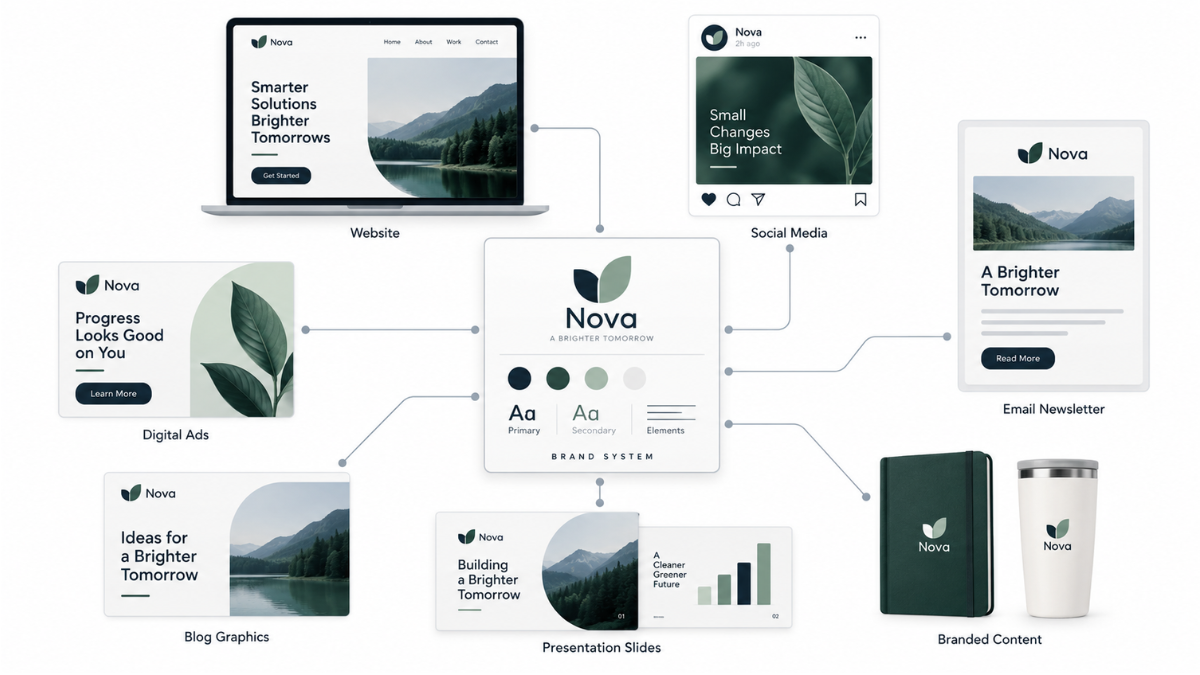
I can usually tell when a business is creating graphics one request at a time. The logo may be correct and the colors may be close, but the website banner, social post, email graphic, proposal, and ad all feel like they came from different companies. Nothing is completely wrong on its own. The problem is that there is no visual system connecting the pieces.
That is why I think a graphic design strategy matters more now than simply having someone who can make a good-looking graphic. Businesses are producing more visual assets across more channels, and AI design tools are making production faster. Without a clear strategy, faster production can also mean faster inconsistency.
In my work as a Graphic Design Specialist, I see the strongest results when design decisions are tied to the brand, the audience, the message, and the purpose of each asset. This guide explains what a graphic design strategy includes, how it supports marketing, where AI fits, how to measure whether the system is working, and when outside design support can help.
What Is a Graphic Design Strategy and Why Does It Matter for a Business?

A graphic design strategy is the plan for how a business communicates visually. It connects the visual brand identity to the goals of the business so designers, marketers, and other team members are not making decisions from scratch every time they need a new asset.
I separate strategy from production because they solve different problems. Graphic design strategy decides how the business should look and communicate visually. Graphic design production creates the individual assets. You need both, but producing more graphics does not automatically create a stronger brand.
A useful strategy gives the team direction on logo use, color, typography, imagery, layout, visual hierarchy, templates, channel requirements, and review standards. It also connects those choices to the audience and the marketing goal. That makes graphic design and branding easier to manage because the visual rules are tied to a reason, not just personal preference.
How Does Graphic Design Shape Your Brand's First Impression?
People often see a visual part of a business before they speak to anyone inside it. They may land on the website, see a social graphic, open a presentation, notice an ad, or receive an email with branded visuals. Those moments shape the first impression before a direct conversation happens.
I do not think that means every design needs to be elaborate. In many cases, clarity creates a stronger impression than decoration. Clean hierarchy, readable type, intentional spacing, appropriate imagery, and consistent brand elements can make a business feel organized and easier to understand.
The opposite is also true. If a website uses one visual style, social media uses another, and proposals look unrelated to both, the audience has to work harder to connect those experiences. A graphic design strategy reduces that disconnect.
How Does Consistent Graphic Design Strengthen Brand Recognition?
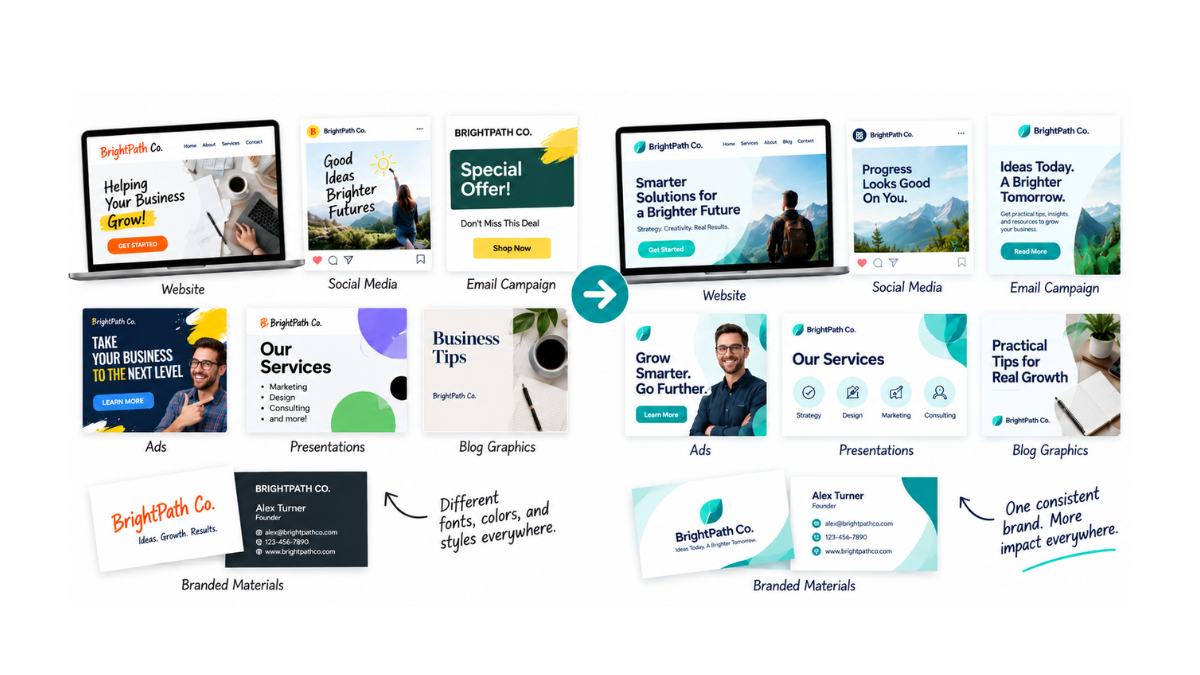
Consistency does not mean copying the same layout forever. It means keeping recognizable visual signals while adapting the design to the message and the platform. I look for consistency in color palette, typography, logo treatment, image style, illustration style, iconography, spacing, and the overall way information is organized.
A customer should be able to move from your website to LinkedIn, Instagram, an email campaign, an advertisement, and a presentation without feeling like they have entered five different brands. The layouts can change. The formats should change. The identity should still feel connected.
This is also why I like reusable templates. A template gives the team a starting point that already follows the visual system. It speeds up recurring production while protecting the details that make the brand recognizable. For a broader look at how teams keep brand consistency across every channel the same principle applies: document the standard, then build a repeatable process around it.
What Happens When Your Visual Branding Is Inconsistent?
Inconsistent design usually appears in small choices before it becomes an obvious brand problem. One person uses a different font because it was convenient. Another stretches the logo. A new social template introduces colors that were never part of the brand. A presentation uses stock imagery that feels completely different from the website.
Random font changes
Colors that shift from asset to asset
Different logo sizing or placement rules
Templates that do not look related
Low-quality or mismatched imagery
Different design styles for every platform
No clear rule for spacing, hierarchy, or calls to action
When these choices repeat, the business can look less coordinated than it actually is. A strategy gives the team a standard to check against before those small differences become the default.
How Can a Graphic Design Strategy Improve Marketing Communication?
Good design is not only about making information attractive. My job is also to make the message easier to understand. Visual hierarchy tells the viewer what to notice first, what supports it, and what action to take next.
That becomes important when the business needs to explain something quickly. An infographic can organize a process. A comparison graphic can make options easier to scan. A chart can make a trend visible. A landing-page graphic can support the message instead of competing with it. A presentation can guide attention from one idea to the next.
When design is tied to communication, I can ask better questions before I start: What does the audience need to understand? What is the main message? What can be removed? What should stand out? What action comes next? Those questions are part of the strategy, not just the final styling.
Which Marketing Assets Should Follow a Graphic Design Strategy?
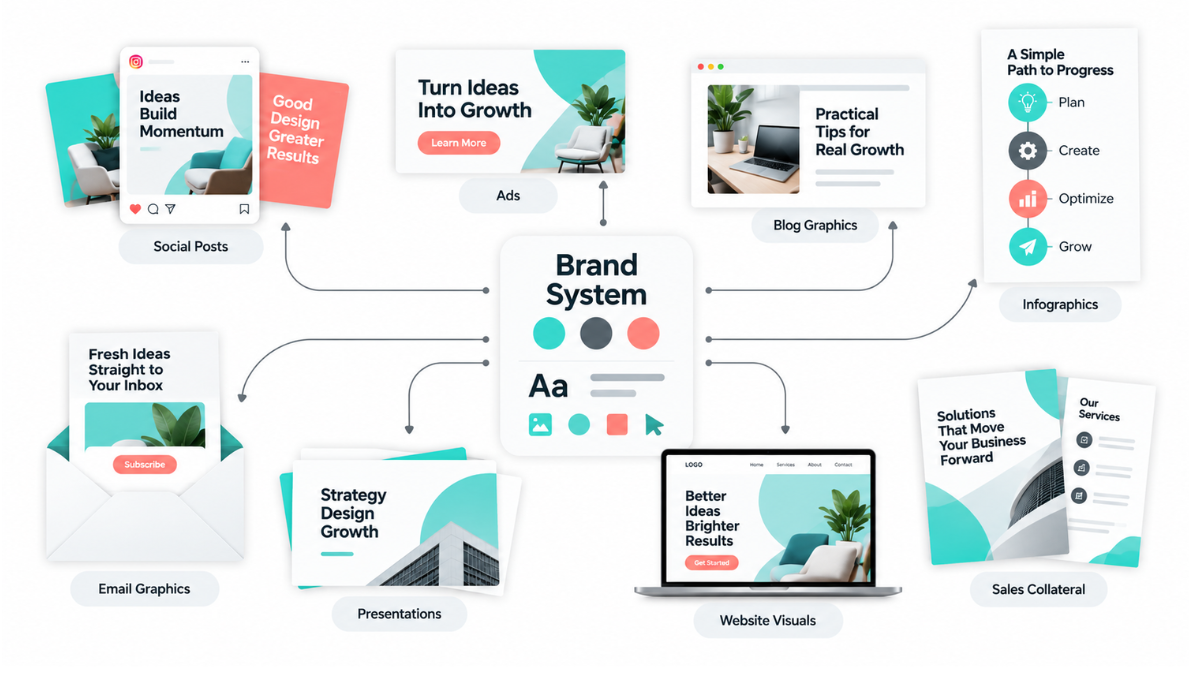
A graphic design strategy should cover the places where the brand regularly appears. I do not need every channel to use identical layouts, but I do want the same visual rules to guide each one.
The practical benefit is that the design team does not have to reinvent the brand for each channel. The strategy provides the shared foundation, while the format changes to fit the platform. When the visual workload is closely tied to publishing and engagement, a Social Media Management Specialist can also work alongside design support so the assets, captions, schedule, and campaign direction stay connected.
How Can Businesses Use AI Design Tools Without Losing Brand Consistency?

AI has changed the speed of design production, but I do not treat speed as the same thing as strategy. AI can help me explore directions, create variations, adapt assets, remove backgrounds, or get repetitive production moving faster. The important question is what system the tool is working from.
Current Canva guidance on setting up a brand system before using AI makes the same practical point: logos, colors, fonts, tone, approved assets, templates, and controls need to be defined so AI output has a brand foundation instead of starting from a blank prompt.
Adobe is also expanding AI-assisted brand production. Its Firefly AI Assistant guide for building brand assets shows how AI can help move from source images into edited visuals, brand identity work, packaging concepts, mockups, and social video assets. That is useful capability, but the business still needs someone deciding what fits the brand and what is ready to publish.
What AI Design Tools Are Good At
Generating starting concepts and directions
Creating simple variations
Resizing or adapting recurring assets
Background removal and routine image cleanup
Template-based production
Idea generation during early exploration
Speeding up repetitive production steps
Where AI-Generated Design Can Still Need Review
Brand consistency and nuance
Visual hierarchy and readability
Typography and layout decisions
Accuracy of text, imagery, and context
Original creative direction
Audience fit
Platform requirements
Quality control before publishing
Why Human Oversight Still Matters
When I review AI-assisted work, I am not only asking whether the tool created something attractive. I am asking whether it looks like the brand, whether the message is accurate, whether the hierarchy is clear, whether the imagery makes sense for the audience, and whether the design works in the channel where it will be used.
That is the balance I recommend: use AI to accelerate parts of the workflow where it genuinely helps, then keep strategic direction, brand judgment, review, and quality control inside a clear human-led process.
How Can a Graphic Design Strategy Help Businesses Create More Content Without Sacrificing Consistency?
One of the biggest design problems I see is not a lack of ideas. It is volume. A business may need social graphics, ads, blog visuals, presentation updates, email assets, landing-page graphics, and campaign variations in the same month. If every item begins with a blank page, production becomes slow and consistency becomes harder to protect.
That is where a design system helps. I use reusable templates, brand guidelines, standardized dimensions, shared asset libraries, organized folders, repeatable design briefs, and clear approval stages to reduce the number of decisions that need to be made again and again.
The goal is not to make every asset look identical. It is to create enough structure that recurring work can move faster without losing the brand. If your team is regularly hitting creative bottlenecks, it can also help to review how to outsource graphic design to a virtual assistant and decide which parts of production can be delegated without giving up brand ownership.
What Should a Business Include in Its Graphic Design Strategy?
I like to keep the strategy practical enough that someone can actually use it while designing. A long brand document is not helpful if the production team cannot quickly find the rules that matter.
| Strategy Area | What to Define |
|---|---|
| Brand identity | Logo rules, colors, typography, imagery, iconography, illustration or photography style |
| Target audience | Who the design is for, what they need to understand, readability and accessibility considerations |
| Marketing objectives | Awareness, engagement, lead generation, sales, education, retention, or another defined purpose |
| Content channels | Website, social media, email, advertising, content, presentations, sales materials |
| Design standards | Templates, layout rules, image treatment, typography rules, spacing, logo use, CTA treatment |
| Production workflow | Brief, design, review, revisions, approval, delivery, naming, storage, asset management |
If I join a project and these pieces are already documented, I can usually get to useful work faster because I am not guessing at basic brand decisions. If they are missing, part of the early work should be defining them before the content volume increases.
How Can Businesses Measure Whether Their Graphic Design Strategy Is Working?
I do not believe every graphic should be judged by the same metric. A social infographic designed to educate has a different job from an ad designed to generate leads. The measurement should match the purpose of the asset.
| Measurement Level | What You Can Monitor |
|---|---|
| Brand-level | Consistency across channels, recognizability, audience feedback, fewer off-brand assets |
| Marketing | Engagement, click-through rate, landing-page interaction, ad performance, content saves or shares where relevant |
| Business | Qualified leads, conversions, sales, inquiries when the design is part of a conversion-focused campaign |
| Operational | Turnaround time, revision volume, asset reuse, production capacity, fewer duplicated design requests |
I also pay attention to the production side. If the same type of asset takes fewer revisions because the template and brief are clear, that is a meaningful improvement. If the team can find the correct files quickly and reuse approved components, the strategy is reducing friction even before a revenue number appears.
When Should a Business Consider Outsourcing Graphic Design?
Outsourcing usually makes sense when the need is ongoing but the internal team does not have enough capacity to keep production moving. The signal is not simply, "we do not have a designer." It may be that marketing needs more creative assets than the current team can reasonably produce.
Internal marketing staff are overloaded with recurring design requests.
Campaigns are delayed because graphics are waiting in a queue.
The same assets need to be resized or adapted repeatedly.
Brand consistency is becoming harder to manage across channels.
The business needs ongoing production but not another full-time hire.
Design work is pulling marketers or business owners away from higher-value responsibilities.
I make one distinction here: outsourcing production does not mean outsourcing brand ownership. The business should still own its positioning, brand standards, priorities, and approvals. The outside specialist should work inside that direction and make execution easier.
If the design workload is part of a larger marketing capacity problem, this is also where I would look at when to outsource your marketing team rather than solving every bottleneck with a separate one-off hire.
Is It Better to Hire an In-House Designer, Use AI Tools, or Outsource Graphic Design?

There is no single best setup for every business. I would choose based on how much design is needed, how strategic the work is, how often it changes, and how much internal coordination the business can support.
For many growing businesses, the hybrid model is practical: keep brand strategy and approvals close to the business, then delegate recurring execution to specialist support. That protects the decisions only the business can make while removing production work that does not need to stay with the owner or marketing lead.
How Can a Business Build a Graphic Design Workflow That Scales?
1. Define brand guidelines: Document the visual rules before volume increases.
2. Create reusable templates: Build repeatable starting points for common asset types.
3. Establish a design request process: Require the objective, copy, dimensions, deadline, channel, and references.
4. Assign responsibilities: Make it clear who briefs, designs, reviews, approves, and publishes.
5. Create review and approval stages: Avoid conflicting feedback and last-minute surprises.
6. Organize final assets: Use naming rules, folders, and a shared source of truth.
7. Measure output and performance: Track both campaign outcomes and production efficiency.
8. Refine the system: Update templates and guidelines when repeated feedback reveals a better standard.
This type of workflow is what turns design from a string of isolated requests into a repeatable marketing capability. It also makes onboarding easier because the next person does not need to rely on memory to understand how the brand works.
What Does a Strong Graphic Design Strategy Look Like in Practice?
Imagine a growing service business producing social content, email campaigns, proposals, blog graphics, and paid ads. Before a design strategy, every request begins from scratch and different people make visual decisions based on what looks good in the moment.
| Before | After |
|---|---|
| Different social designs every week | Defined visual system with flexible templates |
| Colors and fonts change by creator | Approved colors and typography used consistently |
| Every graphic starts from a blank file | Reusable templates and design components |
| Feedback arrives from several people | One clear review and approval path |
| Files are scattered across folders | Organized shared asset library |
| Campaigns wait on recurring design tasks | Repeatable production workflow for common assets |
I would not promise that this process automatically produces a specific revenue increase. What it does is remove avoidable production friction, make the brand easier to protect, and give the marketing team a more reliable way to produce the assets it already needs.
What Are the Most Common Graphic Design Strategy Mistakes Businesses Make?
Designing without defined brand guidelines.
Prioritizing decoration over communication.
Using inconsistent templates across teams and platforms.
Creating every asset from scratch instead of reusing approved systems.
Relying on AI-generated designs without enough brand context or review.
Ignoring readability, accessibility, and platform requirements.
Having no clear review or approval process.
Failing to organize final files and reusable assets.
Treating design as separate from marketing objectives.
Measuring every design by likes instead of the purpose it was created to serve.
The common thread is a lack of connection. Design becomes stronger when the visual choices, the message, the workflow, and the business objective are all connected.
How Can Smart VAs Support Your Business's Graphic Design Needs?
At Smart VAs I see graphic design support work best when it fits into the systems a business already uses. A Graphic Design Specialist can support recurring social graphics, marketing collateral, presentations, branded visuals, content graphics, campaign assets, website visuals, resizing, adaptation, and other ongoing production needs.
One real example is Melissa Martin and Creative Island. Smart VAs supported her agency with social media design alongside copywriting, web development, and blog writing. What stands out to me from that case study is not only the list of tasks. Melissa improved the collaboration by giving detailed project context, design inspiration, structured documents, Loom videos, and realistic timelines. That kind of input gives creative support a much better chance of producing work that matches the client vision with fewer avoidable revisions.
That is the model I prefer for outsourced graphic design: the business keeps the brand direction and approvals, while the specialist brings reliable creative capacity into the workflow. You do not always need another full-time hire. Sometimes you need a dependable way to keep design production moving without asking the same internal people to absorb more work.
Turning Graphic Design Into a Long-Term Marketing Asset
A graphic design strategy is not about making every marketing asset beautiful for its own sake. It is about creating a visual system that helps the business communicate clearly, stay recognizable, and produce the assets marketing needs without starting over every time.
For me, the progression is simple: strategy creates consistency, consistency supports scalable production, and scalable production makes marketing easier to execute. AI tools can support that system. Templates can speed it up. Outsourced design can add capacity. But the foundation still needs to be clear.
If your team is spending too much time recreating graphics, fixing inconsistent assets, or waiting for design work to catch up with marketing, the next step may not be another random tool. It may be a clearer graphic design strategy and a workflow that gives the right people enough direction to execute it well.
Smart Virtual Assistant
👍🤵
Smart Virtual Assistant 👍🤵
What if you could reclaim 40 hours this month?
Find out inside this free guide.
Frequently Asked Questions
-
A graphic design strategy is a plan for how a business communicates visually. It connects brand identity, audience needs, marketing objectives, channels, design standards, and production workflows so individual graphics follow a consistent direction instead of being created as unrelated one-off pieces.
-
Graphic design helps a business communicate information visually, support brand recognition, and present a more consistent experience across websites, social media, email, advertising, presentations, and other customer touchpoints. Its value is not only appearance. Good design also supports clarity and easier understanding.
-
It should include brand identity rules, target audience information, marketing objectives, channel requirements, templates, typography and image standards, layout guidance, a design request process, review and approval steps, and an organized system for storing and reusing final assets.
-
AI tools can help with early concepts, variations, background removal, resizing, adaptation, and other repetitive production work. They work best when the business already has clear brand assets, templates, and review standards so AI-assisted output can be checked for accuracy, hierarchy, audience fit, and brand consistency.
-
Outsourcing can be practical when a small business needs recurring design support but does not have enough work or budget for another full-time role. The business should keep ownership of brand direction and approvals while the outsourced specialist handles agreed production tasks inside a documented workflow.
-
Start with shared brand guidelines, approved templates, a centralized asset library, and clear rules for logo, color, typography, imagery, and layout. Then adapt the format for each channel without changing the underlying identity. A regular review process helps catch visual drift before it becomes a repeated pattern.
About the Author:
Regie, Graphic Design Specialist, SmartVAs

Regie is a Graphic Designer at Smart VAs who creates engaging visual content to help businesses communicate their ideas effectively. He is adept at using various graphic design platforms and also has experience with video editing, allowing him to work across different types of visual content.
With a passion for creative projects and an eye for visual storytelling, Regie brings a versatile approach to graphic design, combining creativity and technical skills to create visuals that support clients’ branding and marketing needs.