Key Takeaways
A dedicated designer creates the most value when design requests are recurring, deadlines are frequent, and the internal team is becoming a bottleneck.
The ROI of design support should be measured with operational metrics such as output, turnaround time, revision volume, on-time delivery, and internal time saved, not only direct revenue.
Brand familiarity compounds over time. Clear guidelines, reusable references, and consistent feedback make recurring design work faster and easier to approve.
A dedicated virtual designer is not automatically better than a freelancer or in-house hire. The best model depends on workload, complexity, budget, and how much ongoing brand familiarity matters.
Clear briefs and realistic deadlines are part of the ROI. Poor instructions can create avoidable revisions no matter how skilled the designer is.

DELEGATE SMART. SCALE FAST.
The step-by-step guide to reclaim your time and grow with confidence.
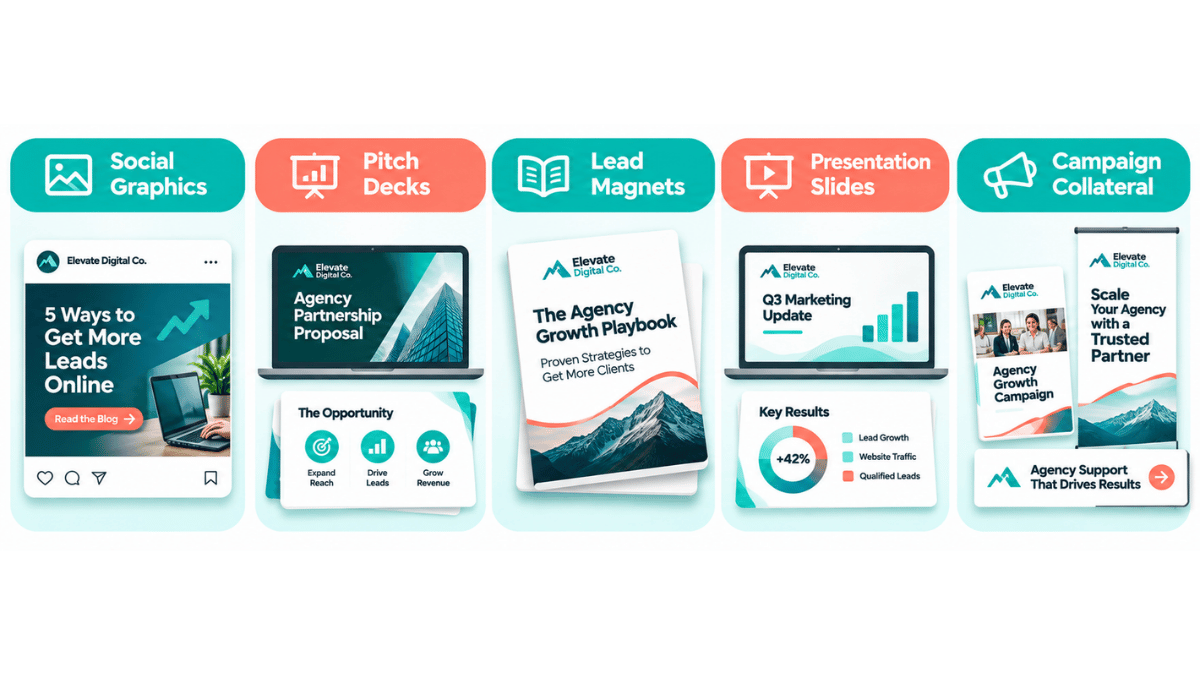
When design requests start piling up, the problem is not always that an agency needs more ideas. Often, it simply needs more reliable production capacity. In my work as a Graphic Design Specialist at Smart VAs, I handle social media graphics, brand kits, logo work, presentations, print materials, website visuals, email newsletters, marketing materials, thumbnails, and photo editing. The work I see most often is social media graphics and print materials, and those requests can quickly become a bottleneck when deadlines overlap.
A dedicated virtual graphic designer can improve ROI when the designer takes recurring production work off the marketing or agency team, learns the brand over time, reduces avoidable revisions, and helps campaigns move without waiting for design capacity. I do not judge that value only by whether one graphic directly made a sale. I also look at how much work is completed, how quickly it moves, how much rework is needed, and how much internal time the designer gives back to the team.
What Does a Dedicated Virtual Graphic Designer Actually Do?
A dedicated virtual graphic designer works remotely but becomes familiar with the client’s recurring design needs, brand standards, preferred layouts, and review process. In my own work, that can mean switching between social graphics, email newsletter designs, presentations, print pieces, website visuals, thumbnails, photo edits, and brand materials depending on the client’s priorities.
The advantage of a dedicated relationship is not that every design becomes automatic. It is that I no longer have to relearn the brand from zero on every request. I know which logo version is normally used, what visual style the client prefers, which references they respond well to, and how their approval process works. That familiarity can make recurring work much smoother.
At Smart VAs, our Graphic Design Specialists can support branded visual production across marketing and business materials, while separate Social Media Management Specialists can handle the ongoing social workflow around planning, publishing, and platform execution. Keeping those roles clear helps the right person own each part of the process.
How More Design Capacity Reduces Creative Bottlenecks
The biggest pressure I see when agencies have many design requests is usually a combination of tight deadlines and unclear instructions. When several client requests arrive at once, the bottleneck is not only design time. It is also the time spent clarifying missing details, waiting for assets, revising work, and deciding which request comes first.
One project that stands out for me is an email newsletter workflow for OceanBlue. I worked together with another VA who handled the copywriting. Because the responsibilities were clear, we could work as a small production team and manage multiple newsletters in a month. We were able to complete and submit the work days before the actual deadlines. For me, that is a practical example of design capacity creating value: the client did not need to personally carry the writing and design production for every newsletter.
This is also why I do not think every growing team needs to add every marketing role as a full-time employee. A well-structured team can build marketing capacity without adding every role full-time when strategy, copy, design, and execution are assigned clearly.
How a Dedicated Designer Can Improve Turnaround and Reduce Revisions
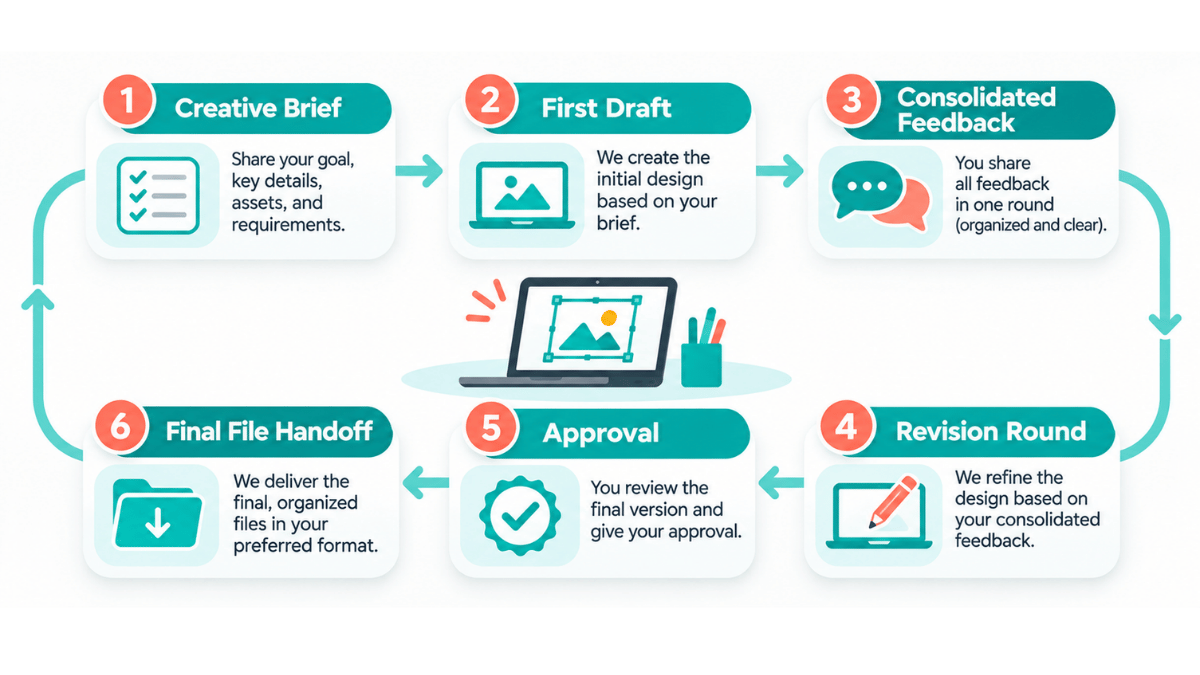
Faster turnaround does not come from rushing. In my experience, it comes from understanding the request earlier and removing avoidable back-and-forth. When a task arrives, I first assess the instructions. If the brief is missing an asset, dimension, reference, or content, I ask for it before I start. Then I execute the design using the approved branding, submit it for review, and wait for feedback.
Repeated revisions usually happen when the instructions are unclear or the client is still undecided about the visual direction. I try to reduce that by reading carefully, researching when necessary, and triple-checking the work before I hand it over. The designer still needs client approval, but the goal is to make each review round useful instead of sending something unfinished just to move the task forward.
If a business is still setting up this type of workflow, a clear process for outsourcing graphic design can help define the brief, required assets, feedback process, and deadlines before the volume increases.
Why Brand Familiarity Creates Compounding Value
The longer I work with the same brand, the easier it becomes to create work that feels familiar without becoming repetitive. I learn the editing style, common image choices, usual layouts, and the kinds of visual decisions the client approves. That does not remove creativity. It gives me a stronger starting point.
One example I know well is Melissa Martin and Creative Island. When I work on recurring designs for her clients, the process is already familiar, so many requests follow a practiced structure with smaller changes based on the new information that needs to go into the design. The published case study also describes how clearer project context and design inspiration helped make collaboration smoother. That is exactly what I see in practice: familiarity plus clear direction reduces guesswork.
Before I begin, the four things I most want from a client are brand guidelines, high-quality logo files, design references, and the final content or copy. A centralized Brand Kit can make that easier by keeping approved logos, colors, fonts, templates, and other brand assets in one place. Adobe also recommends documented brand guidelines so teams have clear standards for using brand assets consistently.
That same consistency matters outside the design file itself. A graphic design virtual assistant can help strengthen a brand when recurring visual work follows the same approved system across campaigns and channels.
How Should an Agency Measure the ROI of a Dedicated Graphic Designer?
I would not measure graphic design ROI with one number alone. Different design assets have different jobs. A social graphic may support reach or engagement, while a sales presentation may support a pitch, and a newsletter design may help a campaign go out on time. The most useful measurement combines creative output with operational performance.
| Metric | What to compare | Why it matters |
|---|---|---|
| Design output | Completed assets before vs. after adding support | Shows whether the team has more production capacity. |
| Turnaround time | Average time from complete brief to first draft/final | Shows whether design is still delaying campaigns. |
| Revision volume | Average revision rounds per asset | Can reveal unclear briefs, brand gaps, or quality issues. |
| On-time delivery | Assets delivered by agreed deadlines | Shows whether the workflow is dependable. |
| Internal time saved | Hours managers or marketers no longer spend designing or chasing files | Shows whether the designer is freeing higher-value team capacity. |
| Cost per usable asset | Total design support cost divided by approved output where useful | Helps compare recurring support models fairly. |
| Brand consistency | Frequency of off-brand corrections or rejected assets | Shows whether brand familiarity is improving. |
| Campaign readiness | Whether design is ready when copy, ads, email, or launch tasks need it | Shows whether creative production supports the wider marketing timeline. |
The point is not to create a complicated dashboard. Track the few measures that reflect the real bottleneck. If the agency’s problem is missed deadlines, track delivery. If the problem is revision overload, track rework. If managers are spending too much time in Canva, track internal hours reclaimed.
Dedicated Virtual Designer vs. Freelancer vs. Other Options
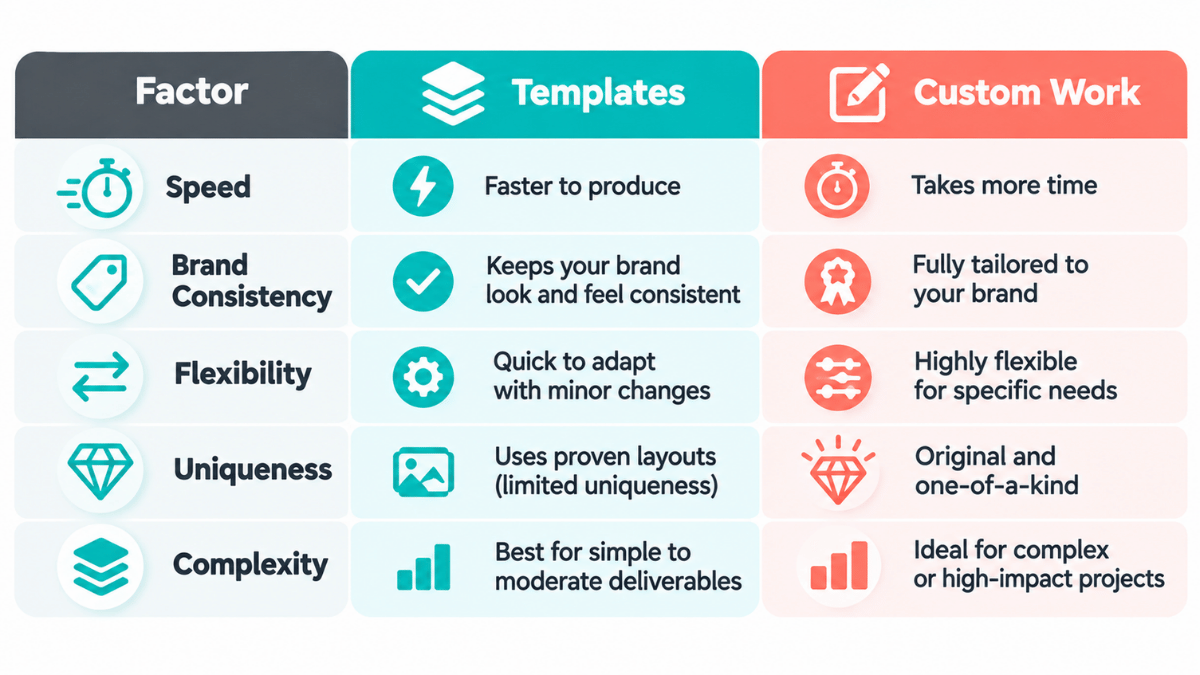
A dedicated virtual designer is not automatically the right choice for every agency. If you only need a logo once a year, a project-based freelancer may make more sense. If design is core to the business and requires constant strategic direction, an in-house role may be justified. The dedicated model becomes more attractive when requests are recurring and brand familiarity has ongoing value.
| Model | Best fit | Main advantage | Main limitation |
|---|---|---|---|
| Dedicated virtual designer | Recurring design volume across ongoing campaigns | Brand familiarity and predictable capacity | Needs a clear brief, approval flow, and workload planning. |
| Freelancer | One-off or specialized projects | Flexible project-based access | Availability and brand familiarity may vary. |
| In-house designer | Continuous high-volume strategic design needs | Close day-to-day integration | Higher fixed employment cost and management responsibility. |
| Design agency | Campaigns needing a broader creative team or art direction | Wider creative capability | May be more expensive or less embedded in daily workflow. |
| Hybrid | Internal strategy with external recurring production | Keeps brand ownership in-house while adding capacity | Requires clear coordination and ownership. |
When comparing options, I would look beyond the headline rate. Different graphic design pricing models make sense for different workloads, so compare the total cost of getting approved work delivered, including briefing, revisions, management time, and missed-deadline risk.
How I Set Up an Efficient Design Workflow
My own process is simple because a design workflow should reduce confusion, not create more administration.
Review the brief and confirm the goal, size, platform, deadline, and required content.
Check the brand guidelines, high-quality logos, references, and final copy or content.
Ask for missing information before designing instead of guessing.
Prioritize work by deadline, business priority, and complexity. When deadlines are equal, I usually start with the higher-priority or more difficult task.
Start earlier than the stated deadline whenever possible so there is room for feedback.
Create the design independently within the approved brand direction.
Triple-check the output for content accuracy, visual issues, sizing, and missing assets.
Submit for approval, apply useful feedback, and prepare the final files in the required format.
Save reusable references or templates so the next similar request starts from a stronger base.
When Is an Agency Ready for a Dedicated Virtual Graphic Designer?
I think the clearest sign is recurring volume. If an agency regularly needs social media graphics, print pieces, presentations, ads, email graphics, or client marketing materials, and those requests keep competing for internal time, a dedicated designer can become easier to justify.
Design requests are regularly waiting in a backlog.
Marketing or account managers are doing production design instead of their primary work.
Deadlines are becoming difficult because one-off freelancers are not always available.
Multiple brands need consistent visual execution each month.
The agency already has brand systems and references, but lacks production capacity.
Repetitive design work is slowing launches, newsletters, social campaigns, or client delivery.
The decision should still be based on the workload. If design demand is occasional or highly specialized, project-based help may be enough. The goal is to match the support model to the actual work instead of hiring a role just because it sounds efficient.
Common Mistakes That Reduce the ROI of Remote Design Support
A strong designer can still struggle inside a weak process. These are the mistakes I would avoid based on what I have seen in real design work.
Hiring without checking whether the designer has real background experience that matches the type of work you need.
Giving unclear instructions and expecting the designer to guess the visual direction.
Sending low-quality logos, incomplete copy, or missing brand assets.
Setting deadlines without leaving time for feedback and approval.
Letting too many people give conflicting feedback without one decision-maker.
Changing the vision after the designer has already completed the agreed direction.
Measuring value only by the number of graphics produced instead of quality, delivery, revision load, and team time saved.
The most important hiring advice I would give an agency is to confirm the designer’s capability before handing over important work. Ask to see relevant experience or samples and make sure the person can execute the style and type of design you actually need. That protects the client, the agency, and the designer.
Smart Virtual Assistants
👍🤵
Smart Virtual Assistants 👍🤵
What I Recommend Before You Add Dedicated Design Support
Before you add a dedicated virtual graphic designer, organize the work the designer will receive. You do not need a perfect creative department, but you should know what kind of assets recur, who approves them, where brand files live, and what a complete brief looks like.
List the design types you request most often and estimate the monthly volume.
Prepare brand guidelines, approved logos, fonts, colors, references, and reusable assets.
Choose one place to submit requests and track deadlines.
Decide who gives final approval so feedback does not conflict.
Set realistic turnaround expectations for simple and complex work.
Track output, revision rounds, missed deadlines, and internal time spent before and after adding support.
Start with a defined group of recurring tasks, then expand once the workflow is working.
For agencies already thinking about how to structure ongoing creative and marketing support, the best model is usually the one that keeps strategic decisions with the people closest to the client while giving specialists enough context and ownership to execute well.
Is a Dedicated Virtual Graphic Designer Worth It?
It can be, especially when the agency has recurring design volume and the real problem is creative capacity rather than a lack of strategy. In that situation, the value comes from reliable production, stronger brand familiarity, fewer design bottlenecks, and more time for marketers and account managers to focus on work only they can do.
My own approach is simple: give me a clear brief, the correct brand assets, the deadline, and the purpose of the design. I can handle the execution independently, but the client or agency should still approve the final work. When that process becomes consistent, design stops feeling like a last-minute request and starts working like part of the agency’s delivery system.
If your team has reached that point, Smart VAs can provide ongoing graphic design support through a dedicated specialist model that fits alongside the rest of your marketing workflow.
What if you could reclaim 40 hours this month?
Find out inside this free guide.
Frequently Asked Questions
-
A dedicated virtual graphic designer handles recurring visual production remotely, such as social graphics, presentations, print materials, website visuals, email designs, thumbnails, branding assets, and photo editing. The exact scope depends on the designer’s skills, the client’s brand system, and the agreed workload.
-
A freelancer is often hired project by project, while a dedicated virtual designer usually supports the same business or agency on a recurring basis. That repeated exposure can improve brand familiarity, workflow consistency, and availability, although a freelancer may still be the better fit for occasional specialized work.
-
Track the measures connected to the actual bottleneck: completed assets, turnaround time, revision rounds, on-time delivery, internal hours saved, campaign delays, and cost per usable asset where useful. Revenue can matter for some campaign creative, but it should not be the only measure for every design task.
-
Yes, if each brand has clear guidelines, organized assets, design references, and an approval process. I find it easier to switch between brands when logos, fonts, colors, examples, copy, and deadlines are complete before design starts.
-
At minimum, provide the final copy or content, brand guidelines, high-quality logo files, dimensions or platform requirements, useful design references, and the deadline. If the visual direction is still undecided, clarify it before expecting a polished final result.
-
A dedicated designer makes the most sense when design demand is recurring, internal teams are overloaded, freelancers are creating availability gaps, multiple brands need regular support, or campaigns are being delayed because creative production is not keeping up.
-
Yes. My OceanBlue newsletter work is one example where I collaborated with a copywriter so the content and design could move together. A clear handoff between copy, design, approval, and publishing helps prevent the designer from waiting on missing information.
-
The most common causes are unclear instructions, incomplete brand assets, changing visual direction, and conflicting feedback. I reduce revisions by reviewing the brief carefully, asking for missing information early, researching the context, and checking my work before submission.
Regie | Graphic Designer, Smart VAs

Regie is a Graphic Designer at Smart VAs, skilled in using various graphic design platforms to create engaging visual content. He also has knowledge of video editing and enjoys working on digital art projects, both professionally and in his leisure time. Outside of work, he explores his creativity through mural painting.