Content Marketing vs Inbound Marketing: What's the Difference?
KEY TAKEAWAYS
Content marketing creates helpful assets that attract and educate the right audience.
Inbound marketing connects those assets to a larger conversion and nurturing system.
Content without inbound can create traffic without leads.
Inbound without content has little useful material to distribute.
AI search makes owned audience building and conversion paths more important, not less.

DELEGATE SMART. SCALE FAST.
The step-by-step guide to reclaim your time and grow with confidence.
I see this confusion all the time with growing businesses. They publish blogs, post on social media, send the occasional email, and call it inbound marketing. Then they wonder why the traffic is not turning into leads. The missing piece is usually not effort. It is the system around the effort. Content marketing is what helps the right people notice, trust, and learn from your business. Inbound marketing is the larger structure that captures that attention, nurtures the relationship, and gives people a clear next step. One gives the audience something useful. The other turns that usefulness into a path toward a real conversation. In this guide, I will break down the difference, how the two work together, and what has changed now that AI search is changing how people discover content.
Quick answer
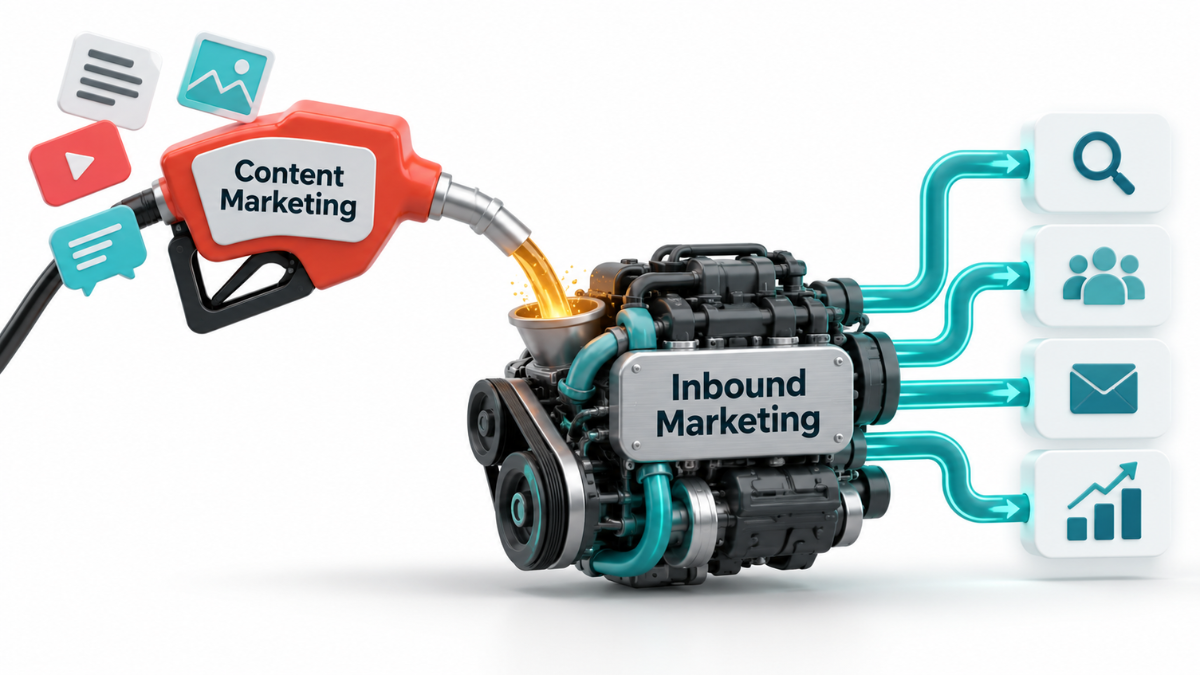
Content marketing is the useful material you create and distribute to attract the right audience. Inbound marketing is the full system that uses that content, plus SEO, email, automation, CRM, offers, and follow-up, to move people from awareness to trust to conversion.
What's the Real Difference Between Content Marketing and Inbound Marketing?
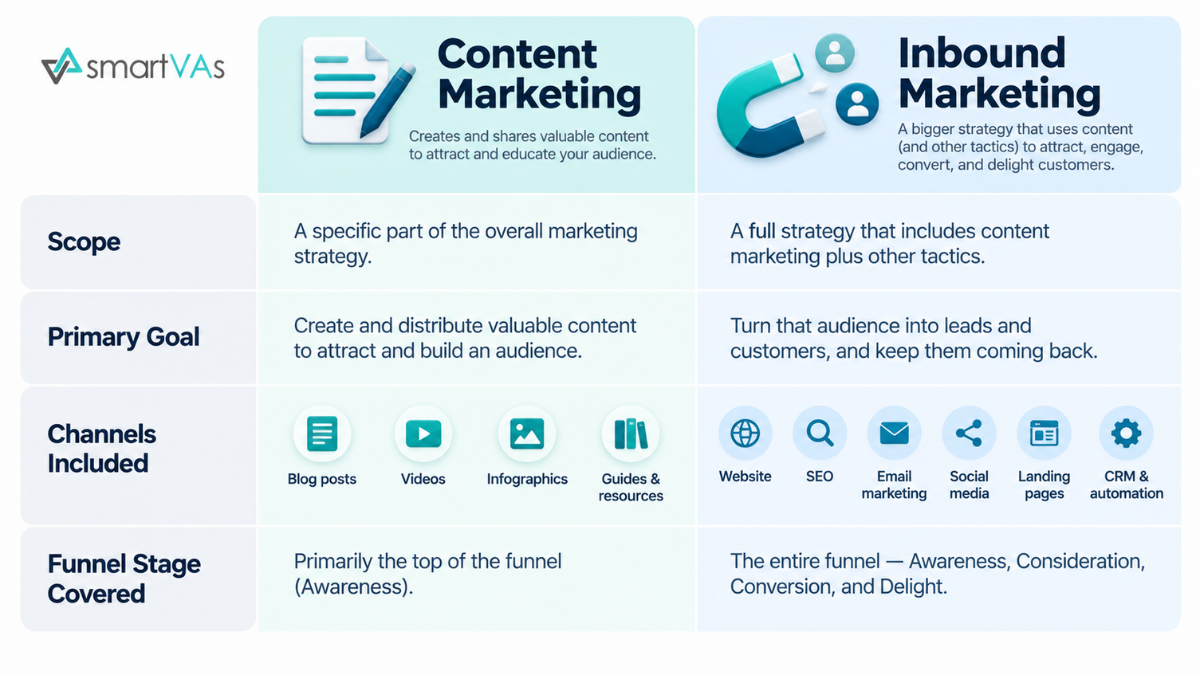
Content marketing is a tactic inside a broader growth system. It includes the blog posts, guides, videos, podcasts, emails, and social posts that answer questions, build trust, and create demand. Inbound marketing is the system that connects those assets to a customer journey.
The easiest way to explain it is this: content attracts attention, while inbound gives that attention somewhere to go. A helpful article may bring someone to your website. An inbound system adds the next step, such as a relevant offer, a form, a nurture sequence, a CRM tag, and follow-up from the team.
That difference matters because content can create visibility without creating leads. I have seen businesses publish consistently, but because there is no conversion path behind the content, interested visitors leave without taking action.
What Is Content Marketing, and What Does It Actually Include?
Content marketing is the practice of creating useful, relevant material for a clearly defined audience instead of leading with a hard sell. The Content Marketing Institute defines it as a strategic approach focused on creating and distributing valuable, relevant, and consistent content to attract and retain a clearly defined audience and drive profitable customer action.
In real business terms, content marketing can include blog posts, short-form videos, podcasts, comparison guides, downloadable checklists, case stories, email newsletters, webinars, and educational tools. It is not limited to blogging. The point is to help the buyer understand a problem, evaluate options, and trust the business before they are ready to speak to sales.
For example, a bookkeeping firm might publish a guide on when a business should move from DIY bookkeeping to professional support. That piece may not sell directly, but it helps the right reader recognize a problem and associate the firm with practical guidance. That is content doing its job.
At Smart VAs, this is why I see professional blog writers work best when they are not just filling a content calendar. They need to understand the business goal behind each topic, the buyer's level of awareness, and the next action the content should support.
What Is Inbound Marketing, and How Does It Go Beyond Content?
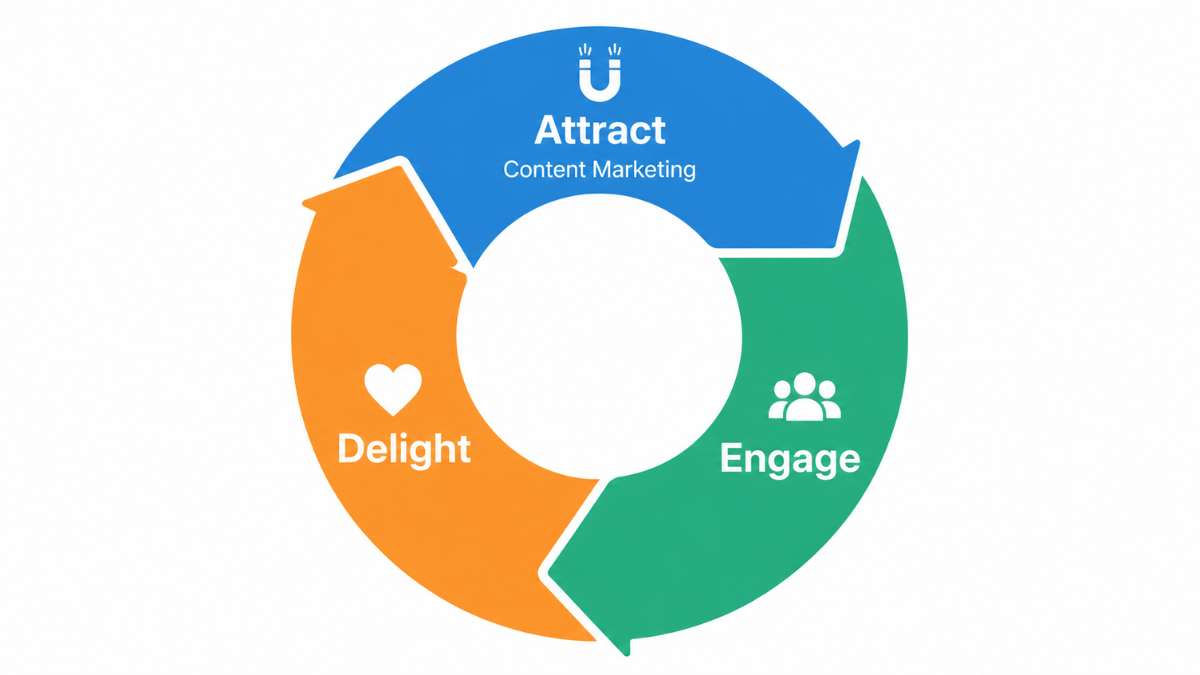
Inbound marketing is the larger methodology that uses helpful content and connected systems to attract, engage, and support the right audience. HubSpot describes inbound around the stages of attracting, engaging, and delighting customers through valuable content and relationship-building.
This is where the work moves beyond publishing. Inbound marketing may include SEO, landing pages, lead magnets, forms, CRM organization, email sequences, lead scoring, retargeting, sales follow-up, and customer education. Content creates the reason someone pays attention. Inbound creates the path that turns that attention into a relationship.
That is why I do not like treating inbound as another word for content. A blog post can attract visitors, but a blog post alone does not organize contact records, segment leads, send a follow-up email, or tell the team which inquiries are ready for a sales conversation.
Is Content Marketing Part of Inbound Marketing, or a Separate Strategy?
Content marketing usually lives inside inbound marketing, but it can also stand on its own. You can create content without having a full inbound system. Many businesses do this in the beginning. They publish blogs, post videos, or send newsletters to build trust and visibility before they have advanced automation in place.
The reverse is harder. Inbound marketing without content has very little to offer. A form, workflow, or CRM pipeline needs something valuable to support it. Without useful content, the system feels empty or too sales-focused.
So the difference is not that one is better than the other. The difference is scope. Content marketing is one important part of the inbound system, but inbound marketing also handles conversion, nurturing, follow-up, and measurement.
Can You Do Inbound Marketing Without Content Marketing?
Technically, yes. Practically, it is weak. You could build landing pages, forms, email workflows, and CRM stages without a strong content strategy, but the system would have little value to send people toward.
Content gives the inbound system its substance. It answers questions before the buyer is ready to book a call. It gives your email list a reason to keep opening. It gives SEO something to rank. It gives social media something more useful than promotional posts.
This is also where content marketing traffic matters. Traffic from helpful content becomes more valuable when the next step is clear and connected to the buyer's problem.
Why Do These Strategies Matter More Now, With AI Search and Shrinking Organic Reach?
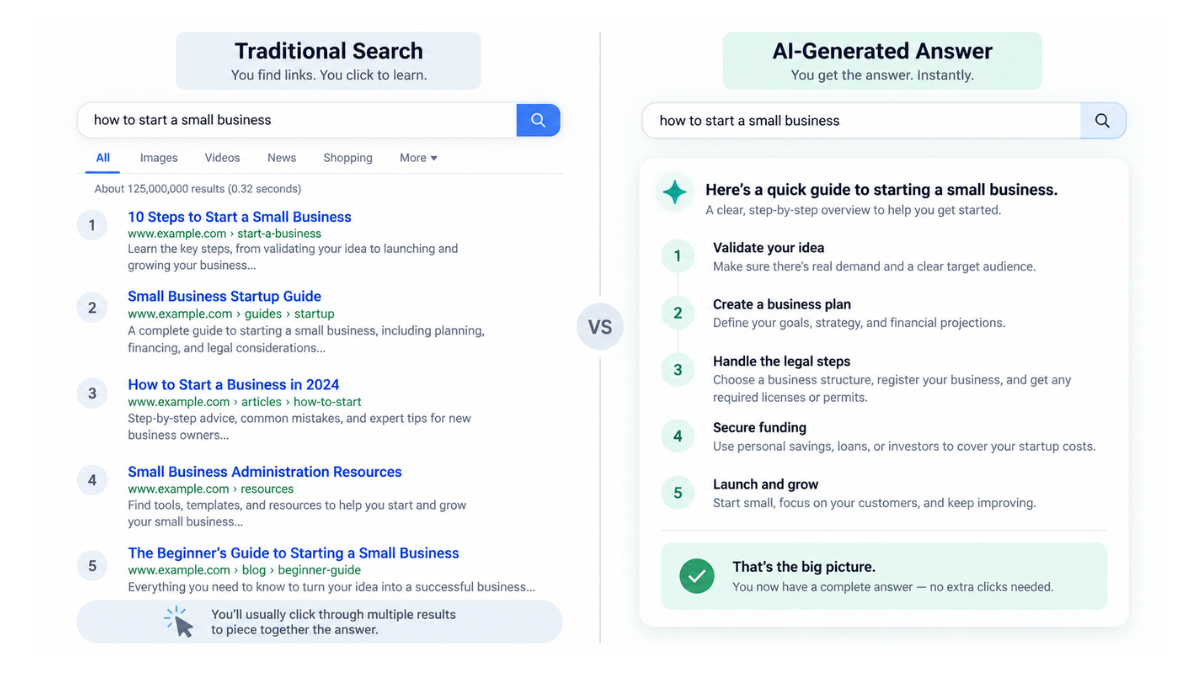
Content and inbound marketing are becoming more connected because discovery is changing. AI Overviews, zero-click search behavior, social algorithms, and crowded inboxes all affect how often people click through to a website.
Pew Research Center found that users were less likely to click links when a Google AI summary appeared, with 8% clicking a traditional search result when an AI summary was present compared with 15% when it was not. Google has also said AI features can send higher-quality clicks when users do click through, and Search Console now includes reporting for generative AI visibility. The exact impact will vary by industry and query, but the direction is clear: businesses cannot rely only on rankings and hope clicks follow.
That is why I want business owners to think beyond content volume. A strong content strategy still matters, but the business also needs owned channels. Email lists, CRM data, repeat visitors, direct traffic, and recognizable brand presence all matter more when platforms answer more questions on the results page.
This is why content marketing and SEO work together. SEO helps the content get discovered, but inbound systems help the business keep building the relationship after that first touch.
How Do Content Marketing and Inbound Marketing Work Together in Practice?
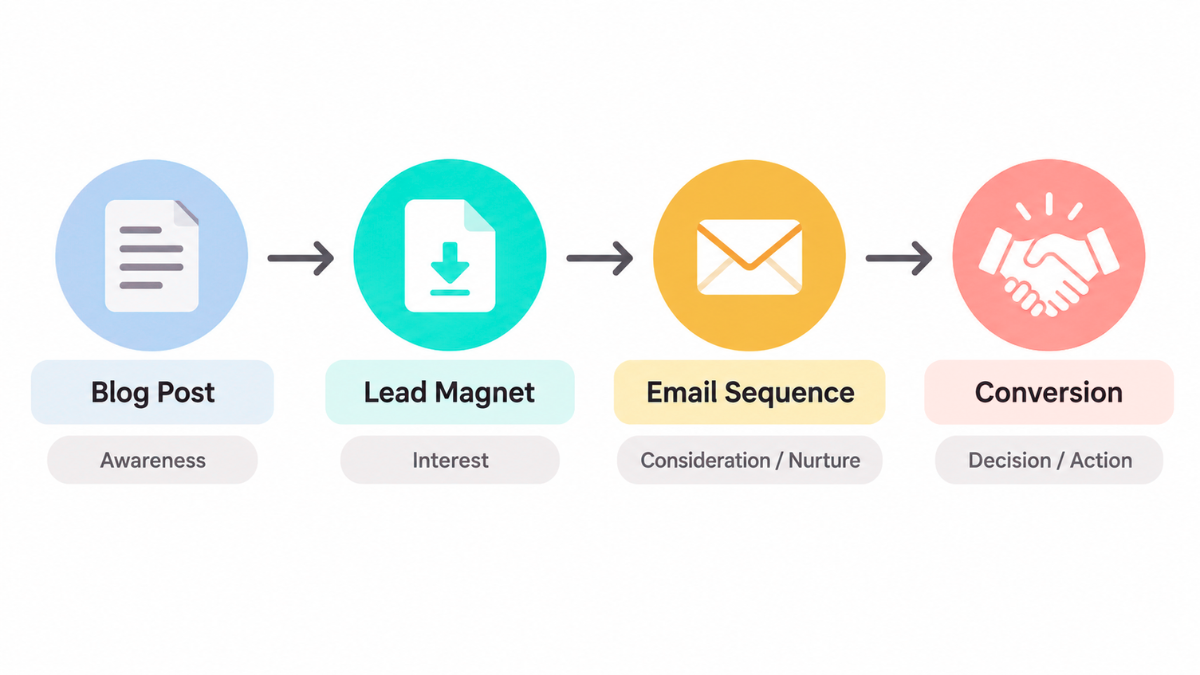
Here is a simple example. A business publishes a blog post answering a high-intent question. That post ranks in search or gets shared on LinkedIn. A reader finds it useful and downloads a related checklist. The checklist adds them to a segmented email sequence. The emails send more useful content, address objections, and invite them to book a call when the timing is right.
That is content feeding inbound. The blog creates the first moment of trust. The checklist captures interest. The emails nurture the relationship. The CRM keeps the follow-up organized. The sales conversation happens when the prospect is warmer and more informed.
Without content, the system has nothing helpful to distribute. Without inbound, the content creates awareness but may not create a reliable next step.
What Metrics Show Whether Your Combined Strategy Is Actually Working?
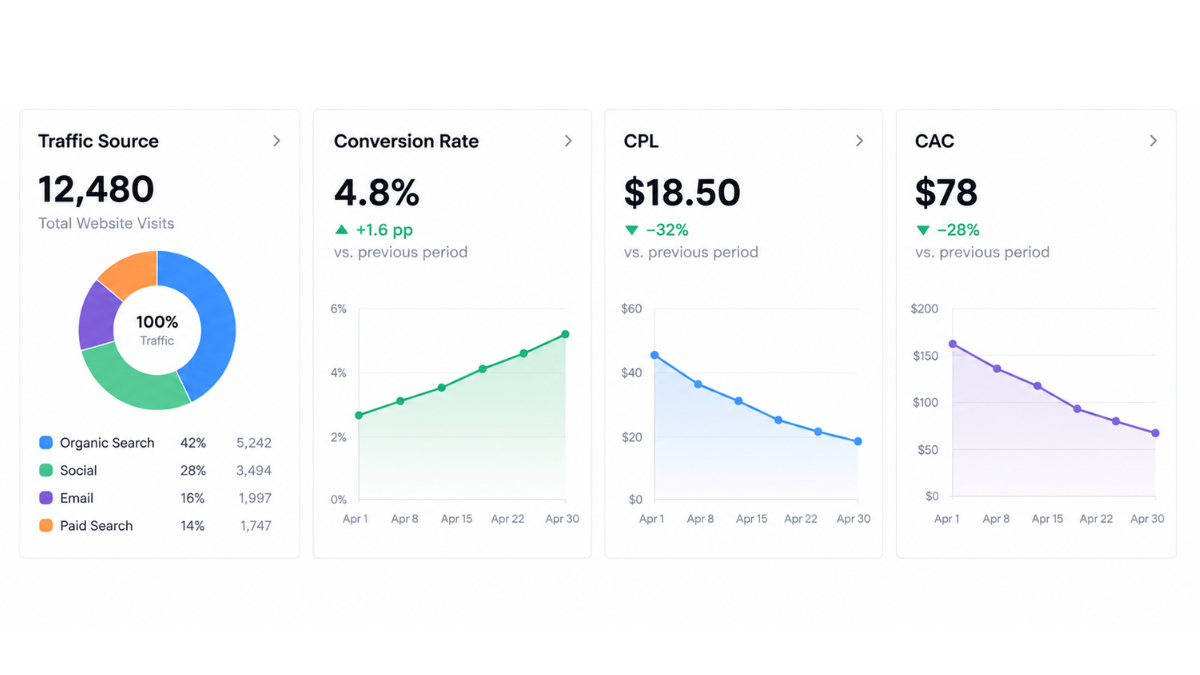
I would not judge content or inbound performance by traffic alone. Traffic matters, but it only tells you that people arrived. It does not tell you whether the right people arrived or whether the content helped them move forward.
I would look at organic traffic by topic, source breakdown, conversion rate by landing page, lead magnet signups, email open and click behavior, cost per lead, lead-to-customer rate, and the quality of conversations created. I would also look at where people drop off. If readers visit a blog and leave without clicking anything else, that may be a conversion path problem, not a content quality problem.
Strong measurement also depends on SEO-friendly blog posts that are structured clearly, internally linked well, and written for the questions real buyers are asking.
Which Strategy Should a Growing Business Focus on First?
The right starting point depends on what is already working. If the business has little traffic, few search rankings, and no strong educational content, I would usually start with content. That gives the brand something useful to be found for, shared, and referenced.
If the business already has traffic but few inquiries, I would look at inbound first. That may mean stronger CTAs, better lead magnets, cleaner forms, segmented email follow-up, and a CRM process that helps the team see which leads are moving forward.
If the business has both traffic and leads but inconsistent follow-up, the priority may be operations. Sometimes the marketing strategy is not broken. The follow-through is.
How Do You Build a System That Uses Both Effectively?
Start with a defined audience. Then map the questions they ask before they are ready to buy. Build content around those questions, but make sure every piece has a next step. That next step might be a related service page, a checklist, a comparison guide, a consultation form, or an email sequence.
Then connect the pieces. Content should support SEO. SEO should support visibility. Email should support nurturing. CRM should support follow-up. Social should support distribution. The problem I often see is that each channel is handled separately, so the business is active everywhere but the strategy feels scattered.
This is where a fully managed specialist team can help because the work does not sit with one overwhelmed owner trying to write, optimize, publish, send, track, and follow up alone.
I saw this clearly with Melissa Martin of Creative Island. Her business needed support across design, web development, blog writing, social content, and copywriting. The growth did not come from one isolated task being handed off. It came from having steady execution across the marketing work that supported her client delivery and gave her more room to focus on strategy and growth.
When content, SEO, and email are connected, email marketing and SEO can reinforce each other because audience behavior from one channel can guide what gets improved in the other.
Building Both Into One System
Content marketing and inbound marketing should not compete with each other. Content feeds inbound. Inbound gives content a conversion path.
For growing businesses, the challenge is usually not understanding the idea. It is keeping the system moving consistently. That may mean planning topics, writing articles, updating pages, optimizing old content, setting up email sequences, reviewing CRM data, and making sure every asset points to the right next step. With content writing support and SEO support for content visibility, Smart VAs can help turn disconnected marketing tasks into a clearer system.
Smart Virtual Assistant
👍🤵
Smart Virtual Assistant 👍🤵
What if you could reclaim 40 hours this month?
Find out inside this free guide.
Frequently Asked Questions
-
No. Content marketing is the creation and distribution of useful content. Inbound marketing is the larger system that uses content, SEO, forms, email, CRM, and follow-up to move people from awareness to trust to conversion. Content is part of inbound, but inbound includes more than content.
-
Neither is better in every situation. If your business needs more visibility and trust, content marketing may come first. If you already have traffic but few leads, inbound marketing may be the bigger gap. Most growing businesses eventually need both working together.
-
You can build inbound tools without content, but the system will be weak. Forms, workflows, and email sequences need something valuable to offer. Content gives your inbound system the useful material that attracts, educates, and nurtures people before they are ready to buy.
-
There is no universal split. A newer business may put more effort into content creation first. A business with existing traffic may need more budget for landing pages, automation, email, and CRM cleanup. The right balance depends on where leads are currently getting stuck.
-
One coordinated team can often handle both, as long as the responsibilities are clear. Content requires writing, research, and SEO judgment. Inbound requires conversion paths, email, CRM, and measurement. The key is not one person doing everything, but a connected system with accountable support.

Kristy Yoder is the Founder of Smart VAs, a virtual assistant agency that helps entrepreneurs grow through reliable administrative and digital marketing support. With extensive experience building and managing remote teams, she specializes in delegation, operational efficiency, and scalable business growth.
Passionate about helping business owners reclaim their time, Kristy leads Smart VAs in connecting entrepreneurs with skilled virtual professionals who provide dependable support and contribute to long-term success.