Remote Staffing vs Outsourcing: What's Best For Your Business
Choosing between remote staffing vs outsourcing depends on whether you want dedicated team members who integrate into your business or project-based support from an external company. Each model has unique benefits for control, cost, and scalability.
Is it possible to expand your team, handle more work, and grow your business without ever increasing office space? Is hiring remote professionals better than outsourcing work to external companies? You might think these options sound similar, but there are clear differences in control, cost, and long-term impact.
Understanding remote staffing vs outsourcing helps you make smarter decisions. You’ll see which approach fits your workflow, budget, and business goals. By the end, you’ll know which model can deliver consistent results and which is better for project-specific needs.
Related Article: 10 Benefits of Outsourcing Digital Marketing to a VA Agency

ARE YOU STILL TRYING TO DO IT ALL?
Discover the SMART way to delegate without losing control—and finally free up your time.
What Is Remote Staffing?
When you ask what remote staffing is, it means hiring people who work exclusively for your business but operate from a location outside your office. They are your employees, following your instructions and aligned with your business goals. You decide their responsibilities, schedule, and workflows, and they become an extension of your team.
Remote staff integrates with your company’s culture and processes. They participate in team meetings, use your systems, and report to your managers. Over time, they gain a deep understanding of your business, making them more efficient and reliable.
Integration also strengthens communication. You can assign tasks, give feedback, and monitor progress just as you would with in-office employees. This makes it easier to maintain quality and consistency across projects.
When it comes to flexibility and specialization, a remote team can be tailored to your needs. You might start with one virtual assistant for administrative support and scale up to a full team handling marketing, social media, and customer service. Each member develops expertise in your specific workflows, which makes them far more effective than temporary contractors.
Lastly, hiring remote staff supports sustainable growth. Because they work exclusively for you, they adapt to your business style, improve processes, and stay invested in outcomes. In contrast to short-term solutions, a dedicated remote team helps you maintain consistency, reduce errors, and build a reliable support system.
Related Article: Hire an Administrative Support Specialist

What Is Outsourcing?
Remote outsourcing refers to hiring an external company or service provider to complete tasks or projects. Unlike remote staff, outsourced teams are not your employees. They are managed by their own company, which assigns professionals to your work.
Outsourcing can include marketing campaigns, software development, bookkeeping, or customer support. You provide instructions, deadlines, and outcomes, but the team manages how the work is completed.
Furthermore, outsourcing can be project-based, ongoing, or task-specific. You might hire a company to develop your website or manage seasonal campaigns. Some outsourcing companies operate remotely, giving you access to global talent at potentially lower costs.
Using a staffing agency outsourcing model is another option, where agencies provide professionals for your projects. Agencies handle recruitment, training, and HR issues, which reduces the burden on your business.
Ultimately, outsourcing works well for specialized work or projects that do not require day-to-day supervision. You can tap into expertise immediately without hiring long-term employees. It’s especially useful when deadlines are tight or projects require niche skills that your current team cannot provide.
Related Article: Hire a Bookkeeping Specialist
| Aspect: | Remote Staffing: | Outsourcing: |
|---|---|---|
| Control Over Daily Operations | High – you manage tasks, priorities, and workflow | Low – external team manages their own schedule and processes |
| Cost Structure | Predictable – salaries, benefits, agency fees if applicable | Variable – pay per project or task, may incur extra costs for revisions or extensions |
| Flexibility & Scaling | Gradual – scale team as business grows | Quick – access skilled professionals immediately for projects |
| Skill Specialization | Dedicated to your business and workflows | Existing expertise but split focus among multiple clients |
| Business Integration | Fully integrated into company culture and values | Limited integration; may follow outsourcing company’s processes |
Control Over Daily Operations
With remote staffing, you stay closely involved in how work gets done every day. You decide priorities, assign tasks directly, and adjust workloads in real time based on what your business needs that week or even that day. Because remote staff work exclusively for you, they follow your systems, tools, and expectations. This level of oversight helps prevent misunderstandings and reduces the need for repeated revisions. Outsourcing, on the other hand, usually focuses on deliverables rather than daily execution, which can feel limiting if you need hands-on involvement. That difference matters more as your operations become more complex or time-sensitive.
Cost Structure
Remote staffing comes with predictable and consistent costs, which makes budgeting easier over time. You know what you are paying monthly, and that stability helps with long-term planning. While outsourcing can appear more affordable at first, costs can shift quickly when projects expand or need revisions. Additional requests, timeline changes, or extended support often lead to extra fees. Over time, repeated outsourcing for similar tasks can cost more than having a dedicated remote team that already understands your business. The financial difference becomes clearer the longer the relationship lasts.
Flexibility and Scaling
Outsourcing gives you fast access to resources when you need immediate help, especially for short-term projects. That speed can be useful when deadlines are tight or workloads suddenly increase. Remote staffing scales differently, focusing on steady and intentional growth. As your remote team gains experience with your business, they work faster and with less supervision. This type of scaling supports stability rather than quick fixes. For businesses planning long-term growth, this gradual flexibility often leads to stronger operational foundations.
Related Article: How To Build Your Own Remote Team Step by Step
Skill Specialization
Remote staff develop skills that are specific to your business, not just their general role. Over time, they learn your brand voice, systems, customers, and internal standards. This familiarity improves accuracy and reduces onboarding time for future tasks. Outsourced teams usually bring strong technical expertise, but they apply it across many clients. That shared focus can limit how deeply they adapt to your workflows. Skill specialization in remote staffing grows with your business, while outsourcing expertise stays more generalized.
Business Integration
Remote staff becomes part of your business rhythm. They align with your communication style, participate in planning discussions, and understand how their work affects other areas of your company. This integration supports consistency and accountability across teams. Outsourced teams typically operate outside your internal structure, following their own processes. While this can work for isolated projects, it may create gaps in communication or expectations. Over time, deeper integration often leads to smoother collaboration and stronger results.

Cost Comparison: Remote Staffing vs Outsourcing
| Aspect: | Remote Staffing: | Outsourcing: |
|---|---|---|
| Short-Term vs Long-Term Costs | Higher upfront, but cost-effective long-term | Lower upfront, may become expensive with repeated projects |
| Hidden Costs | Minimal – team aligned with your business | Potential – revisions, project management, troubleshooting |
| Return on Investment | High – consistency, process knowledge, long-term value | Moderate – fast results but may lack continuity |
Short-Term vs Long-Term Costs
Outsourcing often looks more affordable at the beginning because you pay only for a specific project or outcome. This works well when you need something done quickly and do not expect ongoing work in that area. Remote staffing usually requires an initial investment for recruitment, onboarding, and training, which can feel heavier upfront. Over time, though, your remote team becomes faster, more accurate, and more familiar with how your business operates. That familiarity reduces mistakes, back-and-forth communication, and repeated onboarding costs. When you look beyond immediate expenses, remote staffing often provides stronger cost stability and better value as your business grows.
Hidden Costs
Hidden costs are one of the most overlooked parts of outsourcing. While a project may start with a fixed price, changes in scope, additional revisions, or extended timelines can quickly increase the final cost. You may also spend extra time managing communication, clarifying instructions, or reviewing work that does not fully meet expectations. With remote staffing, many of these hidden costs are reduced because your team already understands your processes, tools, and priorities. Communication is more direct, and expectations are clearer from the start. This leads to smoother workflows and fewer surprises that impact your budget.
Return on Investment
Remote staffing creates long-term value by keeping knowledge inside your business. Your team learns your systems, understands your clients, and improves processes over time. This continuity leads to consistent quality and stronger operational efficiency. Outsourcing delivers fast results for individual projects, which can be helpful, but the value often ends when the project ends. Each new project may require re-explaining workflows, expectations, and brand standards. When you focus on long-term growth, remote staffing typically offers a higher return because the investment compounds as your team grows alongside your business.
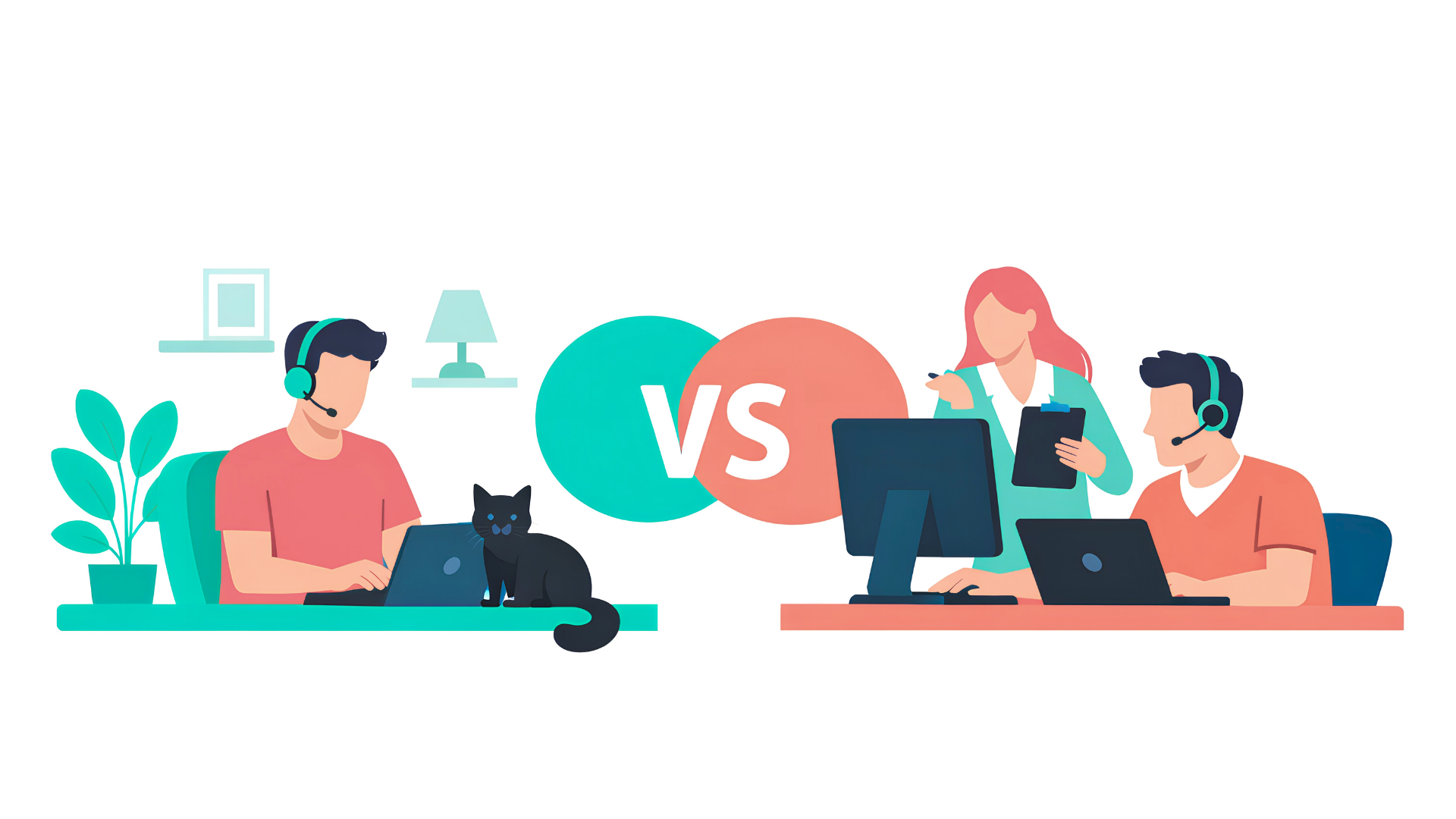
PROS AND CONS OF REMOTE STAFFING AND OUTSOURCING
Pros and Cons of Remote Staffing
| Pros of Remote Staffing: | Cons of Remote Staffing: |
|---|---|
| Dedicated support focused solely on your business | Requires upfront time for recruitment and onboarding |
| Strong integration with your company culture and processes | Ongoing responsibility for management and performance |
| Consistency in workflows and output | Needs clear systems and communication structures |
| Scales gradually and sustainably | Initial setup of tools and processes may take effort |
| Greater control over priorities and daily execution | Results depend heavily on leadership and direction |
Pros of Remote Staffing
Dedicated support focused solely on your business
When you hire remote staff, their time and attention are centered on your business alone. They are not switching between multiple clients or juggling competing priorities. This focus allows them to understand your goals, deadlines, and expectations more clearly. Over time, they become proactive, spotting issues and opportunities without needing constant direction. That level of dedication is hard to achieve with short-term or shared resources. It creates a stronger working relationship and better long-term results.
Strong integration with your company culture and processes
Remote staff work within your systems, communication style, and values. They learn how decisions are made and how work flows from one task to another. This integration helps reduce friction and confusion as projects move forward. When your team understands how your business operates, collaboration becomes smoother and faster. Culture alignment also improves accountability because expectations are clear and consistent. Over time, this creates a team that feels connected, even when working remotely.
Consistency in workflows and output
Consistency is one of the biggest strengths of remote staffing. Because the same people handle recurring tasks, quality becomes more predictable. Your team knows what “good work” looks like for your business. This reduces the need for repeated corrections or detailed instructions. As processes stabilize, productivity improves naturally. Consistent output also makes it easier to plan and forecast your operations.
Scales gradually and sustainably
Remote staffing allows you to grow at a pace that makes sense for your business. You can start with one role and expand as your workload increases. This avoids the pressure of hiring too quickly or overcommitting resources. As your team grows, existing members can help onboard new hires, maintaining quality and efficiency. Sustainable scaling supports long-term growth rather than short-term fixes. It also helps you maintain control as your operations become more complex.
Greater control over priorities and daily execution
With remote staffing, you decide what gets done and when. You can shift priorities based on changing business needs without renegotiating contracts or scopes. This flexibility is valuable when work evolves quickly or requires frequent adjustments. Direct oversight also allows you to catch issues early before they become larger problems. Having control over daily execution helps maintain momentum and clarity across your operations. It keeps your business agile and responsive.
Cons of Remote Staffing
Requires upfront time for recruitment and onboarding
Hiring remote staff takes planning and effort at the start. You need to define roles clearly, screen candidates, and provide proper onboarding. This process can feel time-consuming, especially if you are already busy running your business. However, skipping these steps often leads to bigger problems later. Investing time upfront helps set expectations and ensures long-term success. While the beginning requires effort, it pays off as your team becomes more efficient and independent.
Ongoing responsibility for management and performance
Remote staff still need leadership, guidance, and feedback. You are responsible for setting goals, reviewing work, and addressing performance issues. This requires consistency and clear communication from you or your managers. Without regular check-ins, misalignment can occur. Managing people remotely also means being intentional about accountability. Strong management practices help turn this challenge into a long-term strength.
Needs clear systems and communication structures
Remote staffing works best when systems are clearly defined. Without clear workflows, tasks can be misunderstood or delayed. Communication gaps may happen if expectations are not documented. You need tools for task tracking, messaging, and reporting to keep everything organized. While setting up these systems takes effort, they improve efficiency across the entire business. Clear structures help your team work confidently and independently.
Initial setup of tools and processes may take effort
Remote teams rely on digital tools to collaborate effectively. You may need to set up project management platforms, communication channels, and documentation systems. This setup can feel overwhelming at first if you are not used to remote operations. However, these tools create transparency and structure. Once in place, they reduce manual follow-ups and confusion. The initial effort leads to smoother daily operations.
Results depend heavily on leadership and direction
Remote staffing reflects how well the business is led. If priorities are unclear or direction changes frequently, productivity can suffer. Your team needs clear goals and consistent communication to perform well. Leadership sets the tone for accountability, quality, and engagement. When direction is strong, remote teams perform exceptionally well. When it is lacking, even skilled professionals may struggle to deliver their best work.

Pros and Cons of Outsourcing
| Pros of Outsourcing: | Cons of Outsourcing: |
|---|---|
| Quick access to specialized skills | Limited control over daily execution |
| Faster setup compared to hiring employees | Less alignment with your business processes |
| No long-term employment commitment | Quality may vary across projects |
| Reduced responsibility for recruitment and HR | Communication gaps can occur |
| Flexible for short-term or project-based work | Knowledge does not stay within your business |
| Easier to scale up or down quickly | Can become costly for ongoing or recurring work |
Pros of Outsourcing
Quick access to specialized skills
Outsourcing allows you to tap into skills that may not exist within your current team. You can work with professionals who already have experience in specific areas like development, accounting, or design. This saves time because you do not need to train someone from scratch. It also helps you move faster on projects that require technical knowledge. For businesses that need immediate expertise, outsourcing can fill gaps efficiently.
Faster setup compared to hiring employees
Outsourcing removes many steps from the hiring process. You do not need to post job listings, conduct multiple interviews, or manage onboarding. Once you agree on scope and timelines, work can begin quickly. This speed is helpful when deadlines are tight or workloads suddenly increase. Faster setup allows you to focus on strategy rather than recruitment.
No long-term employment commitment
Outsourcing gives you flexibility without long-term obligations. You can engage services for a specific project or time period and end the relationship when the work is complete. This reduces financial risk if your needs change. It also works well for businesses that are still testing workflows or new initiatives. Short-term commitment allows you to stay agile without expanding payroll.
Reduced responsibility for recruitment and HR
With outsourcing, the service provider handles hiring, training, payroll, and compliance. This reduces administrative burden on your business. You do not need to worry about employment laws, benefits, or performance reviews. That simplicity can be appealing if you want to stay focused on core operations. Less HR responsibility means fewer internal resources spent on management tasks.
Flexible for short-term or project-based work
Outsourcing works well when tasks are clearly defined and temporary. You can bring in support for one-time initiatives or seasonal demands. This flexibility prevents overstaffing during slower periods. It also helps you control costs by paying only for the work delivered. For project-based needs, outsourcing offers practical efficiency.
Easier to scale up or down quickly
Outsourcing allows you to adjust resources based on demand. You can scale up during busy periods and scale down when workloads decrease. This flexibility supports businesses with fluctuating needs. You are not tied to long-term staffing levels. Quick scaling helps maintain productivity without long-term commitments.
Cons of Outsourcing
Limited control over daily execution
When you outsource, you typically focus on deliverables rather than daily processes. You may not see how work is being done behind the scenes. This can be challenging if you prefer hands-on involvement. Changes may take longer because requests go through an external team. Limited control can affect responsiveness and alignment.
Less alignment with your business processes
Outsourced teams follow their own workflows and systems. They may not fully adapt to how your business operates internally. This can lead to misunderstandings or inefficiencies. You may need to repeat instructions or clarify expectations more often. Over time, lack of alignment can slow progress on ongoing work.
Quality may vary across projects
Outsourced providers often work with multiple clients at the same time. Their attention may shift depending on workload and priorities. This can result in inconsistent quality from one project to another. You may receive strong results one time and average results the next. Quality control becomes an ongoing concern rather than a one-time setup.
Communication gaps can occur
Outsourcing relationships rely heavily on clear communication. Differences in time zones, language, or processes can create delays. Misunderstandings may lead to revisions or missed expectations. Communication gaps require extra effort to manage. These issues can slow down projects and impact timelines.
Knowledge does not stay within your business
When a project ends, the outsourced team takes their knowledge with them. This means your business does not retain insights gained during the work. If you repeat similar projects, you may need to re-explain processes from scratch. This lack of continuity can reduce long-term efficiency. Knowledge loss becomes more noticeable as operations grow.
Can become costly for ongoing or recurring work
Outsourcing is cost-effective for short-term needs but less efficient for long-term support. Repeated projects often require new contracts and setup time. Costs can increase through revisions, extensions, or added scope. Over time, ongoing outsourcing may exceed the cost of a dedicated team. This makes outsourcing less ideal for daily or recurring tasks.
Which Is Best for Your Business Needs?
| Decision Area: | Remote Staffing: | Outsourcing: |
|---|---|---|
| Business Goals | Best for long-term growth, consistency, and dedicated support | Best for short-term projects and specialized expertise |
| Workflow & Daily Involvement | High involvement and direct control over priorities | Low involvement with responsibility handled by a third party |
| Budget Impact Over Time | Higher upfront investment with long-term cost stability | Lower upfront cost but may increase with repeated projects |
| Scalability | Grows steadily alongside your business | Scales quickly for temporary or fluctuating needs |
| Overall Approach | Ideal for core, ongoing operations | Ideal for project-based or occasional work |
Matching Goals to Model
Your business goals play a major role in deciding which model works best. If you want long-term growth, consistent output, and a team that understands your business deeply, remote staffing is a strong fit. Your remote staff work exclusively for you, allowing them to improve processes and contribute beyond basic task execution. Over time, this leads to higher efficiency and better results. Outsourcing works better when your goals are short-term or project-focused. It allows you to bring in expertise quickly without committing to permanent roles, which is useful for specific initiatives or one-off needs.
Workflow Considerations
Your preferred level of involvement matters more than many business owners realize. Remote staffing allows you to stay closely involved in daily operations and manage priorities directly. You can adjust workloads, shift focus, and give feedback in real time. This approach works well if your business needs flexibility and ongoing collaboration. Outsourcing places responsibility for execution with the third party, which suits businesses that prefer a hands-off approach. If you value control and visibility, remote staffing usually feels more comfortable.
Budget and Scalability
Remote staffing requires upfront investment in hiring and onboarding, but it offers cost stability over time. As your team gains experience, productivity improves without additional hiring costs. Outsourcing often looks less expensive initially because you pay per project. However, repeated outsourcing for similar tasks can increase costs over time. Scalability also differs between the two models. Remote staffing supports steady growth, while outsourcing allows quick scaling during short-term spikes in demand.
Hybrid Approach
Many businesses choose a hybrid approach to balance flexibility and control. A core remote team handles daily operations, ensuring consistency and accountability. Outsourcing is then used to support specialized or temporary projects that do not require ongoing involvement. This setup prevents overstaffing while still giving access to expert skills when needed. It also helps businesses manage costs more effectively. A hybrid model often provides the most balanced solution for growing companies.

Partner With Experts to Optimize Your Remote Staffing Strategy
Smart Virtual Assistant
👍🤵
Smart Virtual Assistant 👍🤵
Smart VAs gives you the flexibility to approach your business support in the way that works best for you. If your focus is long-term growth, workflow consistency, and building a dedicated team, our remote staffing model lets you hire specialists who integrate directly into your business. Your team can include experts in social media management, email management, podcast management, web management, and administrative support, all aligned with your systems and priorities. They work exclusively for you, providing consistency, accountability, and familiarity that grows with your business.
At the same time, Smart VAs can also be tapped for remote outsourcing when you need short-term projects, specialized expertise, or quick results without committing to permanent hires. Our staffing outsourcing services let you access skilled professionals who can take on discrete projects, manage seasonal workloads, or fill gaps in your team efficiently.
This flexibility allows you to confidently navigate Remote Staffing vs Outsourcing, choosing the right approach for each business need. By partnering with Smart VAs, you gain a team, or a combination of dedicated staff and outsourced support, that is designed to help your business thrive, no matter the challenge. Book a call now!
READY TO FINALLY DELEGATE LIKE A CEO?
Learn the 7-day plan to build your dream VA team and step out of the weeds.
Frequently Asked Questions
-
Remote staffing is better for control. Your team reports to you directly and follows your workflows. Outsourcing provides results without daily oversight.
-
Remote staffing is more cost-effective long-term because your team gains efficiency and understanding of your processes. Outsourcing works well for short-term tasks but may not provide consistent results over time.
-
Outsourcing allows immediate scaling for projects. Remote staffing requires recruitment and onboarding, but delivers dedicated support that grows with your business.
-
Remote staff are under your direct management, so you can enforce strict security protocols. Outsourcing carries potential risks because third-party companies handle sensitive information.
-
Remote staffing is ideal for ongoing, consistent support. Outsourcing is better for project-based or temporary work.

Ready to Work Smarter, Not Harder?
Smart VAs provides a team of highly skilled specialists from around the world, ensuring seamless support no matter the time zone. We take pride in delivering efficient, fast, and high-quality service so you can focus on growing your business. With one subscription plan, you gain access to a complete team of digital marketing experts that’s customized to your unique needs, eliminating the need to train and look for one yourself!