Rates for CPA Firm Virtual Assistant: Freelancers vs. Agencies
Rates for CPA Firm Virtual Assistant services vary depending on whether you hire freelancers or agencies, and are influenced by experience level, specialization in accounting tasks, service structure, and level of oversight provided.
From our experience working with finance teams and service-based businesses, CPA firms rarely choose based on cost alone. More often, the decision is shaped by operational reliability, accuracy during high-volume periods like tax season, and the ability to scale support when workloads suddenly increase.
Freelancers are generally more affordable and flexible, while agencies offer structured systems, quality control, and team-based coverage. Understanding these differences is essential for CPA firms that want to avoid hiring gaps, missed deadlines, or inconsistent bookkeeping outputs.
Related Article: Roles and Responsibilities of a Virtual Assistant for Your CPA Firm

DELEGATION ISN’T JUST A TASK—IT’S A STRATEGY.
Learn how to delegate with clarity and purpose so your team thrives and your business grows.
Understanding CPA Firm Virtual Assistant Pricing
Before comparing freelancers and agencies, it’s important to understand what actually drives pricing in CPA-related virtual assistant work.
Unlike general administrative tasks, CPA firm support often involves:
Financial record accuracy
Confidential client data handling
Monthly reporting cycles
Tax preparation assistance
Accounting software proficiency
These responsibilities require higher reliability and attention to detail than typical VA work, which is why pricing tends to vary significantly based on skill level and service structure.
In most cases, CPA firms are not just paying for time—they are paying for risk reduction, accuracy, and consistency.
Hourly Rate Breakdown for CPA Firm Virtual Assistants: Freelancers vs. Agencies
Freelancers
Freelancers typically charge lower hourly rates because they operate independently without management layers, office overhead, or team coordination costs.
Based on common market patterns, freelance CPA support falls into three general categories:
Entry-Level Freelancers
Handle data entry and basic administrative accounting support
Limited exposure to accounting workflows
Lower cost, but requires supervision
Mid-Level Freelancers
Assist with invoicing, reconciliations, and expense tracking
Familiar with tools like QuickBooks or Xero
More reliable for recurring tasks
Experienced Freelancers
Support bookkeeping workflows and financial reporting assistance
May have accounting background or certification exposure
Higher hourly rates due to specialization
However, one key consideration CPA firms often overlook is availability risk. Freelancers usually manage multiple clients, and during peak accounting seasons (tax filing periods or month-end closing), responsiveness may decrease. This can create bottlenecks in reporting workflows or delayed reconciliations.
Agencies
Agencies charge higher rates because pricing includes more than just execution time. It typically covers:
Project management
Quality assurance
Training and onboarding systems
Backup staff availability
Workflow supervision
In CPA environments, agencies often assign multiple roles within one account setup:
One assistant handles bookkeeping tasks
Another manages reporting or client communication
A supervisor reviews outputs for accuracy
This layered structure reduces dependency on a single person and improves continuity.
From a CPA firm perspective, this is especially valuable during:
Tax season peaks
Audit preparation
Monthly financial closing cycles
While agencies cost more, many firms justify the investment because it reduces operational risk and improves consistency.

Project-Based CPA Firm Virtual Assistant Pricing: What to Expect from Freelancers vs. Agencies
Freelancers
Freelancers often prefer fixed-price arrangements for clearly defined accounting tasks. These may include:
Transaction categorization
Monthly reconciliation
Financial summary preparation
Invoice processing
Pricing is typically based on:
Volume of transactions
Complexity of accounting systems
Deadline urgency
One advantage of project-based pricing is cost predictability. CPA firms know the total cost upfront, which helps with budgeting. However, scope clarity is critical. Incomplete instructions or evolving requirements may result in additional charges or delays.
In practice, CPA firms get the best results from freelancers when tasks are:
Well-defined
Repetitive
Limited in scope
Agencies
Agencies also offer project-based pricing, but with more structured delivery frameworks.
Instead of pricing isolated tasks, agencies usually bundle services into packages such as:
Monthly bookkeeping support
Financial reporting cycles
Multi-client accounting workflows
These packages often include:
Defined timelines
Task allocation across team members
Quality assurance checkpoints before submission
For CPA firms, this structure reduces the likelihood of errors, especially in financial reporting where accuracy is critical.
While agencies are more expensive upfront, they often deliver higher operational stability, particularly for firms managing multiple clients or complex financial systems.
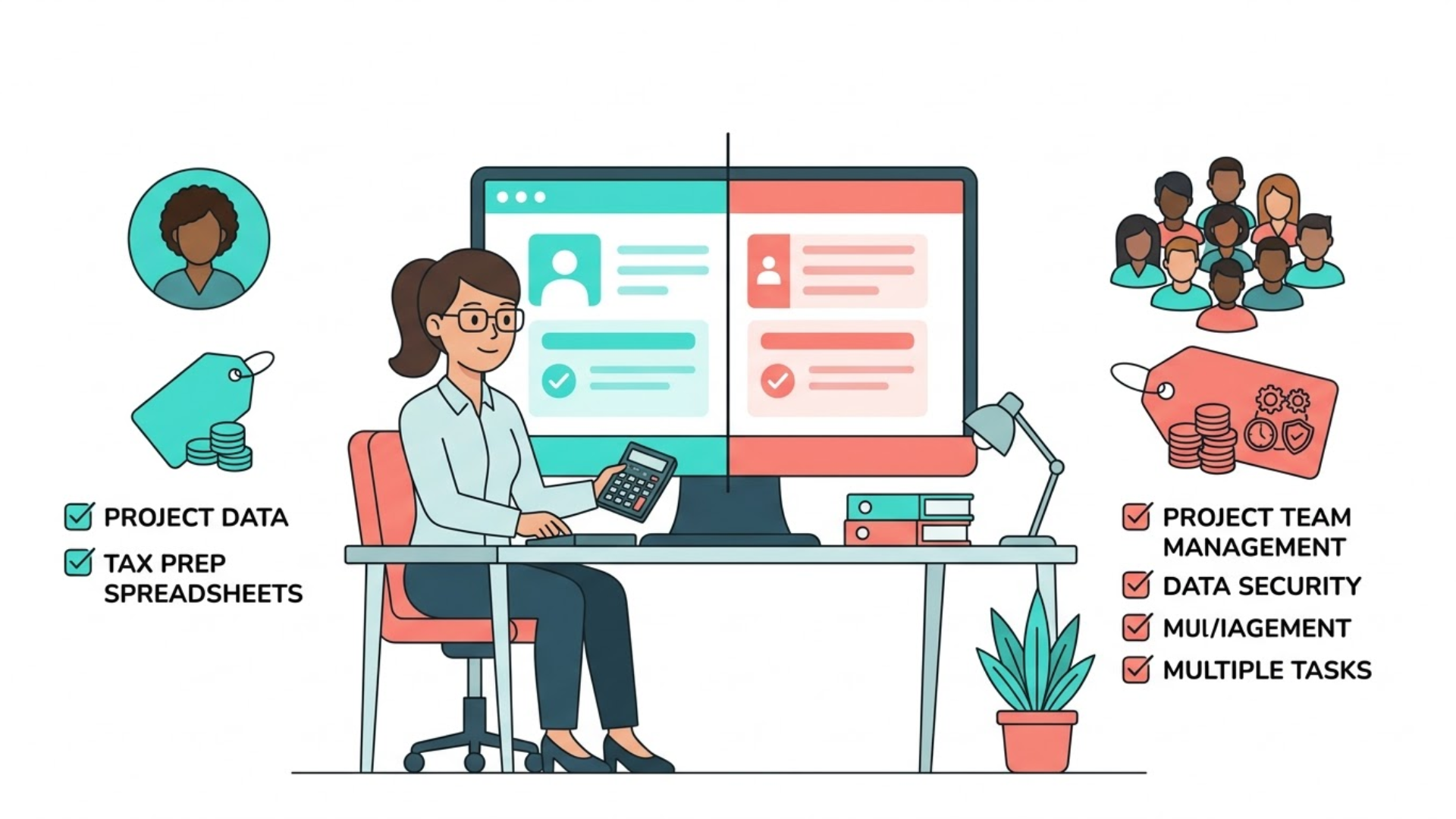
Monthly Retainer Rates for CPA Firm Virtual Assistants: Freelancers vs. Agencies
Freelancers
Monthly retainers are common in CPA support because accounting work is continuous rather than one-time.
Freelancers typically offer:
Fixed monthly hours
Recurring bookkeeping tasks
Invoicing and expense tracking support
Retainers are especially useful during:
Tax season
Year-end financial reporting
Audit preparation periods
However, capacity remains a limitation. A single freelancer can only handle a limited workload, and scaling beyond their availability may require hiring additional support.
From experience, CPA firms using freelancers often need to carefully plan workloads to avoid bottlenecks during high-demand periods.
Agencies
Agencies structure retainers differently by offering subscription-style service packages.
These may include:
Access to multiple assistants
Flexible task allocation across specialists
Broader accounting and administrative support coverage
For CPA firms, this model offers one key advantage: built-in redundancy. If one assistant is unavailable, another team member can step in without disrupting operations.
Agencies also provide scalability, allowing firms to increase or reduce support depending on workload cycles. This is particularly useful for firms that experience seasonal fluctuations in accounting activity.

Freelancers vs Agencies: Pros and Cons (CPA Context)
Freelancers
| Pros: | Cons: |
|---|---|
| Lower cost | Limited availability |
| Direct communication | No backup support |
| Flexible engagement terms | Variable skill levels |
| Personalized working relationship | Higher risk during peak seasons |
Freelancers are often best suited for:
Small CPA firms
Limited bookkeeping tasks
Short-term or project-based needs
Agencies
| Pros: | Cons: |
|---|---|
| Team-based coverage | Higher cost |
| Structured workflows | Less direct personalization |
| Quality control systems | More structured engagement process |
| Higher consistency and reliability | N/A |
Risk, Accuracy, and Compliance Considerations
One of the most overlooked factors in CPA virtual assistant hiring is risk exposure.
Financial data requires:
Accuracy in reporting
Confidential handling of client records
Consistent documentation practices
Agencies often reduce risk through:
Standard operating procedures (SOPs)
Internal review systems
Controlled access to financial data
Task verification before submission
Freelancers may also provide high-quality work, but oversight and consistency depend heavily on individual experience and discipline.
For CPA firms, even small errors in bookkeeping or reporting can lead to:
Compliance issues
Incorrect financial statements
Delays in client reporting cycles
This is why many firms prioritize structured support systems over cost alone.

Choosing the Right CPA Firm Virtual Assistant
Smart Virtual Assistants
👍🤵
Smart Virtual Assistants 👍🤵
Rates for CPA Firm Virtual Assistant services vary widely depending on experience, structure, and service model. Freelancers provide affordability and flexibility, while agencies offer reliability, scalability, and structured financial workflows.
The right choice ultimately depends on whether a CPA firm prioritizes cost savings or operational stability.
At Smart Virtual Assistants, we support CPA firms with trained virtual professionals who handle administrative and finance-related workflows such as bookkeeping assistance, reporting support, client coordination, and operational task management. Our structured onboarding and quality-focused process help ensure consistency and reliability across financial operations.
For CPA firms looking to streamline operations without sacrificing accuracy, the key is not just hiring help, but choosing the right support system for long-term growth. Book a call now!

FROM OVERWHELMED TO CEO IN 7 DAYS
Your shortcut to building a team of specialists who keep your business moving without you doing it all.
Frequently Asked Questions:
-
Rates differ due to overhead, team structure, expertise, and service scope. Freelancers operate independently with lower costs, while agencies include management, training, and multi-person support, which increases pricing but adds consistency and reliability.
-
Yes, rates can often be negotiated, especially for long-term contracts or high-volume work. Freelancers may offer discounts for retainers, while agencies may adjust pricing based on scope, duration, or bundled services.
-
Freelancers are usually more cost-effective for startups due to lower hourly or project-based rates. However, agencies may provide better long-term value if the startup requires scalability, multiple skill sets, or ongoing support across several tasks.
-
More experienced virtual assistants and those specializing in CPA or accounting-related work typically charge higher rates. Niche expertise reduces training time and improves accuracy, which is valuable for firms handling financial data and compliance tasks.
-
Not always, but higher rates often reflect more experience, specialization, or structured service delivery. Quality should be evaluated based on proven results, client feedback, and relevant expertise rather than price alone.

Ready to Work Smarter, Not Harder?
Smart VAs provides a team of highly skilled specialists from around the world, ensuring seamless support no matter the time zone. We take pride in delivering efficient, fast, and high-quality service so you can focus on growing your business. With one subscription plan, you gain access to a complete team of digital marketing experts that’s customized to your unique needs, eliminating the need to train and look for one yourself!